Gutscheinbedingungen

**Gültig bis 06.07.2026 auf fremdsprachige Bücher online auf thalia.at, in der Thalia App ab einem Mindestbestellwert von 30€ und in allen Thalia Buchhandlungen in Österreich. In den Buchhandlungen nur gültig auf lagernde Ware. Einzelne Artikel können ausgeschlossen sein. Ausgenommen sind preisgebundene Artikel & eBooks. Pro Einkauf einmal einlösbar. Nur gültig gegen Vorlage oder im Onlineshop hinterlegter Bonuscard. Infos zur Einlösung in der Buchhandlung sind auf der Bonuscard-Vorteilspreisseite zu finden. Click & Collect nur bei Onlinevorabzahlung möglich. Keine Einlösung bei Scan & Go-Bezahlung. Keine Barauszahlung. Nicht kombinierbar mit anderen Aktionen und Gutscheinen. Gutschein wird auf max. 500€ Bestellwert angerechnet. Nicht gültig für Versandkosten und Services.

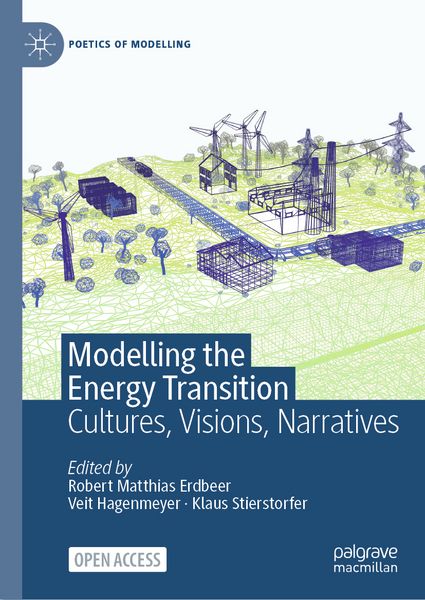
Produktbild: Modelling the Energy Transition
- 13%

Modelling the Energy Transition Cultures, Visions, Narratives

Aus der Reihe Poetics of Modelling
13% sparen

142,99 € UVP 164,99 €

inkl. gesetzl. MwSt., Versandkostenfrei


Beschreibung

Produktdetails

Einband

Gebundene Ausgabe

Erscheinungsdatum

06.07.2025

Abbildungen

XXXI, 51 illus., 42 illus. in color., schwarz-weiss Illustrationen, farbige Illustrationen

Herausgeber

Robert Matthias Erdbeer + weitere

Verlag

Springer

Seitenzahl

408

Maße (L/B/H)

21,6/15,3/2,9 cm

Gewicht

676 g

Sprache

Englisch

ISBN

978-3-031-69030-3

Beschreibung

Portrait

Robert Matthias Erdbeer is a professor for German literature and literary theory at the University of Münster, Germany. His research covers literary form and modelling, experimental video games, but also the extensive contact zone of literature, philosophy of nature, and scientific thought. He has been the spokesperson of the Münster Center for Philosophy of Science.

Veit Hagenmeyer holds the Chair of Energy Informatics and is the director of the Institute for Automation and Applied Informatics at Karlsruhe Institute of Technology (KIT), Germany. He is the spokesperson of the German federal national research programme ‘Energy System Design’ of the Helmholtz Association and a Director of the Energy Lab at KIT.

Klaus Stierstorfer is Chair of British Studies at the University of Münster, Germany. He has published widely on literary history, literary and cultural theory, law and literature, and has an interest in literary modelling. He has been spokesperson of the Collaborative Research Centre ‘Law and Literature’ and is director of the EU CoFund Project ‘Migration, Diaspora, Citizenship’.

Produktdetails

Einband

Gebundene Ausgabe

Erscheinungsdatum

06.07.2025

Abbildungen

XXXI, 51 illus., 42 illus. in color., schwarz-weiss Illustrationen, farbige Illustrationen

Herausgeber

Verlag

Springer

Seitenzahl

408

Maße (L/B/H)

21,6/15,3/2,9 cm

Gewicht

676 g

Sprache

Englisch

ISBN

978-3-031-69030-3

Herstelleradresse

Springer-Verlag GmbH
Tiergartenstr. 17
69121 Heidelberg
DE

Email: ProductSafety@springernature.com

Noch keine Bewertungen vorhanden

Verfassen Sie die erste Bewertung zu diesem Artikel

Helfen Sie anderen Kundinnen und Kunden durch Ihre Meinung.

Kundinnen und Kunden meinen

Bewertungen (0)

  • Produktbild: Modelling the Energy Transition
  • Introduction: Modelling the Energy Transition: Cultures - Visions - Narratives, R. M, Erdbeer, V. Hagenmeyer and K. Stierstorfer.- Part I: Transparent Modelling: Revisiting Model Theory.- Theories, Modelling and Empirical Support, B. van Fraassen.- Modelling in Experimentation, H-J. Rheinberger.- Model-Based Science as Epistemic Warfare: Scientific Models in a Static and a Dynamic Perspective, L. Magnani.- Modelling Objectively, N, Cartwright, F. Ray.- Basic Operations of Model Building in Literary Studies, D. Tenev.- ¿¿¿¿¿¿¿Part II: Modelling the Energy Transition 1: Technology and Practice.- On the Art of Electric Power System Modelling and Simulation for Integrated Transmission-Distribution Analysis, U. Kuehnapfel, V. Hagemeyer.- Daily Streamflow Forecasting using an Enhanced LSTM Neural Network Model, V. Eniola et al.- Open Models areNot Enough: Advancing Energy System Modelling Towards Practical Usefulness, F. Lombardi et al.- ¿¿¿¿¿¿¿Part III: Modelling the Energy Transition 2: Societal and Cultural Perspectives.- Backcasting: Prototyping Future Ontologies by Backward Chaining Possible Futures, G. Gramelsberger.- Indicator Politics: Modelling Societal Problems under Real-World Conditions, S. Boeschen.- Understanding Petromodernity: Oil as a Medium between Geology, Technology, and Different Types of History, B. Steininger.- ¿¿¿¿¿¿¿Part IV: The Energy Imaginary: Model Media in Literature and Art.- Literary Models of/for Resilience in Juliana Spahr's "The Transformation" and Kim Stanley Robinson's "The Ministry for the Future", J. Dorson.- Modelling the Future with Miniature Worlds, O. Eide.- Models in Art: A Visual Approach to Energy Transition, T. Becker.