KI-Beratung Beta

Gutscheinbedingungen

**Gültig bis 18.11.2026 auf englischsprachige Klassiker (klassiker-32728) online auf thalia.at und in der Thalia App. Einzelne Artikel können ausgeschlossen sein. Ausgenommen sind preisgebundene Artikel & eBooks. Pro Einkauf einmal einlösbar. Click & Collect nur bei Onlinevorabzahlung möglich. Keine Barauszahlung. Nicht kombinierbar mit anderen Aktionen und Gutscheinen. Gutschein wird auf max. 500€ Bestellwert angerechnet. Nicht gültig für Geschenkkarten, Versandkosten und Services.

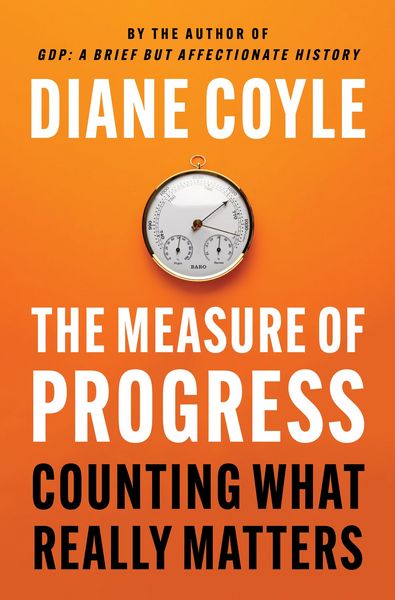
Produktbild: The Measure of Progress

The Measure of Progress Counting What Really Matters

26,99 €

inkl. gesetzl. MwSt., zzgl. Versandkosten


  • Kostenlose Lieferung ab 30 € Einkaufswert
  • Versandkostenfrei für Bonuscard-Kund*innen

Beschreibung

Why do we use eighty-year-old metrics to understand today’s economy? The ways that statisticians and governments measure the economy were developed in the 1940s, when the urgent economic problems were entirely different from those of today. In The Measure of Progress, Diane Coyle argues that the framework...

Beschreibung

Why do we use eighty-year-old metrics to understand today’s economy?
The ways that statisticians and governments measure the economy were developed in the 1940s, when the urgent economic problems were entirely different from those of today. In The Measure of Progress, Diane Coyle argues that the framework underpinning today’s economic statistics is so outdated that it functions as a distorting lens, or even a set of blinkers. When policymakers rely on such an antiquated conceptual tool, how can they measure, understand, and respond with any precision to what is happening in today’s digital economy? Coyle makes the case for a new framework, one that takes into consideration current economic realities.
Coyle explains why economic statistics matter. They are essential for guiding better economic policies; they involve questions of freedom, justice, life, and death. Governments use statistics that affect people’s lives in ways large and small. The metrics for economic growth were developed when a lack of physical rather than natural capital was the binding constraint on growth, intangible value was less important, and the pressing economic policy challenge was managing demand rather than supply. Today’s challenges are different. Growth in living standards in rich economies has slowed, despite remarkable innovation, particularly in digital technologies. As a result, politics is contentious and democracy strained.
Coyle argues that to understand the current economy, we need different data collected in a different framework of categories and definitions, and she offers some suggestions about what this would entail. Only with a new approach to measurement will we be able to achieve the right kind of growth for the benefit of all.

Produktdetails

Einband

Gebundene Ausgabe

Erscheinungsdatum

01.04.2025

Abbildungen

34 b/w illus. 16 tables.

Verlag University Presses

Produktdetails

Einband

Gebundene Ausgabe

Erscheinungsdatum

01.04.2025

Abbildungen

34 b/w illus. 16 tables.

Verlag University Presses
Seitenzahl

320

Maße (L/B/H)

23,7/15,7/3,1 cm

Gewicht

618 g

Sprache

Englisch

ISBN

978-0-691-17902-5

Herstelleradresse

Libri GmbH
Europaallee 1
36244 Bad Hersfeld
DE

Email: gpsr@libri.de

Noch keine Bewertungen vorhanden

Verfassen Sie die erste Bewertung zu diesem Artikel

Helfen Sie anderen Kundinnen und Kunden durch Ihre Meinung.

Kundinnen und Kunden meinen

Bewertungen (0)

Weitere Artikel finden Sie in

Die Leseprobe wird geladen.
  • Produktbild: The Measure of Progress