
KI-Beratung Beta

Gutscheinbedingungen

**Gültig bis 30.11.2026 auf Spielzeug, Schreibwaren, Filme, Geschenke & Trends, Musik, tolino eReader & Zubehör, Hörbücher und Hörbuch-Downloads, nicht preisgebundene Bücher und Kalender online auf thalia.at und in der Thalia App. Einzelne Artikel können ausgeschlossen sein. Aufgrund der Buchpreisbindung sind deutschsprachige Bücher und eBooks ausgenommen. Zusätzlich ausgenommen sind Abos & Flatrates, Games, Geschenkkarten/-boxen, Shelfies, Software, Zeitschriften sowie einzelne Artikel von tonies®. Pro Einkauf einmal einlösbar. Nur gültig mit im Onlineshop hinterlegter Bonuscard. Click & Collect nur bei Onlinevorabzahlung möglich. Keine Barauszahlung. Nicht kombinierbar mit anderen Aktionen und Gutscheinen. Gutschein wird auf max. 500€ Bestellwert angerechnet. Nicht gültig für Versandkosten und Services.

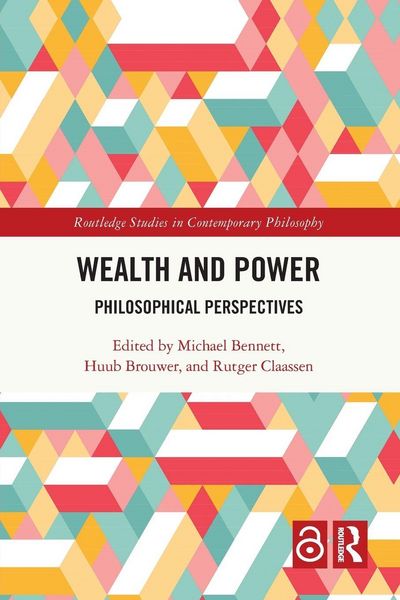
  • Produktbild: Wealth and Power
  • Produktbild: Wealth and Power

Wealth and Power Philosophical Perspectives

57,99 €

inkl. gesetzl. MwSt., Versandkostenfrei


Beschreibung

Is political equality viable when a capitalist economy unequally distributes private property? This book examines the nexus between wealth and politics and asks how institutions and citizens should respond to it.

Theories of democracy and property have often ignored the ways in which the rich attempt...

Beschreibung

Is political equality viable when a capitalist economy unequally distributes private property? This book examines the nexus between wealth and politics and asks how institutions and citizens should respond to it.

Theories of democracy and property have often ignored the ways in which the rich attempt to convert their wealth into political power, implicitly assuming that politics is isolated from economic forces. This book brings the moral and political links between wealth and power into clear focus. The chapters are divided into three thematic sections. Part I analyses wealth and politics from the perspective of various political traditions, such as liberalism, republicanism, anarchism, and Marxism. Part II addresses the economic sphere, and looks at the political influence of corporations, philanthropists, and commons-based organisations. Finally, Part III turns to the political sphere and looks at the role of political parties and constitutions, and phenomena such as corruption and lobbying.

Wealth and Power: Philosophical Perspectives will be of interest to scholars and advanced students working in political philosophy, political science, economics, and law.

Produktdetails

Einband

Taschenbuch

Erscheinungsdatum

26.08.2024

Abbildungen

2 SW-Abb., 2 SW-Zeichn., 1 Tabellen

Herausgeber Michael Bennett + weitere

Produktdetails

Einband

Taschenbuch

Erscheinungsdatum

26.08.2024

Abbildungen

2 SW-Abb., 2 SW-Zeichn., 1 Tabellen

Herausgeber
Verlag Taylor & Francis
Seitenzahl

358

Maße (L/B/H)

22,9/15,2/1,9 cm

Gewicht

519 g

Sprache

Englisch

ISBN

978-1-03-200320-7

EU-Ansprechpartner

Taylor & Francis Verlag GmbH
Kaufingerstraße 24
80331 München
DE
GPSR@taylorandfrancis.com

Herstelleradresse

Taylor & Francis Group
5 Howick Place
SW1P 1WG London
UK
GPSR@taylorandfrancis.com

Noch keine Bewertungen vorhanden

Verfassen Sie die erste Bewertung zu diesem Artikel

Helfen Sie anderen Kundinnen und Kunden durch Ihre Meinung.

Kundinnen und Kunden meinen

Bewertungen (0)

Die Leseprobe wird geladen.
  • Produktbild: Wealth and Power
  • Produktbild: Wealth and Power
  • 1. Introduction: The Wealth-Power Nexus Michael Bennett, Huub Brouwer & Rutger Claassen

    Part I: Theoretical Orientations

    2. What about Ethos? Republican Institutions, Oligarchic Democracy and Norms of Political Equality Jessica Kimpell Johnson

    3. Two Liberal Egalitarian Perspectives on Wealth and Power Richard Arneson

    4. Public Choice and Political Equality Brian Kogelmann

    5. Private Wealth and Political Domination: A Marxian Approach Igor Shoikhedbrod

    6. Anarchism and Redistribution Jessica Flanigan

    Part II: Power in the Economic Sphere

    7. Why Does Worker Participation Matter? Three Considerations in Favour of Worker Participation in Corporate Governance Thomas Christiano

    8. Taming the Corporate Leviathan: How to Properly Politicise Corporate Purpose? Michael Bennett and Rutger Claassen

    9. The Power of Big Tech Corporations as Modern Bigness and a Vocabulary for Shaping Competition Law as Counter-power Anna Gerbrandy & Pauline Phoa

    10. Economic Power and Democratic Forbearance: The Case of Corporate Social Responsibility and Philanthropy Emma Saunders-Hastings

    11. Independence in the Commons: How Group Ownership Realises Basic Non-Domination Yara Al Salman

    Part III. Wealth and Democratic Institutions

    12. Hidden in Plain Sight: How Lobby Organisations Undermine Democracy Phil Parvin

    13. No Money, No Party: The Role of Political Parties in Electoral Campaigns Chiara Destri

    14. Constitutions against Oligarchy Elliot Bulmer & Stuart White

    15. Automation, Desert, and the Case for Capital Grants Huub Brouwer

    16. The Power of Private Creditors and the Need for Reform of the International Financial Architecture Anahí Wiedenbrüg & Patricio López Turconi