Gutscheinbedingungen

**Gültig bis 25.06.2026 auf fremdsprachige Bücher online auf thalia.at und in der Thalia App. Einzelne Artikel können ausgeschlossen sein. Ausgenommen sind preisgebundene Artikel & eBooks. Pro Einkauf einmal einlösbar. Click & Collect nur bei Onlinevorabzahlung möglich. Keine Barauszahlung. Nicht kombinierbar mit anderen Aktionen und Gutscheinen. Gutschein wird auf max. 500€ Bestellwert angerechnet. Nicht gültig für Geschenkkarten, Versandkosten und Services.

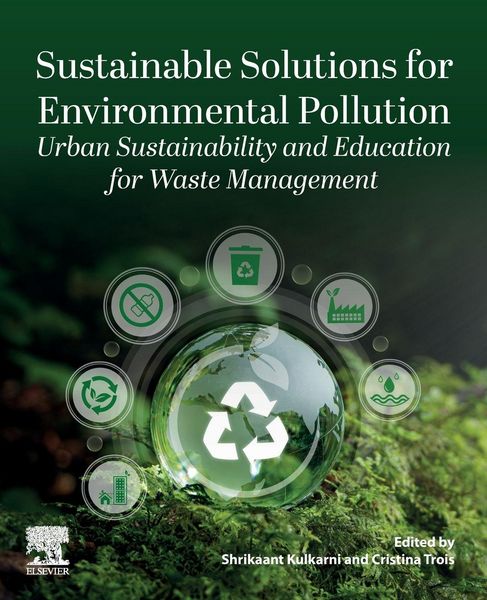
Produktbild: Sustainable Solutions for Environmental Pollution

Sustainable Solutions for Environmental Pollution Urban Sustainability and Education for Waste Management

183,99 €

inkl. gesetzl. MwSt., Versandkostenfrei


Beschreibung

Produktdetails

Einband

Taschenbuch

Erscheinungsdatum

24.11.2025

Herausgeber

Shrikaan Kulkarni + weitere

Verlag

Elsevier

Seitenzahl

648

Maße (L/B/H)

23,5/19,1/3,3 cm

Gewicht

1098 g

Sprache

Englisch

ISBN

978-0-443-33145-9

Beschreibung

Portrait

Shrikaant Kulkarni, Ph.D., is currently a Research and Technical Advisor at Filantrofia Sarvada CleanTech Pvt. Ltd.,Pune, India, and Adjunct Professor at Padm. Dr. V. B. Kolte College of Engineering, Malkapur, India. Dr. Kulkarni has been a senior academician and researcher for more than four decades. He has delivered invited lectures and conducted sessions at national and international conferences as well as faculty development programs. He has guided many major and minor projects in the subject areas like engineering chemistry, green chemistry, nanotechnology, analytical chemistry, catalysis, chemical engineering materials, industrial organization, and management. He has published over 75+ research papers in national and international journals and conferences of repute. He has authored 50 book chapters in books published by CRC, Springer Nature, Apple Academic Press, Elsevier, Wiley, and IET. He has edited twelve books published by Apple Academic Press/CRC Press and Springer Nature. Another ten books are in the offing. He authored four textbooks in engineering chemistry. Dr Kulkarni possesses MSc, MPhil, and PhD degrees in Chemistry in addition to master’s degrees in Economics, Business Management, and Political Science. He has expertise in the fi elds of green chemistry and engineering, analytical chemistry, and green nanoscience and nanotechnology, wastewater treatment, Green and Analytical Chemistry, and advanced areas in Chemical Engineering and Material Science.

Cristina Trois, Ph.D., is a Professor of Environmental Engineering and the Director of the Centre for Renewable and Sustainable Energy Studies at Stellenbosch University, in South Africa. Before that, she was the DSTI/NRF South African Research Chair in Waste and Climate Change (SARCHI) at the University of KwaZulu-Natal (UKZN), former Dean and Head of the School of Engineering also at UKZN. She holds an MScEng (summa cum laude) and a Ph.D. in Environmental Engineering from the Department of Geo-Engineering and Environmental Technology of Cagliari University, Italy. Professor Trois is a C1-rated scientist with the National Research Foundation. Her main fields of expertise are environmental and geo-engineering, waste and climate change in sustainable cities, waste and resources management, control, management and treatment of landfill emissions, renewable energy from waste, biomass energy, greenhouse gas control from zero waste in Africa and developing countries and the circular economy. Professor Trois is the developer of the waste management decision support tool/model: WROSE. She is editor of Springer’s Waste as a Resource book series and co-editor of the book Waste Management in Developing Countries (Springer, 2022). She is the author of over 130 publications in high-impact journals and has successfully supervised more than 100 Ph.D. and Master’s students. Professor Trois is the Chair of the joint secretariat for the Southern Africa Region of the UN-IPLA Programme (International

Partnership for advancing waste management services of local authorities) and the IWWG (International Waste Working Group) and is a Fellow of the South African Academy of Engineers and Academy of Science.

Produktdetails

Einband

Taschenbuch

Erscheinungsdatum

24.11.2025

Herausgeber

Verlag

Elsevier

Seitenzahl

648

Maße (L/B/H)

23,5/19,1/3,3 cm

Gewicht

1098 g

Sprache

Englisch

ISBN

978-0-443-33145-9

Herstelleradresse

Libri GmbH
Europaallee 1
36244 Bad Hersfeld
DE

Email: gpsr@libri.de

Kundinnen und Kunden meinen

0 Bewertungen

Informationen zu Bewertungen

Zur Abgabe einer Bewertung ist eine Anmeldung im Konto notwendig. Die Authentizität der Bewertungen wird von uns nicht überprüft. Wir behalten uns vor, Bewertungstexte, die unseren Richtlinien widersprechen, entsprechend zu kürzen oder zu löschen.

Die Bewertungen sind nach Format, Anzahl Sterne und Datum sortiert.

Verfassen Sie die erste Bewertung zu diesem Artikel

Helfen Sie anderen Kund*innen durch Ihre Meinung

Kundinnen und Kunden meinen

0 Bewertungen filtern

  • Produktbild: Sustainable Solutions for Environmental Pollution
  • 1. Water Resources Pollution Management: Issues and Perspectives
    2. Global Environmental Pollution: History, Science and Solutions
    3. Impact of Environmental Pollution on Food Security: Concepts and Issues
    4. Soil Health and Environmental Sustainability from an Interdisciplinary Perspective
    5. Environmental pollution and Medicinal Plants
    6. Sustainable Solutions for Environmental Pollution
    7. Treatment of Industrial Wastewater: A Sustainable Approach
    8. Sustainable Electronic Waste Management: Processes, Technologies and Impact
    9. Waste Treatment in Food Processing Industries
    10. Environmental Impacts of Plastic Waste Disposal: Innovative Approaches
    11. Negative Effects of Improper Waste Management: From Crisis to Cure
    12.Planning for Sustainable Waste Management
    13. Development of Smart and Automated Solid Waste Management Systems
    14. Sustainable Solid Waste Management for Clean and Safe Environment
    15. Waste Management, Informal Recycling, Environmental Pollution and Public Health
    16. Sustainable Household Waste Management: Limiting Environmental Impacts
    17. Hazardous Waste Treatment and Disposal
    18. Innovative Waste Treatment Technologies
    19. Sustainable Disposal Solutions: Challenges and Strategies for Mitigation
    20. Sustainable and Economic Waste Management
    21 . Policies and Strategies for Waste Management
    22. Case Studies in Waste Management
    23. Waste Management and Future Implication
    24. Sustainable Waste Management and Circular Economy