KI-Beratung Beta

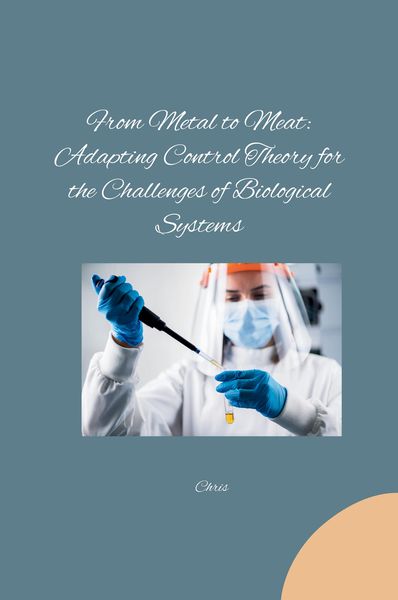
  • Produktbild: From Metal to Meat: Adapting Control Theory for the Challenges of Biological Systems
  • Produktbild: From Metal to Meat: Adapting Control Theory for the Challenges of Biological Systems
  • Produktbild: From Metal to Meat: Adapting Control Theory for the Challenges of Biological Systems
  • Produktbild: From Metal to Meat: Adapting Control Theory for the Challenges of Biological Systems

From Metal to Meat: Adapting Control Theory for the Challenges of Biological Systems

28,39 €

inkl. gesetzl. MwSt., zzgl. Versandkosten


  • Kostenlose Lieferung ab 30 € Einkaufswert
  • Versandkostenfrei für Bonuscard-Kund*innen

Beschreibung

The pursuit of autonomy and artificial intelligence — particularly in the domain of robotics — is a major driving force behind funding, research, and technological ad-vances in both academia and industry. However, despite significant investments and breakthroughs, state-of-the-art systems are often bested...

Beschreibung

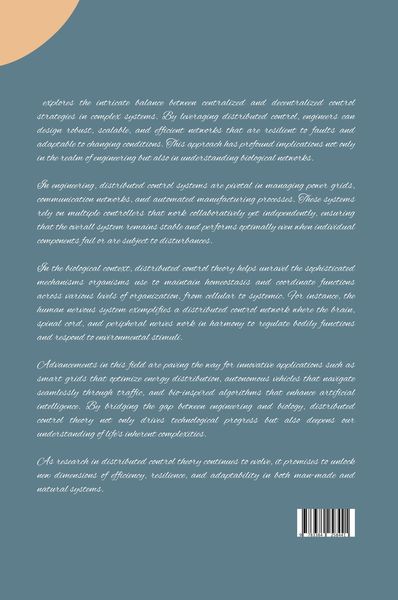
The pursuit of autonomy and artificial intelligence — particularly in the domain of robotics — is a major driving force behind funding, research, and technological ad-vances in both academia and industry. However, despite significant investments and breakthroughs, state-of-the-art systems are often bested by biology. One only has to look across the street at the neighbor’s cat to see an example of an autonomous being that is at once more agile, energy-efficient, and robust to environmental variations than our best quadruped robots. In general, animals excel at complex tasks (e.g. predator evasion) in highly dynamic and unpredictable environments — modern engineering systems, for the most part, cannot achieve comparable performance for even simple subsets of these tasks (e.g. legged locomotion, balancing). This contrast is made more remarkable by the fact that, as previously mentioned, animals are composed of organic components that are in many ways inferior to the metal components that make up our robots. In short, animals attain a level of robust-ness and autonomy that engineers have thus far failed to replicate. By gaining a deeper understanding of how biology accomplishes this, engineers can gain valuable insights to aid in their designs.

Produktdetails

Einband

Taschenbuch

Erscheinungsdatum

12.06.2024

Verlag Tredition
Seitenzahl

130

Produktdetails

Einband

Taschenbuch

Erscheinungsdatum

12.06.2024

Verlag Tredition
Seitenzahl

130

Maße (L/B/H)

23,4/15,5/1 cm

Gewicht

230 g

Sprache

Englisch

ISBN

978-3-384-25844-1

Herstelleradresse

tredition
Heinz-Beusen-Stieg 5
22926 Ahrensburg
DE

Email: support@tredition.com

Noch keine Bewertungen vorhanden

Verfassen Sie die erste Bewertung zu diesem Artikel

Helfen Sie anderen Kundinnen und Kunden durch Ihre Meinung.

Kundinnen und Kunden meinen

Bewertungen (0)

  • Produktbild: From Metal to Meat: Adapting Control Theory for the Challenges of Biological Systems
  • Produktbild: From Metal to Meat: Adapting Control Theory for the Challenges of Biological Systems
  • Produktbild: From Metal to Meat: Adapting Control Theory for the Challenges of Biological Systems
  • Produktbild: From Metal to Meat: Adapting Control Theory for the Challenges of Biological Systems