Gutscheinbedingungen

**Gültig bis 06.07.2026 auf fremdsprachige Bücher online auf thalia.at, in der Thalia App ab einem Mindestbestellwert von 30€ und in allen Thalia Buchhandlungen in Österreich. In den Buchhandlungen nur gültig auf lagernde Ware. Einzelne Artikel können ausgeschlossen sein. Ausgenommen sind preisgebundene Artikel & eBooks. Pro Einkauf einmal einlösbar. Nur gültig gegen Vorlage oder im Onlineshop hinterlegter Bonuscard. Infos zur Einlösung in der Buchhandlung sind auf der Bonuscard-Vorteilspreisseite zu finden. Click & Collect nur bei Onlinevorabzahlung möglich. Keine Einlösung bei Scan & Go-Bezahlung. Keine Barauszahlung. Nicht kombinierbar mit anderen Aktionen und Gutscheinen. Gutschein wird auf max. 500€ Bestellwert angerechnet. Nicht gültig für Versandkosten und Services.

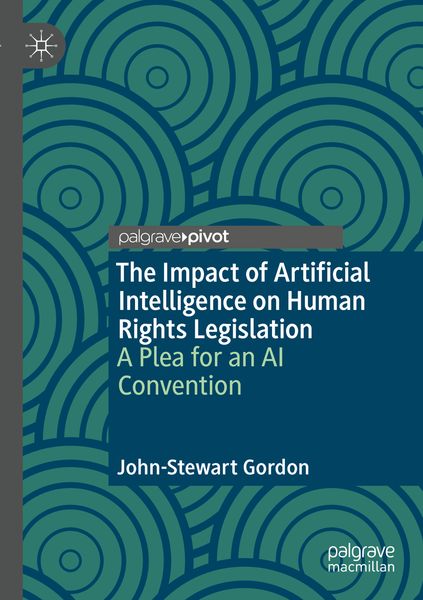
Produktbild: The Impact of Artificial Intelligence on Human Rights Legislation

The Impact of Artificial Intelligence on Human Rights Legislation A Plea for an AI Convention

49,99 €

inkl. gesetzl. MwSt., Versandkostenfrei


Beschreibung

Produktdetails

Einband

Taschenbuch

Erscheinungsdatum

01.06.2024

Verlag

Springer

Seitenzahl

88

Maße (L/B/H)

21/14,8/0,7 cm

Gewicht

147 g

Sprache

Englisch

ISBN

978-3-031-31390-5

Beschreibung

Rezension

“In this easy read on artificial intelligence (AI), human rights, and robot rights, the author states different arguments from many different points of view. He refers to this futuristic topic in a very objective way. … I enjoyed reading this book. It will be a good reference for lawmakers, human rights legislators, and anyone who has an interest in the area.” (Gulustan Dogan, Computing Reviews, December 13, 2023)

Produktdetails

Einband

Taschenbuch

Erscheinungsdatum

01.06.2024

Verlag

Springer

Seitenzahl

88

Maße (L/B/H)

21/14,8/0,7 cm

Gewicht

147 g

Sprache

Englisch

ISBN

978-3-031-31390-5

Herstelleradresse

Springer-Verlag GmbH
Tiergartenstr. 17
69121 Heidelberg
DE

Email: ProductSafety@springernature.com

Noch keine Bewertungen vorhanden

Verfassen Sie die erste Bewertung zu diesem Artikel

Helfen Sie anderen Kundinnen und Kunden durch Ihre Meinung.

Kundinnen und Kunden meinen

Bewertungen (0)

  • Produktbild: The Impact of Artificial Intelligence on Human Rights Legislation
  • 1 General Introduction.- 1.1 General Line of Argumentation.- 1.2 The Caveat.- 1.3 Extreme Scepticism and Robot Rights.- 1.3.1 A Plea for Human Exceptionalism.- 1.3.2 The Mindless Morality View.- 1.3.3 Open-mindedness.- References.- 2 What Is Artificial Intelligence?.- 2.1 Introduction.- 2.2 Defining Artificial Intelligence.- 2.3 Artificial Intelligence and Ethics.- 2.3.1 Three Developmental Periods.- 2.3.2 The Ethics of Artificial Intelligence.- 2.4 Weak and Strong Artificial Intelligence.- 2.5 Superintelligence.- 2.6 Conclusions.- References.- 3 What Are Human Rights?.- 3.1 Introduction.- 3.2 What Are Human Rights?.- 3.2.1 The Concept of Human Rights.- 3.2.2 The Main Features of Human Rights.- 3.2.3 Different Types of Human Rights—A Classification.- 3.3 Moral and Legal Human Rights.- 3.4 Human Rights and Personhood.- 3.4.1 The Human DNA Argument.- 3.4.2 The Human Dignity Argument.- 3.5 Conclusions.- References.- 4 The Impact of Artificial Intelligence on Human Rights.- 4.1 Introduction.- 4.2 Artificial Intelligence and Human Rights—An Overview.- 4.3 Universal Declaration of Human Rights—Abridged Version.- 4.4 Zones of Conflict I—Machines Violate Human Rights.- 4.4.1 Table.- 4.4.2 Comments.- 4.4.3 Table.- 4.4.4 Comments.- 4.4.5 Table.- 4.4.6 Comments.- 4.5 Zones of Conflict II—Humans Violate “Machine Rights”.- 4.5.1 Table.- 4.5.2 Comments.- 4.6 Conclusions.- References.- 5 Moving Towards a “Universal Convention for the Rights of AI Systems”.- 5.1 Introduction.- 5.2 The Significance of Moral Status.- 5.3 Machine Rights as Fundamental Rights.- 5.4 The Idea of an AI Convention.- 5.5 The Problem of Design.- 5.6 Conclusions.- References.- 6 Objections.- 6.1 Introduction.- 6.2 The Dark Side of Superintelligence.- 6.3 Human Rights Are for Humans and Not Machines.- 6.4 The Argument from Artificial Servitude.- 6.5 Conclusions.- References.- 7 General Conclusions.