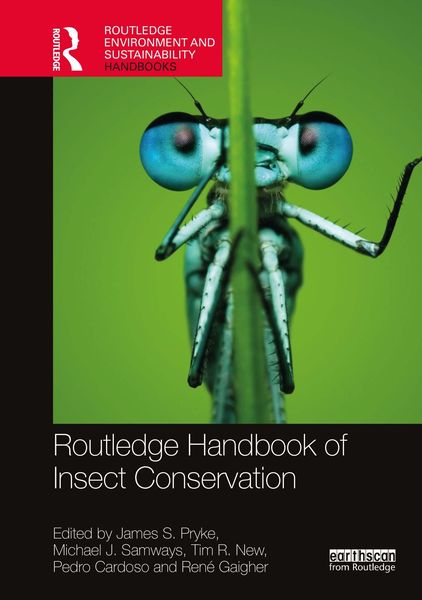
Routledge Handbook of Insect Conservation
-
- Hardcover
- Taschenbuch
- eBook ausgewählt
-
Form:Einzelkauf Download
-
Sprache:Englisch
-
eBook Format:PDF
- ePUB 3 75,10 €
- PDF 75,10 € ausgewählt
75,10 €
inkl. gesetzl. MwSt.Beschreibung
Produktdetails
Format
Kopierschutz
Ja
Family Sharing
Nein
Text-to-Speech
Nein
Erscheinungsdatum
14.06.2024
Herausgeber
James S. Pryke + weitereVerlag
Taylor & Francis eBooksSeitenzahl
586 (Printausgabe)
Auflage
1. Auflage
Sprache
Englisch
EAN
9781040023419
Winner of the 2025 Choice Outstanding Academic Title
This handbook presents a comprehensive overview of insect conservation and provides practical solutions to counteract insect declines, at a time where insects are facing serious threats across the world from habitat destruction to invasive species and climate change.
The Routledge Handbook of Insect Conservation consist of six sections, covering all aspects of insect conservation, containing contributions from academics, researchers and practitioners from across the globe. Section I addresses the fundamentals of insect conservation and outlines the reason why insects are important and discusses the greatest drivers of insect decline. The chapters in Section II examine the approaches that can be used for insect conservation globally, such as protected areas and agroecology, while highlighting the importance of insects in the composition and function of ecosystems. The chapters in Section III focus on insect populations in the major biomes around the world, from temperate and tropical forests to savannas and grasslands, with the chapters in Section IV focusing on natural and manmade ecosystems of the world, including mountain, soil, urban, island and agricultural habitats. They discuss the unique pressures and challenges for each biome and ecosystem and offer practical solutions for conserving their insect populations. Section V focuses on the assessment and monitoring of insects for conservation, discussing how we can implement practical monitoring protocols and what options are available. A wide variety of methods and tools are examined, including citizen science, bioindication, the role of taxonomy, drones and eDNA. The book concludes by examining policy and education strategies for insect conservation in Section VI. The chapters discuss key issues around social and policy strategies and conservation legislation for ensuring the long-term protection of insects.
This book is essential reading for students and scholars of biodiversity conservation and entomology as well as professionals and policymakers involved in conservation looking for real-world solutions to the threats facing insects across the globe.
Noch keine Bewertungen vorhanden
Verfassen Sie die erste Bewertung zu diesem Artikel
Helfen Sie anderen Kundinnen und Kunden durch Ihre Meinung.
Kurze Frage zu unserer Seite
Vielen Dank für Ihr Feedback
Wir nutzen Ihr Feedback, um unsere Produktseiten zu verbessern. Bitte haben Sie Verständnis, dass wir Ihnen keine Rückmeldung geben können. Falls Sie Kontakt mit uns aufnehmen möchten, können Sie sich aber gerne an unseren Kund*innenservice wenden.
zum Kundenservice