Gutscheinbedingungen

**Gültig bis 06.07.2026 auf fremdsprachige Bücher online auf thalia.at, in der Thalia App ab einem Mindestbestellwert von 30€ und in allen Thalia Buchhandlungen in Österreich. In den Buchhandlungen nur gültig auf lagernde Ware. Einzelne Artikel können ausgeschlossen sein. Ausgenommen sind preisgebundene Artikel & eBooks. Pro Einkauf einmal einlösbar. Nur gültig gegen Vorlage oder im Onlineshop hinterlegter Bonuscard. Infos zur Einlösung in der Buchhandlung sind auf der Bonuscard-Vorteilspreisseite zu finden. Click & Collect nur bei Onlinevorabzahlung möglich. Keine Einlösung bei Scan & Go-Bezahlung. Keine Barauszahlung. Nicht kombinierbar mit anderen Aktionen und Gutscheinen. Gutschein wird auf max. 500€ Bestellwert angerechnet. Nicht gültig für Versandkosten und Services.

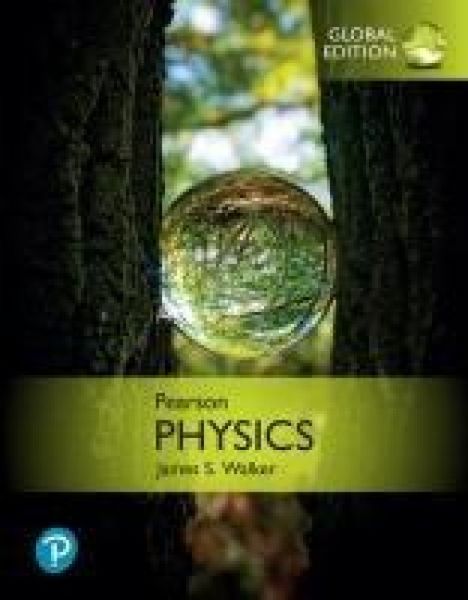
Produktbild: Pearson Physics, Global Edition + Mastering Physics with Pearson eText (Package)

Pearson Physics, Global Edition + Mastering Physics with Pearson eText (Package)

82,99 €

inkl. gesetzl. MwSt., Versandkostenfrei


Beschreibung

Produktdetails

Einband

Set mit diversen Artikeln

Erscheinungsdatum

05.09.2024

Verlag

Pearson Studium

Maße (L/B/H)

27,7/21,9/4,2 cm

Gewicht

2330 g

Sprache

Englisch

ISBN

978-1-292-74042-3

Beschreibung

Produktdetails

Einband

Set mit diversen Artikeln

Erscheinungsdatum

05.09.2024

Verlag

Pearson Studium

Maße (L/B/H)

27,7/21,9/4,2 cm

Gewicht

2330 g

Sprache

Englisch

ISBN

978-1-292-74042-3

Herstelleradresse

Pearson
St.-Martin-Straße 82
81541 München
DE

Email: GPSR Kontakt

Noch keine Bewertungen vorhanden

Verfassen Sie die erste Bewertung zu diesem Artikel

Helfen Sie anderen Kundinnen und Kunden durch Ihre Meinung.

Kundinnen und Kunden meinen

Bewertungen (0)

  • Produktbild: Pearson Physics, Global Edition + Mastering Physics with Pearson eText (Package)
  • 1. Introduction to Physics
    • 1.1 Physics and the Scientific Method
    • 1.2 Physics and Society
    • 1.3 Units and Dimensions
    • 1.4 Basic Math for Physics
    • 1.5 Problem Solving in Physics
    2. Introduction to Motion
    • 2.1 Describing Motion
    • 2.2 Speed and Velocity
    • 2.3 Position-Time Graphs
    • 2.4 Equation of Motion
    3. Acceleration and Accelerated Motion
    • 3.1 Acceleration
    • 3.2 Motion with Constant Acceleration
    • 3.3 Position-Time Graphs for Constant Acceleration
    • 3.4 Free Fall
    4. Motion in Two Dimensions
    • 4.1 Vectors in Physics
    • 4.2 Adding and Subtracting Vectors
    • 4.3 Relative Motion
    • 4.4 Projectile Motion
    5. Newtons Laws of Motion
    • 5.1 Newtons Laws of Motion
    • 5.2 Applying Newtons Laws
    • 5.3 Friction
    6. Work and Energy
    • 6.1 Work
    • 6.2 Work and Energy
    • 6.3 Conservation of Energy
    • 6.4 Power
    7. Linear Momentum and Collisions
    • 7.1 Momentum
    • 7.2 Impulse
    • 7.3 Conservation of Momentum
    • 7.4 Collisions
    8. Rotational Motion and Equilibrium
    • 8.1 Describing Angular Motion
    • 8.2 Rolling Motion and the Moment of Inertia
    • 8.3 Torque
    • 8.4 Static Equilibrium
    9. Gravity and Circular Motion
    • 9.1 Newtons Law of Universal Gravity
    • 9.2 Applications of Gravity
    • 9.3 Circular Motion
    • 9.3 Planetary Motion and Orbits
    10. Temperature and Heat
    • 10.1 Temperature, Energy, and Heat
    • 10.2 Thermal Expansion and Energy Transfer
    • 10.3 Heat Capacity
    • 10.4 Phase Changes and Latent Heat
    11. Thermodynamics
    • 11.1 The First Law of Thermodynamics
    • 11.2 Thermal Processes
    • 11.3 The Second and Third Laws of Thermodynamics
    12. Gases, Liquids, and Solids
    • 12.1 Gases
    • 12.2 Fluids at Rest
    • 12.3 Fluids in Motion
    • 12.4 Solids
    13. Oscillations and Waves
    • 13.1 Oscillations and Periodic Motion
    • 13.2 The Pendulum
    • 13.3 Waves and Wave Properties
    • 13.4 Interacting Waves
    14. Sound
    • 14.1 Sound Waves and Beats
    • 14.2 Standing Sound Waves
    • 14.3 The Doppler Effect
    • 14.4 Human Perception of Sound
    15. The Properties of Light
    • 15.1 The Nature of Light
    • 15.2 Color and the Electromagnetic Spectrum
    • 15.3 Polarization and Scattering of Light
    16. Reflection and Mirrors
    • 16.1 The Reflection of Light
    • 16.2 Plane Mirrors
    • 16.3 Curved Mirrors
    17. Refraction and Lenses
    • 17.1 Refraction
    • 17.2 Applications of Refraction
    • 17.3 Lenses
    • 17.4 Applications of Lenses
    18. Interference and Diffraction
    • 18.5 Interference
    • 18.6 Interference in Thin Films
    • 18.7 Diffraction
    • 18.8 Diffraction Gratings
    19. Electric Charges and Forces
    • 19.1 Electric Charge
    • 19.2 Electric Force
    • 19.3 Combining Electric Forces
    20. Electric Fields and Electric Energy
    • 20.1 The Electric Field
    • 20.2 Electric Potential Energy and Electric Potential
    • 20.3 Capacitance and Energy Storage
    21. Electric Current and Electric Circuits
    • 21.1 Electric Current, Resistance, and Semiconductors
    • 21.2 Electric Circuits
    • 21.3 Power and Energy in Electric Circuits
    22. Magnetism and Magnetic Fields
    • 22.1 Magnets and Magnetic Fields
    • 22.2 Magnetism and Electric Currents
    • 22.3 The Magnetic Force
    23. Electromagnetic Induction
    • 23.1 Electricity from Magnetism
    • 23.2 Electric Generators and Motors
    • 23.3 AC Circuits and Transformers
    24. Quantum Physics
    • 24.1 Quantized Energy and Photons
    • 24.2 Wave-Particle Duality
    • 24.3 The Heisenberg Uncertainty Principle
    25. Atomic Physics
    • 25.1 Early Models of the Atom
    • 25.2 Bohrs Model of the Hydrogen Atom
    • 25.3 The Quantum Physics of Atoms
    26. Nuclear Physics
    • 26.1 The Nucleus
    • 26.2 Radioactivity
    • 26.3 Applications of Nuclear Physics
    • 26.4 Fundamental Forces and Elementary Particles
    27. Relativity
    • 27.1 The Postulates of Relativity
    • 27.2 The Relativity of Time and Length
    • 27.3 E = mc^2
    • 27.4 General Relativity
    Math Review Appendices
    • Appendix A: Selected Answers
    • Appendix B: Additional Problems
    • Appendix C: Tables
    • Appendix D: Safety in the Laboratory
    • Credits
    • Index