Gutscheinbedingungen

**Gültig bis 22.07.2026 ab einem Mindestbestellwert von 40€ auf Spielzeug, Schreibwaren, Filme, Geschenke & Trends, Musik, tolino eReader & Zubehör, Hörbücher und Hörbuch-Downloads (außer Abo), nicht preisgebundene Bücher und Kalender online auf thalia.at und in der Thalia App. Einzelne Artikel können ausgeschlossen sein. Aufgrund der Buchpreisbindung sind deutschsprachige Bücher und eBooks ausgenommen. Zusätzlich ausgenommen sind preisgebundene Artikel, Abos & Flatrates, eBooks, Games, Geschenkkarten/-boxen, Shelfies, Software, Zeitschriften sowie einzelne Artikel von tonies®. Pro Einkauf einmal einlösbar. Click & Collect nur bei Onlinevorabzahlung möglich. Keine Barauszahlung. Nicht kombinierbar mit anderen Aktionen und Gutscheinen. Gutschein wird auf max. 500€ Bestellwert angerechnet. Nicht gültig für Versandkosten und Services. Preisgebundene Artikel sind vom Mindestbestellwert ausgeschlossen.

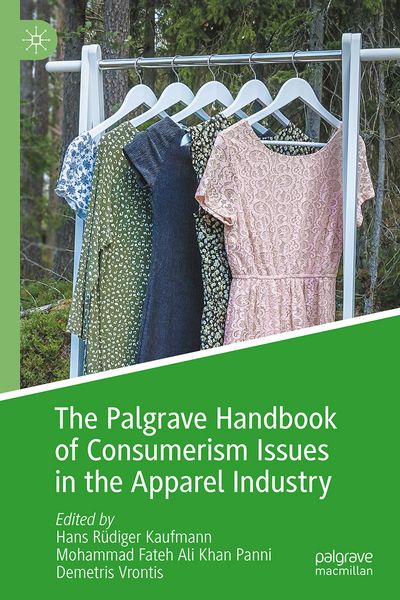
Produktbild: The Palgrave Handbook of Consumerism Issues in the Apparel Industry
- 12%

The Palgrave Handbook of Consumerism Issues in the Apparel Industry

12% sparen

221,99 € UVP 252,99 €

inkl. gesetzl. MwSt., Versandkostenfrei


Beschreibung

Produktdetails

Einband

Gebundene Ausgabe

Erscheinungsdatum

01.08.2024

Herausgeber

Hans Rüdiger Kaufmann + weitere

Verlag

Springer

Seitenzahl

599

Maße (L/B/H)

24,1/16/3,9 cm

Gewicht

1041 g

Sprache

Englisch

ISBN

978-3-031-59951-4

Beschreibung

Portrait

Hans Rüdiger Kaufmann has worked in Germany, Manchester, Budapest, and Liechtenstein in banking, consulting and academic positions. He was called Full Professor at the University of Nicosia in 2013. Since 2016, he is additionally Professor of International Sales Management and Chair of the English Master Programs at the University of Applied Management Studies, Mannheim.

Mohammad Fateh Ali Khan Panni is an Assistant Professor (Business Administration) at the National Institute of Textile Engineering and Research, Bangladesh. He has an MPhil degree from Multimedia University, Malaysia (MMU) in Consumerism. His major research areas are Consumerism, Green and Sustainability and Customer Centric Marketing Strategies.

Demetris Vrontis is the Vice Rector for Faculty and Research and a Professor of Strategic Marketing Management at the University of Nicosia, Cyprus. He is also the President of the EuroMed Academy of Business and the Managing Director of Gnosis Mediterranean Institute for Management Science. He is a certified Chartered Marketer and a Chartered Business Consultant.

Produktdetails

Einband

Gebundene Ausgabe

Erscheinungsdatum

01.08.2024

Herausgeber

Verlag

Springer

Seitenzahl

599

Maße (L/B/H)

24,1/16/3,9 cm

Gewicht

1041 g

Sprache

Englisch

ISBN

978-3-031-59951-4

Herstelleradresse

Springer-Verlag GmbH
Tiergartenstr. 17
69121 Heidelberg
DE

Email: ProductSafety@springernature.com

Noch keine Bewertungen vorhanden

Verfassen Sie die erste Bewertung zu diesem Artikel

Helfen Sie anderen Kundinnen und Kunden durch Ihre Meinung.

Kundinnen und Kunden meinen

Bewertungen (0)

  • Produktbild: The Palgrave Handbook of Consumerism Issues in the Apparel Industry
  • Section 1: Introductory chapter 1.- Section 2: Theoretical implications on sustainable consumerism in the Textile, Fashion and Apparel Industry.- Chapter 2: Modern Slavery and Clothing Retailing.- Chapter 3: Fashion Revolution in Italy: An exploration of GenZ's approach to activism in the fast-fashion industry.- Chapter 4: Ethical Consumer Behavior: a systematic review shown by the “Risacca” case study.- Chapter 5: Fashion and Sustainability: The Czech Republic Perspective.- Section 3: The influence of sustainable consumerism on Consumer Behavior in the Textile, Apparel and Fashion Industry.- Chapter 6: Developing a Consumer Decision-Making Process (DMP) model fit for overtly sustainable fashion companies.- Chapter 7: A tall person as a clothing consumer.- Chapter 8: The Production of Boom Fibre: Sustainability and Fashion The Point of View of The Miss Italia.- Chapter 9: Cognitive Dissonance Behavior Regarding Sustainable Beliefs when Millennials Intend to Purchase Luxury Fashion Products.- Chapter 10: Conceptual Framework for the influence of Cross-Cultural Consumer Behavior on sustainable consumerism.- Section 4 Macro Consumerism Issues.- Chapter 11: Sustainability in The Apparel Industry: A Study of Leading Ten Apparel Companies.- Chapter 12: The regulation of “review marketing” in the Omnibus Directive and its impact on the fashion industry.- Chapter 13: The environmental and social impact of the garment industry: the case of developing countries.- Section 5:  The influence of Innovative Trends on sustainable consumerism in the textile, fashion and Apparel industry.- Chapter 14: Prosumerism:  Transforming external stakeholders into internal in innovation process.- Chapter 15: Innovative sustainable products and “Made in Italy” effect: The reuse of fish leather in the fashion industry.- Chapter 16: Sustainability in the Fashion Industry: the role of AI, Blockchain and IoT in carbon footprint reduction and challenges and motivations towards the transition.- Chapter 17: Innovation Cycles: Case Study Textil Sector.- Chapter 18: Digital Twin and Gamers’ Self-Perceptions: A Fashion Perspective.- Chapter 19: Social Sustainability and the Impact of Social Media Influencer Campaigns on the Positive eWOM and Purchase Intention of Youth Subcultures.- Section 6: The influence of sustainable consumerism on Communication.- Chapter 20: The Effects of Flea Market Apps on Apparel Industry and Consumption.- Chapter 21: Green washing in the Fashion Industry: Does Attachment Help to Forgive?.- Chapter 22: Luxury Brand Consumption by German Women in Munic An Analysis of Communication Strategy on Social Media.- Chapter 23: Articulating sustainable fashion through digital storytelling: Actualising citizenship in vlogging of H&M’s “Conscious” Collection.- Section 7:  Sustainable Consumerism Influence on Profitability and Corporate Success - Factors Mirrored by Best Practices derived from case studies.- Chapter 24: Profitable Scope Economies Empower the Sustainable Carded Wool Process.- Chapter 25: Evaluation of sustainable investments in the fashion industry, a triple bottom line & stakeholder approach.- Chapter 26: Sustainable start-ups and entrepreneurial narratives: a lexical analysis of dimensions emerging from crowdfunding campaigns in the fashion industry.- Chapter 27: A case study of Indian apparel market – Enablers and barriers to corporate success.