• Produktbild: Parties and Elections in America
  • Produktbild: Parties and Elections in America

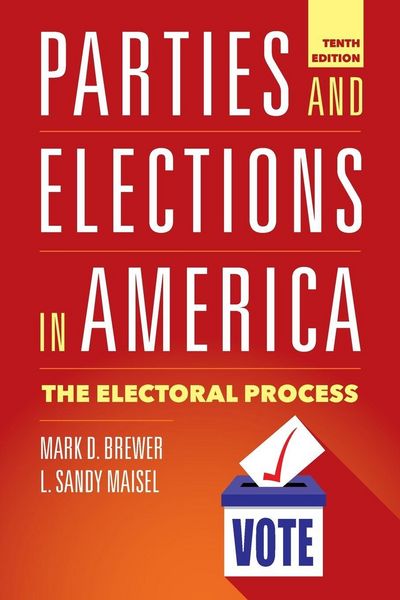
Parties and Elections in America The Electoral Process

93,99 €

inkl. gesetzl. MwSt., Versandkostenfrei


Beschreibung

Produktdetails

Einband

Taschenbuch

Erscheinungsdatum

10.07.2024

Verlag

Rowman & Littlefield

Seitenzahl

510

Maße (L/B/H)

22,9/15,2/2,7 cm

Gewicht

689 g

Sprache

Englisch

ISBN

978-1-5381-8881-1

Beschreibung

Produktdetails

Einband

Taschenbuch

Erscheinungsdatum

10.07.2024

Verlag

Rowman & Littlefield

Seitenzahl

510

Maße (L/B/H)

22,9/15,2/2,7 cm

Gewicht

689 g

Sprache

Englisch

ISBN

978-1-5381-8881-1

Herstelleradresse

Libri GmbH
Europaallee 1
36244 Bad Hersfeld
DE

Email: GPSR Kontakt

Noch keine Bewertungen vorhanden

Verfassen Sie die erste Bewertung zu diesem Artikel

Helfen Sie anderen Kundinnen und Kunden durch Ihre Meinung.

Kundinnen und Kunden meinen

Bewertungen (0)

Die Leseprobe wird geladen.
  • Produktbild: Parties and Elections in America
  • Produktbild: Parties and Elections in America
  • List of Figures and Tables
    About the Authors
    Preface
    Acknowledgments
    Chapter One: Elections and Political Parties
    An Examination of Elections in the United States
    The Role of Elections in Democratic Theory
    Modes of Elections
    Implications for Representation
    Definitions of "Political Party" and "Party Systems"
    Conclusion
    Critical Thinking Questions | Key Terms
    Chapter Two: American Political Parties and Party Organization
    The Development of American Political Parties
    The First Party System
    The Second Party System
    The Third Party System
    The Fourth Party System
    The Fifth Party System
    A Sixth Party System-Yes, But Defined How?
    The Modern Party Organization
    Local and County Organizations
    State Party Organizations
    Party Organization at the National Level
    Critical Thinking Questions | Key Terms
    Chapter Three: Voting and Other Forms of Political Participation
    Who Votes; Who Doesn't
    Expansion of the Franchise
    Decline in Voter Participation
    Voters in Presidential Elections
    Models of Voting Behavior: The American Voter
    Critics of the American Voter Model
    Presidential Voting Reviewed
    Voters in Congressional, Senatorial, and State and Local Elections
    Voting Behavior Theory Revisited
    Voting in the Real World
    Critical Thinking Questions | Key Terms
    Chapter Four: Organized Groups in the Political Process
    Organized Groups in American Politics
    Political and Nonpolitical Associations
    Politically Active Groups
    Electoral Activities of Organized Groups
    Working within the Party
    Group Ratings
    Political Action Committees
    Interest Groups' Influence on their Members
    Critical Thinking Questions | Key Terms
    Chapter Five: Campaign Finance
    The Long History of Campaign Finance Reform
    The Climate for Reform
    The Federal Election Campaign Act of 1971 and Efforts at Amendment
    Buckley v. Valeo, 424 U.S. 1 (1976) and Its Impact
    The Seven-Year Battle for McCain-Feingold and Its Demise
    The Costs of Democracy and Who Pays for It
    The Costs
    Sources of Campaign Funds
    Campaign Finance in a Post-Citizens United and Post-McCutcheon World
    Critical Thinking Questions | Key Terms
    Chapter Six: State and Local Nominations
    Political Context and Politicians' Decisions to Run
    Development of the Direct Primary System
    Primaries as a Response to One-Party Domination
    Primaries as an Item on the Progressive Agenda
    Varieties of Primaries
    Who May Run
    Who May Vote
    Who Wins
    The Politics of Nominations
    Uncontested Nominations
    Contested Nominations
    Conclusion
    Critical Thinking Questions | Key Terms
    Chapter Seven: State and Local Elections
    The Conventional Wisdom: Old versus New Politics
    The New Politics: Campaigning in a Media Age
    Redistricting and Reapportionment
    The Role of Political Parties
    The Role of Organized Groups
    Media Politics
    The Candidate's Personal Organization
    The Structure of a Modern Campaign
    Old-Style Politics: A More Prominent Role for Parties
    Reexamination of the Role of Political Parties
    Local Campaigns in the Absence of Party
    Do Campaigns Determine Who Wins Elections?
    Lack of Competition in American Elections
    Incumbent Advantage in US House and State Legislative Races
    Competition in US Senate and Gubernatorial Races
    Credible Competition in American Elections
    Third Parties in State and Local Elections
    Conclusion
    Critical Thinking Questions | Key Terms
    Chapter Eight: Presidential Nominations
    The Post-1968 Reforms
    The McGovern-Fraser Commission
    The 1972 Nomination
    The Reform Movement: An Assessment
    Twenty-First-Century Presidential Nominations
    Strategic Considerations in the Contests for Nominations
    The Political Calendar
    The Rules of the Game
    Strategic Use of Campaign Resources
    Evaluating Nominating Campaigns
    The Conventions
    Credentials Challenges
    Rules Disputes
    Party Platforms
    Vice Presidential Nominations
    An Evaluation of the Conventions
    The Presidential Nominating Process as It Stands
    Critical Thinking Questions | Key Terms
    Chapter Nine: Presidential Elections
    From the Convention to the General Election
    Organizing for the General Election
    Structuring the Campaign Organization
    Functions of a Presidential Campaign Organization
    Setting a Campaign Strategy
    Strategies for the General Election
    Geographic Determinations
    Coalition Strategies
    Issue Strategies
    The Strategic Use of Incumbency
    Tactics for the General Election
    Tactical Considerations of Where to Go
    Tactical Considerations of Media Use
    Tactical Considerations of Image Establishment
    The Tactics of Presidential Debates
    Third-Party Candidates in Presidential Elections
    The All-Consuming Nature of a Presidential Campaign
    Critical Thinking Questions | Key Terms
    Chapter Ten: The Media and the Electoral Process
    The Media in the Contemporary Context
    Free or Earned Media: Journalists' Presentations of Candidates and Campaigns
    The Varieties of Free Media
    The Role of the Free/Earned Media
    The Actual Role That the Media Play
    An Assessment of the Role of Free Media
    Paid Media: The Candidate Provides the Message
    Types of Paid Media
    Controversies Caused by the Use of Paid Media
    Impact of Paid Media on Election Campaigns
    An Uneasy yet Necessary Relationship in Transition
    Critical Thinking Questions | Key Terms
    Chapter Eleven: Party in Government
    Theoretical and Historical Context: Is Strong Party Government Possible in the United States?
    Measuring Party Strength in Congress
    Party Organization in Congress: The Leadership Hierarchy in the House and Senate
    House Leadership
    Senate Leadership
    The President as Leader of Party in Government
    Critical Thinking Questions | Key Terms
    Chapter Twelve: The Role of Political Parties
    The Role of Elections
    The Context of Federalism
    Voters, Parties, and Elections
    The Electronic Revolution: Television and Digital Media
    The Parties in the Modern Election
    Parties' Appeal to the Electorate
    The Tone of Twenty-First-Century Politics
    Concluding Remarks
    Critical Thinking Questions
    Glossary
    References
    Credits
    Index