Gutscheinbedingungen

**Gültig von 22.06.2026 ab 19 Uhr bis 23.06.2026 24 Uhr auf Spielzeug, Schreibwaren, Filme, Geschenke & Trends, Musik, tolino eReader & Zubehör, Hörbücher und Hörbuch-Downloads (außer Abo), nicht preisgebundene Bücher und Kalender online auf thalia.at und in der Thalia App. Einzelne Artikel können ausgeschlossen sein. Aufgrund der Buchpreisbindung sind deutschsprachige Bücher und eBooks ausgenommen. Zusätzlich ausgenommen sind preisgebundene Artikel, Abos & Flatrates, eBooks, Games, Geschenkkarten/-boxen, Shelfies, Software, Zeitschriften sowie einzelne Artikel von tonies®. Pro Einkauf einmal einlösbar. Click & Collect nur bei Onlinevorabzahlung möglich. Keine Barauszahlung. Nicht kombinierbar mit anderen Aktionen und Gutscheinen. Gutschein wird auf max. 500€ Bestellwert angerechnet. Nicht gültig für Versandkosten und Services.

  • Produktbild: Getting Started as a Therapist
  • Produktbild: Getting Started as a Therapist

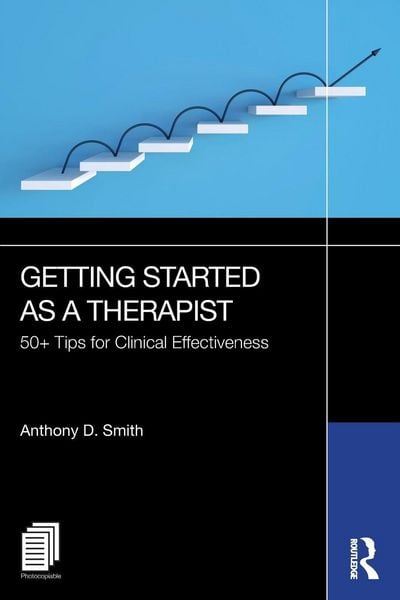
Getting Started as a Therapist 50+ Tips for Clinical Effectiveness

31,99 €

inkl. gesetzl. MwSt., Versandkostenfrei


Beschreibung

Produktdetails

Einband

Taschenbuch

Erscheinungsdatum

10.10.2024

Verlag

Taylor & Francis

Seitenzahl

244

Maße (L/B/H)

22,9/15,2/1,4 cm

Gewicht

362 g

Sprache

Englisch

ISBN

978-1-03-262343-6

Beschreibung

Rezension

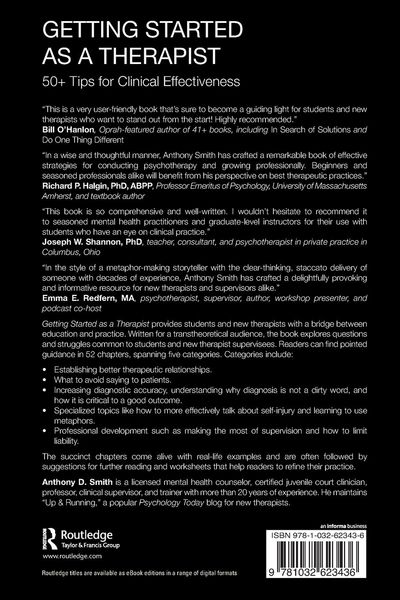
"This is a very user-friendly book that's sure to become a guiding light for students and new therapists who want to stand out from the start! Highly recommended."
Bill O'Hanlon, Oprah-featured author of 41+ books, including In Search of Solutions and Do One Thing Different

"In a wise and thoughtful manner, Anthony Smith has crafted a remarkable book of effective strategies for conducting psychotherapy and growing professionally. Beginners and seasoned professionals alike will benefit from his perspective on best therapeutic practices."
Richard P. Halgin, PhD, ABPP, professor emeritus of psychology, UMass Amherst, and textbook author

"This book is so comprehensive and well-written. I wouldn't hesitate to recommend it to seasoned mental health practitioners and graduate-level instructors for their use with students who have an eye on clinical practice."
Joseph W. Shannon, PhD, teacher, consultant, and psychotherapist in private practice in Columbus, Ohio

"In the style of a metaphor-making storyteller with the clear-thinking, staccato delivery of someone with decades of experience, Anthony Smith has crafted a delightfully provoking and informative resource for new therapists and supervisors alike."
Emma E. Redfern, MA, psychotherapist, supervisor, author, workshop presenter, and podcast co-host

Produktdetails

Einband

Taschenbuch

Erscheinungsdatum

10.10.2024

Verlag

Taylor & Francis

Seitenzahl

244

Maße (L/B/H)

22,9/15,2/1,4 cm

Gewicht

362 g

Sprache

Englisch

ISBN

978-1-03-262343-6

EU-Ansprechpartner

Taylor & Francis Verlag GmbH
Kaufingerstraße 24
80331 München
DE
GPSR@taylorandfrancis.com

Herstelleradresse

Taylor & Francis Group
5 Howick Place
SW1P 1WG London
UK
GPSR@taylorandfrancis.com

Kundinnen und Kunden meinen

0 Bewertungen

Informationen zu Bewertungen

Zur Abgabe einer Bewertung ist eine Anmeldung im Konto notwendig. Die Authentizität der Bewertungen wird von uns nicht überprüft. Wir behalten uns vor, Bewertungstexte, die unseren Richtlinien widersprechen, entsprechend zu kürzen oder zu löschen.

Die Bewertungen sind nach Format, Anzahl Sterne und Datum sortiert.

Verfassen Sie die erste Bewertung zu diesem Artikel

Helfen Sie anderen Kund*innen durch Ihre Meinung

Kundinnen und Kunden meinen

0 Bewertungen filtern

  • Produktbild: Getting Started as a Therapist
  • Produktbild: Getting Started as a Therapist
  • SECTION I: Setting the Stage 1 It’s Not Like on TV; 2 Be Yourself; 3 Therapy isn’t a Race; 4 Don’t Forget the Basics; 5 Forget About Being So Formal; 6 Mastering Your Therapeutic Presence; 7 Body Language Basics; 8 How to Polish Your Summarizing; 9 Find Value in Silence; 10 Strive to Cultivate Substance in Each Session; 11 Ask About Meaning; 12 Be Attentive to Your Intuition; 13 Don’t Rely on Psychological Archaeology; SECTION II: Things Therapists Shouldn’t Say 14 The Big Three; 15 Beware of the "Suck‑It‑Up" Trap; 16 What Not to Say to Anxious Patients; 17 What Not to Say to Depressed Patients; 18 What Not to Say to People Who Hear Voices; SECTION III: Demystifying Diagnosis 19 Ignore Popular Culture Portrayals of Mental Illnesses; 20 In Defense of Diagnosis (Part 1); 21 In Defense of Diagnosis (Part 2); 22 Post‑Diagnosis Considerations; 23 Never Diagnose Based on One Chief Symptom; 24 Re‑Evaluate Historical Diagnoses; 25 Five Quick Tips for More Thorough Assessments; 26 Always Consider Medical Mimicry; 27 How to Evaluate for Medical Mimicry; 28 How to Discuss Diagnoses with Patients; SECTION IV: Special Topics 29 Interview, Don’t Interrogate; 30 Try Not to be Alarmist; 31 Be Familiar with the Defenses; 32 Approach Trauma Lightly; 33 Learn About Self‑Injury; 34 Exploring Therapist Self‑Disclosure; 35 There’s No Need to Rescue; 36 Why Therapists Must Be Salespeople; 37 Learn to Reframe; 38 Getting Friendly with Metaphors; 39 What if Someone Implies, "You’d Never Understand"?; 40 Pay Attention to the Role of Culture; 41 Talk About Medications; 42 Personality Disorders Are Important; 43 Ask for Feedback; SECTION V: Professional Development 44 Consider an Integrative Approach; 45 Limiting Liability; 46 Clinical Supervision Is Vital for Therapist Growth; 47 Take Continuing Education Seriously; 48 Have Clinical Heroes; 49 Improve Your Clinical Skills After Hours; 50 Do Therapists Need Therapy?; 51 Protecting Your Own Mental Health; 52 You Can’t Save Them All