Gutscheinbedingungen

**Gültig bis 06.07.2026 auf fremdsprachige Bücher online auf thalia.at, in der Thalia App ab einem Mindestbestellwert von 30€ und in allen Thalia Buchhandlungen in Österreich. In den Buchhandlungen nur gültig auf lagernde Ware. Einzelne Artikel können ausgeschlossen sein. Ausgenommen sind preisgebundene Artikel & eBooks. Pro Einkauf einmal einlösbar. Nur gültig gegen Vorlage oder im Onlineshop hinterlegter Bonuscard. Infos zur Einlösung in der Buchhandlung sind auf der Bonuscard-Vorteilspreisseite zu finden. Click & Collect nur bei Onlinevorabzahlung möglich. Keine Einlösung bei Scan & Go-Bezahlung. Keine Barauszahlung. Nicht kombinierbar mit anderen Aktionen und Gutscheinen. Gutschein wird auf max. 500€ Bestellwert angerechnet. Nicht gültig für Versandkosten und Services.

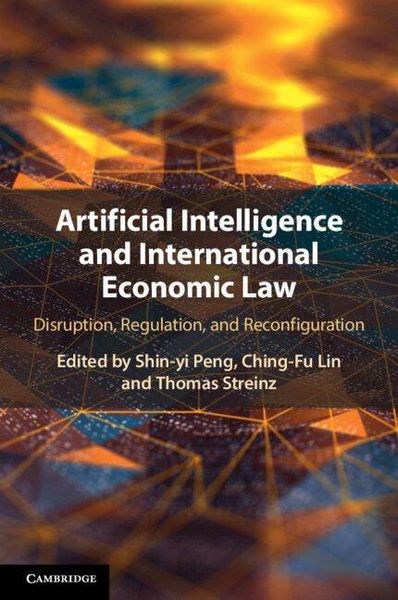
  • Produktbild: Artificial Intelligence and International Economic Law
  • Produktbild: Artificial Intelligence and International Economic Law

Artificial Intelligence and International Economic Law Disruption, Regulation, and Reconfiguration

48,99 €

inkl. gesetzl. MwSt., Versandkostenfrei


Beschreibung

Produktdetails

Einband

Taschenbuch

Erscheinungsdatum

18.04.2024

Herausgeber

Shin-Yi Peng + weitere

Verlag

Cambridge Academic

Seitenzahl

366

Maße (L/B/H)

22,9/15,2/2 cm

Gewicht

532 g

Sprache

Englisch

ISBN

978-1-108-94906-4

Beschreibung

Produktdetails

Einband

Taschenbuch

Erscheinungsdatum

18.04.2024

Herausgeber

Verlag

Cambridge Academic

Seitenzahl

366

Maße (L/B/H)

22,9/15,2/2 cm

Gewicht

532 g

Sprache

Englisch

ISBN

978-1-108-94906-4

Noch keine Bewertungen vorhanden

Verfassen Sie die erste Bewertung zu diesem Artikel

Helfen Sie anderen Kundinnen und Kunden durch Ihre Meinung.

Kundinnen und Kunden meinen

Bewertungen (0)

Die Leseprobe wird geladen.
  • Produktbild: Artificial Intelligence and International Economic Law
  • Produktbild: Artificial Intelligence and International Economic Law
  • Preface; 1. Artificial intelligence and international economic law: disruption, regulation, and reconfiguration Shin-Yi Peng, Ching-Fu Lin and Thomas Streinz; Part I. Systemic Shifts in the Global Economic Order: 2. Trade law in a data-driven economy: a call for modesty and resilience Gregory Shaffer; 3. Global law in the face of datafication and artificial intelligence Rolf H. Weber; 4. Trading AI: economic interests, societal choices and multilateral rules Dan Ciuriak and Vlada Rodionova; Part II. Reconceptualizing WTO Law for the Ai Economy: 5. Trade rules for industry 4.0: why the TBT agreement matters even more Aik Hoe Lim; 6. Autonomous vehicle standards under the TBT agreement: disrupting the boundaries? Shin-Yi Peng; 7. Convergence, complexity and uncertainty: AI and intellectual property protection Bryan Mercurio and Ronald Yu; 8. Are digital trade disputes 'trade disputes'? Yuka Fukunaga; Part III. Data Regulation as AI Regulation: 9. International economic law's regulation of data as a resource for the AI economy Thomas Streinz; 10. Data protection and artificial intelligence: the EU's internal approach and its promotion through trade agreements Alan Hervé; 11. Data portability in a data-driven world Frederike Zufall and Raphael Zingg; Part IV. International Economic Law Limits to AI Regulation: 12. Public moral, trade secret, and the dilemma of regulating driving automation systems Ching-Fu Lin; 13. International trade law and the data ethics: possibilities and challenges Neha Mishra; 14. Disciplining artificial intelligence policies: WTO law as a sword and a shield Kelly K. Shang and Rachel R. Du; V. Reconfiguration of International Economic Law: 15. Across the great wall: e-commerce joint statement initiative negotiation and China Henry Gao; 16. The next great global knowledge infrastructure land rush has begun: will the US or China prevail? Jane K. Winn and Yi-Shyuan Chiang; 17. Trade law architecture after the fourth industrial revolution Lisa Toohey.