
KI-Beratung Beta

Gutscheinbedingungen

**Gültig bis 30.11.2026 auf Spielzeug, Schreibwaren, Filme, Geschenke & Trends, Musik, tolino eReader & Zubehör, Hörbücher und Hörbuch-Downloads, nicht preisgebundene Bücher und Kalender online auf thalia.at und in der Thalia App. Einzelne Artikel können ausgeschlossen sein. Aufgrund der Buchpreisbindung sind deutschsprachige Bücher und eBooks ausgenommen. Zusätzlich ausgenommen sind Abos & Flatrates, Games, Geschenkkarten/-boxen, Shelfies, Software, Zeitschriften sowie einzelne Artikel von tonies®. Pro Einkauf einmal einlösbar. Nur gültig mit im Onlineshop hinterlegter Bonuscard. Click & Collect nur bei Onlinevorabzahlung möglich. Keine Barauszahlung. Nicht kombinierbar mit anderen Aktionen und Gutscheinen. Gutschein wird auf max. 500€ Bestellwert angerechnet. Nicht gültig für Versandkosten und Services.

  • Produktbild: East Asian Ethical Life and Socio-Economic Transformation in the Twenty-First Century
  • Produktbild: East Asian Ethical Life and Socio-Economic Transformation in the Twenty-First Century

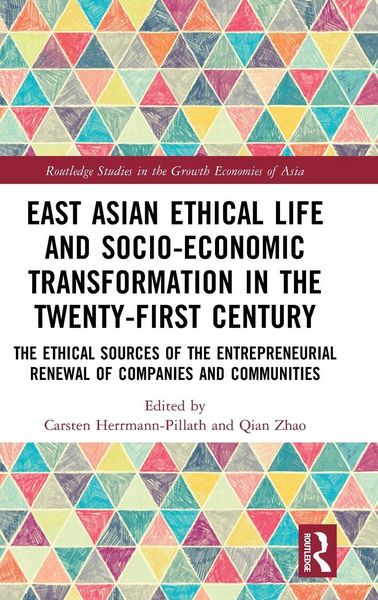
East Asian Ethical Life and Socio-Economic Transformation in the Twenty-First Century The Ethical Sources of the Entrepreneurial Renewal of Companies and Communities

229,99 €

inkl. gesetzl. MwSt., Versandkostenfrei


Beschreibung

This book considers ethical culture in East Asia, examines the impact it has had on economic and social transformation, and explores what effect it might have on solving current problems. It views the ethical culture of East Asia, that is, the beliefs, values, and practices that define East Asian societies'...

Beschreibung

This book considers ethical culture in East Asia, examines the impact it has had on economic and social transformation, and explores what effect it might have on solving current problems. It views the ethical culture of East Asia, that is, the beliefs, values, and practices that define East Asian societies' conceptions of ethics in everyday life, as different from what pertains in the West, with more emphasis in East Asia on respect for ancestors, concern about propriety of behaviour, and notions of community. The book discusses how these particular East Asian values are being applied, for example, in family businesses, and how they might further be applied to solve current crucial challenges for humanity, such as climate change, ageing, and persistent inequality, challenges that are not being solved by an exclusive focus on economic growth alone. The book includes a consideration of ethical innovation, for example, distinct forms of ecological ethics enshrined in newly emerging economic organizations, such as social entrepreneurship.

Produktdetails

Einband

Gebundene Ausgabe

Erscheinungsdatum

25.06.2024

Abbildungen

9 SW-Abb., 9 SW-Zeichn., 6 Tabellen

Herausgeber Carsten Herrmann-Pillath + weitere

Produktdetails

Einband

Gebundene Ausgabe

Erscheinungsdatum

25.06.2024

Abbildungen

9 SW-Abb., 9 SW-Zeichn., 6 Tabellen

Herausgeber
Verlag Taylor & Francis
Seitenzahl

286

Maße (L/B/H)

24/16,1/2 cm

Gewicht

546 g

Sprache

Englisch

ISBN

978-1-03-248498-3

Herstelleradresse

Libri GmbH
Europaallee 1
36244 Bad Hersfeld
DE

Email: gpsr@libri.de

Noch keine Bewertungen vorhanden

Verfassen Sie die erste Bewertung zu diesem Artikel

Helfen Sie anderen Kundinnen und Kunden durch Ihre Meinung.

Kundinnen und Kunden meinen

Bewertungen (0)

Die Leseprobe wird geladen.
  • Produktbild: East Asian Ethical Life and Socio-Economic Transformation in the Twenty-First Century
  • Produktbild: East Asian Ethical Life and Socio-Economic Transformation in the Twenty-First Century
  • Foreword

    List of Figures

    List of Tables

    1. Introduction (Carsten Herrmann-Pillath and Qian Zhao)

    Part 1: Intellectual and spiritual sources of ethical life in East Asia

    2. IE-MURA-SEKEN and Japanese ethical life in the Tokugawa economy (Kiichiro Yagi)

    3. Spiritual origins of ethical life in China's Late Imperial market society: A relational moral universe (Qian Zhao)

    4. Ethical life, merchants and the state in Korean society during the Joseon dynasty (Eun-Jeung Lee)

    Part 2: Religion, traditional values and ethical life in the economy

    5. Cultural entrepreneurship and cooperative enterprises as sustainable and responsible businesses in South Korea (Seungkwon Jang)

    6. Re-integration of ethics and economy: Shrines, community, and social entrepreneurship in Japan (Yoshinori Hiroi and Sigrun Caspary)

    7. Shareholding cooperatives in Shenzhen and the revival of 'filial piety' as a core value of Chinese ethical life (Jing Cheng, Carsten Herrmann-Pillath, Ling Li and Man Guo)

    Part 3: Community, resilience, and ecology as settings of ethical entrepreneurship

    8. Corporate Social Entrepreneurship in times of crisis: Giving back to community in Japan (Masaatsu Doi)

    9. Public-minded ethical life of family businesses in Japan and the management of natural resource commons (Toshio Goto)

    10. Social Enterprises and the Ecological Revival of Rural Communities in China (Tiejun Wen)

    Part 4: Corporate Social responsibility, Government and ethical life in business

    11. Corporate Social Responsibility and ethical life of Chinese family business (Xingyuan Feng)

    12. Investment, Sustainability Reporting and Evolving Ethical Influences in the Shaping of Social Responsibility: Evidence from South Korea (Hannah Jun)

    13. Demographic decline and migrant workers in Taiwan: Social entrepreneurship enacting cultural change (Chun-Hsiao Wang)

    Epilogue - Cultural Entrepreneurship in East Asia and the West: A practitioner's perspective (Peter Heller)

    Index