Beschreibung
Produktdetails
Format
ePUB
Kopierschutz
Ja
Family Sharing
Nein
Text-to-Speech
Ja
Erscheinungsdatum
21.12.2023
Herausgeber
Álvaro López-López + weitereVerlag
Bonnier Books UKSeitenzahl
(Printausgabe)
Dateigröße
11070 KB
Sprache
Englisch
EAN
9781800623309
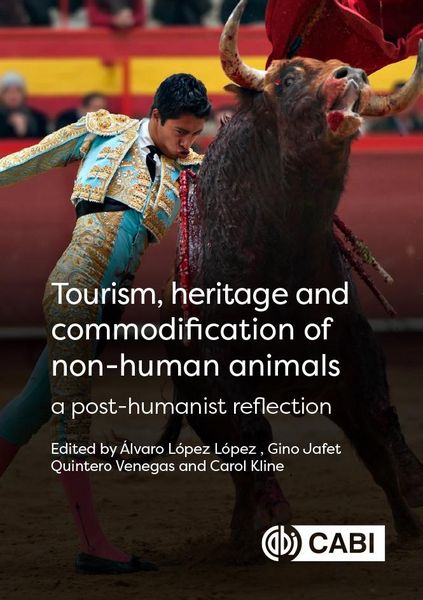
Heritage is a social construction rooted in modern and contemporary societies. It is commonly a positive assessment of many elements of the physical and human environment (e.g. ecosystems and landscapes, monuments, customs, gender norms, religious practices, gastronomy, and livelihoods). Heritage and tourism are strongly related to each other in that heritage gives rise to tourist attractions and activities, and tourism enhances the designation of heritage sites.
Non-human animals (hereafter 'animals') are present as implicit or explicit heritage elements through multiple tourist environments: animals may be themselves the heritage focus of tourist interest (visual arts, gastronomy, as charismatic and distinguished beings, as part of festivities or rituals), or it may be that animals are agents involved in heritage tourist environments such as working animals or in recreational activities.
A post-humanist perspective the moral valuation of equality between humans and other animals demands that both are sentient beings and self-aware of their pain and pleasure. Thus, the involvement of animals as heritage elements by themselves or as an element of tourist consumption in heritage sites implies their commodification and lack of agency. As such, these practices are usually unethical, since they threaten the animals' primary interests: not to suffer, not to feel pain and to be able to live their freedom.
This book contains chapters that reveal both the unethical interactions between humans and animals within heritage tourism, and those that show experiences in which efforts are made to minimize damage within the commercialization of animals involved as heritage themselves.
It will be of interest to postgraduate students, academics, NGOs and tourism planners.
Non-human animals (hereafter 'animals') are present as implicit or explicit heritage elements through multiple tourist environments: animals may be themselves the heritage focus of tourist interest (visual arts, gastronomy, as charismatic and distinguished beings, as part of festivities or rituals), or it may be that animals are agents involved in heritage tourist environments such as working animals or in recreational activities.
A post-humanist perspective the moral valuation of equality between humans and other animals demands that both are sentient beings and self-aware of their pain and pleasure. Thus, the involvement of animals as heritage elements by themselves or as an element of tourist consumption in heritage sites implies their commodification and lack of agency. As such, these practices are usually unethical, since they threaten the animals' primary interests: not to suffer, not to feel pain and to be able to live their freedom.
This book contains chapters that reveal both the unethical interactions between humans and animals within heritage tourism, and those that show experiences in which efforts are made to minimize damage within the commercialization of animals involved as heritage themselves.
It will be of interest to postgraduate students, academics, NGOs and tourism planners.
Noch keine Bewertungen vorhanden
Verfassen Sie die erste Bewertung zu diesem Artikel
Helfen Sie anderen Kundinnen und Kunden durch Ihre Meinung.
Kurze Frage zu unserer Seite
Vielen Dank für Ihr Feedback
Wir nutzen Ihr Feedback, um unsere Produktseiten zu verbessern. Bitte haben Sie Verständnis, dass wir Ihnen keine Rückmeldung geben können. Falls Sie Kontakt mit uns aufnehmen möchten, können Sie sich aber gerne an unseren Kund*innenservice wenden.
zum Kundenservice