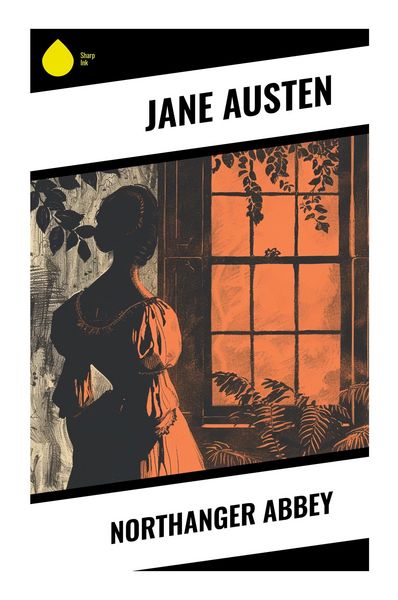
In 'Northanger Abbey,' Jane Austen crafts a witty satire of the Gothic novel genre, intertwining romance and social commentary within the narrative structure of a coming-of-age tale. The story follows Catherine Morland, a naive yet spirited young woman who, in her pursuit of adventure and love, encounters the fictional grandeur of Northanger Abbey. Through Austen's sharp irony and playful prose, the novel explores themes of imagination versus reality, and the follies of youth, reflecting the societal norms of early 19th-century England, particularly regarding women's roles and expectations. Jane Austen, born in 1775, was a keen observer of human behavior and social dynamics, which deeply influenced her writing. Her experiences in the genteel society of Hampshire and her passion for literature offered her a unique perspective, particularly as 'Northanger Abbey' was initially conceived as early as 1798. The novel, which was only posthumously published in 1817, illustrates her ability to merge her literary influences-from Gothic literature to classic romanticism-while laying bare the absurdities of social conventions in a rapidly changing world. 'Northanger Abbey' is recommended for readers seeking a delightful blend of humor, romance, and social critique. Austen's incisive observations and vivid characterizations invite readers to engage with the narrative's deeper meanings, making it an essential read for those interested in both the evolution of the novel as a form and the complexities of human relationships.
Kundinnen und Kunden meinen
3.0/5.0
2 Bewertungen
5 Sterne
(1)
4 Sterne
(0)
3 Sterne
(0)
2 Sterne
(0)
1 Sterne
(1)
Die siebzehnjährige Catherine…
Callisto am 18.07.2011
Bewertungsnummer: 2986117
Bewertet: Buch (Taschenbuch)
Die siebzehnjährige Catherine Morland stellt sich zusammen mit ihren ihren Nachbarn, den Allans, den Gefahren von 6 Wochen im Kurbad Bath. 6 Wochen Einkaufen, 6 Wochen Bälle und 6 Wochen gesellschaftliche Intrigen und Fallstricke. Die ersten gesellschaftlichen Gehversuche des Teenager erweisen sich als eher schwierig und geprägt von Unsicherheiten. Schon bald jedoch schlicht Catherine Freundschaft mit der etwas älteren und deutlich erfahreneren Isabella Thorpe und dem vierundzwanzig Jahre alten Pfarrer Henry Tilney. Wie es der Zufall will kennen Miss Thorpes und Miss Tilneys Brüder sich und natürlich interessiert sich Catherines Bruder James bald für Miss Thorpe und Isabella versucht Catherine mit ihrem Bruder zu verkuppeln, Catherine hingegen will nur einen: Henry. OK, klingt jetzt nicht so wirklich prickelnd und man fragt sich schon, warum ist diese Geschichte ein Schauerroman bzw. eine Satire. Diese Geschichte ist eigentlich nur Staffage, der Hintergrund für Jane Austens bissige, treffende und mit gewetzter Feder geschriebene Abrechnung mit 1. dem Gesellschaftsromanen ihrer Zeit: Gleich im ersten Kapitel werden alle gängigen Klischees des Genre mit Füßen getreten, durch den Kakao gezogen und dann noch mal rund gemacht. "- what is more remarkable, with a good constitution. She had three sons before Catherine was born; and instead of dying in bringing the latter into the world, as anybody might expect, she still lived on - lived to have six children more - to see them growing up around her, and to enjoy excellent health herself." Ihre Heldin ist eine klassische Antiheldin: "the Morlands had little other right to the word, for they were in general very plain, and Catherine, for many years of her life, as plain as any. She had a thin awkward figure, a sallow skin without colour, dark lank hair, and strong features - so much for her person; and not less unpropitious for heroism seemed her mind. She was fond of all boy's plays,[...]" 2. den Vorurteilen der Männer über Frauen und der Vorurteile der Frauen über die Männer. "no one can think more highly of the understanding of women than I do. In my opinion, nature has given them so much that they never find it necessary to use more than half." "A woman especially, if she have the misfortune of knowing anything, should conceal it as well as she can." 3. mit dem Schauerromanen ihrer Zeit. The Castle of Wolfenbach, Clermont, The Mysterious Warning, The Necromancer, The Midnight Bell, The Orphan of the Rhine, Horrid Mysteries und natürlich The Mysteries of Udolpho Und was die Titel angeht, die könnten aus dem Lyx Verlag stammen. So reißerisch und nichtssagend sind sie auch heute noch. "To suppose that a manuscript of many generations back could have remained undiscovered in a room such as that, so modern, so habitable!" Sie schreckt sogar nicht vor prangern mit Namensnennung von Kolleginen nicht zurück! "Charming as were all Mrs. Radcliffe's works, and charming even as were the works of all her imitators, it was not in them perhaps that human nature, at least in the Midland counties of England, was to be looked for." 4. Austens Sprache ist undamenhaft: "Oh! D-- it," Heutzutage würde Miss Austen wohl schreiben f*, that's f* brilliant. Und sie verwendet das böse d Wort mindestens genauso häufig, wie wir heutzutage das f Wort Austen schrieb den Roman mit Anfang 20. Sie war von der gängigen Literatur wohl ziemlich angegrätzt, heutzutage hätte sie wohl Satiren auf die Vampirhysterie geschrieben mit spitzer Feder und viel Sarkasmus. Northanger Abbey wurde 1797-98 unter anderem Titel geschrieben und um 1803 noch einmal überarbeitet und an den Verlag Crosbie & Co. verkauft, der es 1816 an die Familie zurück verkaufte, die es 1818 posthum beim Verlag John Murray veröffentlichte.
Awful voice
Bewertung aus Berlin am 26.05.2021
Bewertungsnummer: 1202404
Bewertet: Hörbuch-Download
I love Northhanger Abbey, but the man reading this audiobook is boring and shows no expression in his voice whatsoever.
I couldn't finish it.
Instead of buying the audiobook, buy a paperback copy instead, it will be much more enjoyable!
Kurze Frage zu unserer Seite
Vielen Dank für Ihr Feedback
Wir nutzen Ihr Feedback, um unsere Produktseiten zu verbessern. Bitte haben Sie Verständnis, dass wir Ihnen keine Rückmeldung geben können. Falls Sie Kontakt mit uns aufnehmen möchten, können Sie sich aber gerne an unseren Kund*innenservice wenden.