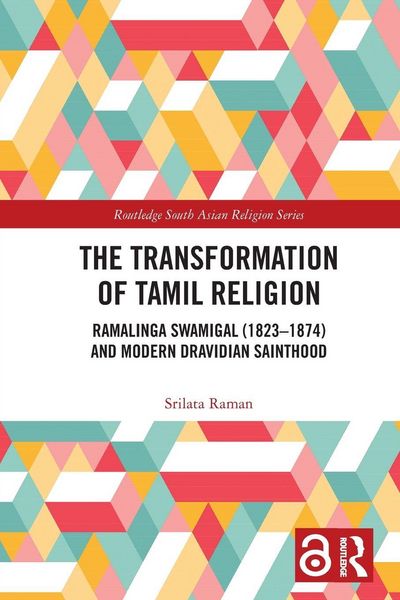
The Transformation of Tamil Religion Ramalinga Swamigal (1823-1874) and Modern Dravidian Sainthood
-
- Hardcover
- Taschenbuch ausgewählt
- eBook
-
Sprache:Englisch
59,99 €
inkl. gesetzl. MwSt.,
Beschreibung
Produktdetails
Einband
Taschenbuch
Erscheinungsdatum
29.01.2024
Verlag
Taylor & FrancisSeitenzahl
360
Maße (L/B/H)
23,4/15,6/1,9 cm
Gewicht
547 g
Sprache
Englisch
ISBN
978-1-03-221034-6
This book analyses the religious ideology of a Tamil reformer and saint, Ramalinga Swamigal of the 19th century and his posthumous reception in the Tamil country and sheds light on the transformation of Tamil religion that both his works and the understanding of him brought about.
The book traces the hagiographical and biographical process by which Ramalinga Swamigal is shifted from being considered an exemplary poet-saint of the Tamil Saivite bhakti tradition to a Dravidian nationalist social reformer. Taking as a starting point Ramalinga's own writing, the book presents him as inhabiting a border zone between early modernity and modernity, between Hinduism and Christianity, between colonialism and regional nationalism, highlighting the influence of his teachings on politics, particularly within Dravidian cultural and political nationalism. Simultaneously, the book considers the implication of such an hagiographical process for the transformation of Tamil religion in the period between the 19th -mid-20th centuries. The author demonstrates that Ramalinga Swamigal's ideology of compassion, civakarunyam, had not only a long genealogy in pre-modern Tamil Saivism but also that it functioned as a potentially emancipatory ethics of salvation and caste critique not just for him but also for other Tamil and Dalit intellectuals of the 19th century.
This book is a path-breaking study that also traces the common grounds between the religious visions of two of the most prominent subaltern figures of Tamil modernity - Iyothee Thass and Ramalingar. It argues that these transformations are one meaningful way for a religious tradition to cope with and come to terms with the implications of historicization and the demands of colonial modernity. It is, therefore, a valuable contribution to the field of religion, South Asian history and literature and Subaltern studies.
Noch keine Bewertungen vorhanden
Verfassen Sie die erste Bewertung zu diesem Artikel
Helfen Sie anderen Kundinnen und Kunden durch Ihre Meinung.
Kurze Frage zu unserer Seite
Vielen Dank für Ihr Feedback
Wir nutzen Ihr Feedback, um unsere Produktseiten zu verbessern. Bitte haben Sie Verständnis, dass wir Ihnen keine Rückmeldung geben können. Falls Sie Kontakt mit uns aufnehmen möchten, können Sie sich aber gerne an unseren Kund*innenservice wenden.
zum Kundenservice