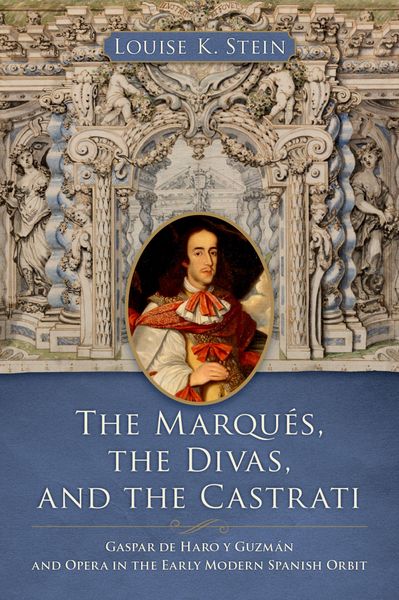
The Marqués, the Divas, and the Castrati Gaspar de Haro Y Guzmán and Opera in the Early Modern Spanish Orbit
155,99 €
inkl. gesetzl. MwSt.,
Beschreibung
Produktdetails
Einband
Gebundene Ausgabe
Erscheinungsdatum
28.06.2024
Abbildungen
83 music examples, 46 figures, 13 tables
Verlag
Oxford University PressSeitenzahl
792
Maße (L/B/H)
22,9/15,5/3,6 cm
Gewicht
1111 g
Sprache
Englisch
ISBN
978-0-19-768184-8
This is an open access title available under the terms of a CC BY-NC-ND 4.0 International licence. It is free to read on the Oxford Academic platform and offered as a free PDF download from OUP and selected open access locations. During a crucial period in opera's development as a genre and as a business, the flamboyantly libertine Spanish aristocrat Gaspar de Haro y Guzmán (1629-87), Marqués de Heliche and del Carpio, influenced operatic practices and productions for both Italian and Hispanic operas. A voracious collector of books and antiquities and famed connoisseur of visual art, the marqués financed operas in both Spain and Italy and further shaped them through his ideas, energy, and politics. His legacy also brought forth the first operas of the Americas, as posthumous revivals of the operatic genres he nurtured appeared in the Americas less than fifteen years after his death. In this book, author Louise K. Stein follows the trajectory of this first operatic producer to have shaped opera in two different worlds-Europe and the Americas-and in doing so, advances our musical and historical understanding of seventeenth- and early eighteenth-century opera and cultural encounter. Each chapter focuses on different productions spearheaded by the Marqués in Madrid, Rome, and Naples during his lifetime, with the final chapter considering how his influence continued in operatic productions in Lima, Mexico City, and other regions of New Spain after his death. Alongside this portrait of the distinguish patron of the arts, Stein shows how conventions of musical dramaturgy for both private and commercial opera were developed within a consistent politics of production across the far-flung administrative centers of the Spanish empire in the years 1650-1730. She reveals the place of opera within the siglo de oro (Golden Age) of Hispanic theatre and delves deeply into how the Marqués became the principal patron of Alessandro Scarlatti in Italy after his time in Rome, sparking a reliable production system for Italian opera in Naples. Stein also addresses gendered performance-how beliefs about female fertility conditioned listeners and shaped the operatic genre-and advances the concept of the "womanly voice" in the first extant Hispanic operas, the Italian operas produced in Naples between 1683 and 1687, and the first operas of the Americas from 1701 to 1730.
Noch keine Bewertungen vorhanden
Verfassen Sie die erste Bewertung zu diesem Artikel
Helfen Sie anderen Kundinnen und Kunden durch Ihre Meinung.
Kurze Frage zu unserer Seite
Vielen Dank für Ihr Feedback
Wir nutzen Ihr Feedback, um unsere Produktseiten zu verbessern. Bitte haben Sie Verständnis, dass wir Ihnen keine Rückmeldung geben können. Falls Sie Kontakt mit uns aufnehmen möchten, können Sie sich aber gerne an unseren Kund*innenservice wenden.
zum Kundenservice