Beschreibung
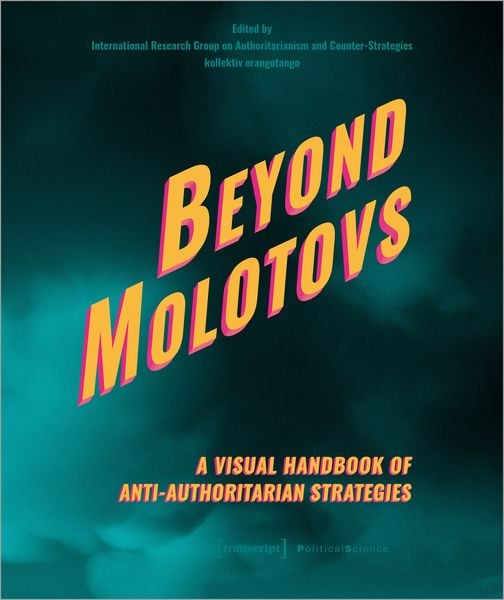
Authoritarianism operates on a visceral level rather than relying on arguments. How can we counter authoritarian affects? This publication brings together more than 50 first-hand accounts of anti-authoritarian movements, activists, artists, and scholars from around the world, focusing on the sensuous and emotional dimension of their strategies. From the collective art and aesthetics of feminist movements in India, Iran, Mexico, and Poland, to sewing collectives, subversive internet art in Hong Kong, and even anti-authoritarian board games, the contributions open new perspectives on moments of resistance, subversion, and creation. Indeed, the handbook itself is a work of anti-authoritarian art.The editors behind the »International Research Group on Authoritarianism and Counter-Strategies« and »kollektiv orangotango« are: Aurel Eschmann, Börries Nehe, Nico Baumgarten, Paul Schweizer, Severin Halder, Ailynn Torres Santana, Inés Duràn Matute, and Julieta Mira.
Rezension
»Das vielleicht wichtigste Handbuch unserer Zeit. Optisch ein echtes Meisterwerk. Noch viel wichtiger ist jedoch die Qualität des Inhaltes und auch die ist wirklich großartig.
»Gerade in einer Zeit, in der autoritäre Tendenzen weltweit zunehmen, ist dieses Buch von besonderer Relevanz. Dabei geht es nicht nur um direkten Widerstand, sondern auch um die Schaffung alternativer, emanzipatorischer Räume.« ("Yvonne de Andrés, Politik und Kultur, 12/1 (2024/25)")
»In einer Welt, in der öffentliche und digitale Räume immer wichtiger werden, zeigt » Beyond Molotovs«, wie diese Räume politische Kämpfe prägen.« ("Yvonne Andrés, Politik & Kultur, 1 (2025)")
»In jedem Fall erhält man eine große Bandbreite von Eindrücken aus globalen Kämpfen gegen autoritäre Tendenzen. Gleichzeitig vermitteln vor allem die einordnenden Texte den Eindruck der Gemeinsamkeit in der Vielfalt.
»Ein einzigartiges, widerständiges und visuell eindrucksvolles Buchprojekt.« ("prozukunft, 2 (2025)")
Besprochen in:Südlink, 211 (2025), Tobias Lambert
»Sämtliche Beiträge rütteln auf und verweigern den Lesenden einen Rückzug in die Apathie, in eine neoliberale Subjektposition, die lieber die Vorhänge zuzieht, als sie kollektiv zu besprühen, zu besticken oder zu bemalen. Dabei gelingt dem Band der Brückenschlag zwischen anti-autoritären Kämpfen und konzeptionellen Beiträgen, die sich einander dialogisch ergänzen und aufzeigen, wie wichtig ein kollektives und reflektiertes Zusammenkommen ist.« ("Katrin Singer, sub\urban, 13/1 (2025)")
»Perhaps the most important handbook of our time. Visually, it is a true masterpiece. Even more important, however, is the quality of the content, and that too is truly outstanding.
»Especially at a time when authoritarian tendencies are on the rise worldwide, this book is particularly relevant. It is not just about direct resistance, but also about creating alternative, emancipatory spaces.« (translated from German) ("Yvonne de Andrés, Politik und Kultur, 12/1 (2024/25)")
»In a world where public and digital spaces are becoming increasingly important, ‘Beyond Molotovs’ shows how these spaces shape political struggles.« (translated from German) ("Yvonne Andrés, Politik & Kultur, 1 (2025)")
Portrait
The International Research Group on Authoritarianism and Counter-Strategies (IRGAC) is an initiative of the Rosa-Luxemburg-Stiftung that brings together scholar-activists from across the Global South to research the authoritarian Right and strategic responses from the Left.
kollektiv orangotango is a circle of critical geographers and friends who have been in coevolution since the 2000s. As popular educators, they strive for a collective horizontal production of knowledge; as militant scholars, they link practical interventions and theoretical reflection. They place their work at the service of emancipatory processes in youth clubs and community gardens, in schools and autonomous social centers, on park benches and in lecture halls, in favelas and in rural communities.