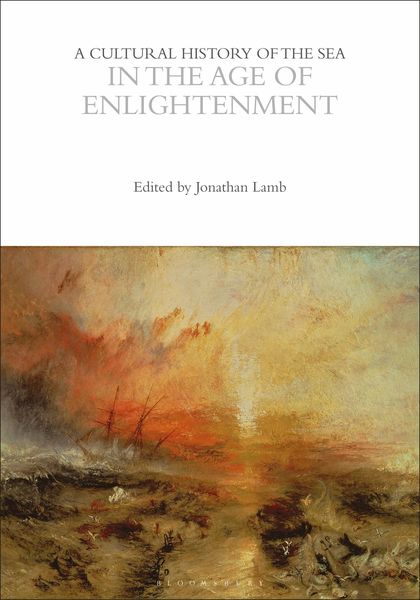
A Cultural History of the Sea in the Age of Enlightenment
-
- Englisch ausgewählt
45,99 €
inkl. gesetzl. MwSt.,
Beschreibung
Produktdetails
Einband
Taschenbuch
Erscheinungsdatum
19.09.2024
Herausgeber
Jonathan LambVerlag
Bloomsbury AcademicSeitenzahl
256
Maße (L/B/H)
24,4/16,9/2,5 cm
Gewicht
454 g
Sprache
Englisch
ISBN
978-1-350-45104-9
This volume covers a period when Europeans were making great advances in the production and application of pure knowledge, especially in the fields of navigation and discovery. Thus European powers gained empires around the globe and the benefits that came with them, while the rest of the world had to be content with supplying the raw material (i.e labour, bullion, wood, plants, ore) of these good things. This would not have been possible without navies and trading monopolies, enterprises in which the freedom of the seas was disputed, then gained or lost.
The essays in this volume range between three eras in the age of discovery: first, the excitement of seeing something for the first time; second, the experience of understanding the importance of the new thing; and third, the disillusion incident to reframing the prehistory of humanity and its destiny without the usual signposts of an anthropocentric journey from innocence to salvation via sin, atonement and judgment. The maritime contribution to all three eras was enormous not simply because it provided a mobile platform for the inspection of the new but because it proved experimentally that there were no extremes of heroic virtue or of brutal depravity to which humans might not tend when necessity or wantonness called for them. Usually the evil side of humanity was assigned to `savages’ but in the curiously singular person of the pirate, a mirror-image can be found of everyone – really, all people who lived on or by the sea were pirates of a sort.
Commencing as an age of rational certainties, the Enlightenment gave way to the opposite. The symmetries of the Linnaean system yielded to the endless process of mutation Buffon called speciation. Rational government of the passions was succeeded by the cult of sensibility and spontaneous emotion. The mathematical exactness of Cartesian knowledge was supplanted by imagination. Sailors returned with pictures of mirages never seen before, the products of Nature’s own imagination that posed a question posed again here: `No doubt they are real, but are they true?’
Noch keine Bewertungen vorhanden
Verfassen Sie die erste Bewertung zu diesem Artikel
Helfen Sie anderen Kundinnen und Kunden durch Ihre Meinung.
Kurze Frage zu unserer Seite
Vielen Dank für Ihr Feedback
Wir nutzen Ihr Feedback, um unsere Produktseiten zu verbessern. Bitte haben Sie Verständnis, dass wir Ihnen keine Rückmeldung geben können. Falls Sie Kontakt mit uns aufnehmen möchten, können Sie sich aber gerne an unseren Kund*innenservice wenden.
zum Kundenservice