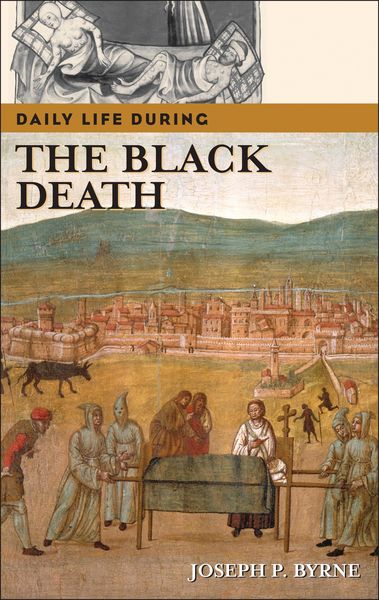
Daily Life during the Black Death
70,50 €
inkl. gesetzl. MwSt.Beschreibung
Produktdetails
Format
Kopierschutz
Ja
Family Sharing
Nein
Text-to-Speech
Nein
Altersempfehlung
ab 7 Jahr(e)
Erscheinungsdatum
30.08.2006
Verlag
Bloomsbury eBooks USSeitenzahl
340 (Printausgabe)
Dateigröße
7907 KB
Sprache
Englisch
EAN
9780313038549
Daily life during the Black Death was anything but normal. When plague hit a community, every aspect of life was turned upside down, from relations within families to its social, political, and economic stucture. Theaters emptied, graveyards filled, and the streets were ruled by the terrible corpse-bearers whose wagons of death rumbled day and night.
Daily life during the Black Death was anything but normal. During the three and a half centuries that constituted the Second Pandemic of Bubonic Plague, from 1348 to 1722, Europeans were regularly assaulted by epidemics that mowed them down like a reaper's scythe. When plague hit a community, every aspect of life was turned upside down, from relations within families to its social, political and economic structure. Theaters emptied, graveyards filled, and the streets were ruled by terrible corpse-bearers whose wagons of death rumbled night and day. Plague time elicited the most heroic and inhuman behavior imaginable. And yet Western Civilization survived to undergo the Renaissance, Reformation, Scientific Revolution, and early Enlightenment.
In Daily Life during the Black Death Joseph Byrne opens with an outline of the course of the Second Pandemic, the causes and nature of bubonic plague, and the recent revisionist view of what the Black Death really was. He presents the phenomenon of plague thematically by focusing on the places people lived and worked and confronted their horrors: the home, the church and cemetary, the village, the pest houses, the streets and roads. He leads readers to the medical school classroom where the false theories of plague were taught, through the careers of doctors who futiley treated victims, to the council chambers of city hall where civic leaders agonized over ways to prevent and then treat the pestilence. He discusses the medicines, prayers, literature, special clothing, art, burial practices, and crime that plague spawned. Byrne draws vivid examples from across both Europe and the period, and presents the words of witnesses and victims themselves wherever possible. He ends with a close discussion of the plague at Marseille (1720-22), the last major plague in northern Europe, and the research breakthroughs at the end of the nineteenth century that finally defeated bubonic plague.
Daily life during the Black Death was anything but normal. During the three and a half centuries that constituted the Second Pandemic of Bubonic Plague, from 1348 to 1722, Europeans were regularly assaulted by epidemics that mowed them down like a reaper's scythe. When plague hit a community, every aspect of life was turned upside down, from relations within families to its social, political and economic structure. Theaters emptied, graveyards filled, and the streets were ruled by terrible corpse-bearers whose wagons of death rumbled night and day. Plague time elicited the most heroic and inhuman behavior imaginable. And yet Western Civilization survived to undergo the Renaissance, Reformation, Scientific Revolution, and early Enlightenment.
In Daily Life during the Black Death Joseph Byrne opens with an outline of the course of the Second Pandemic, the causes and nature of bubonic plague, and the recent revisionist view of what the Black Death really was. He presents the phenomenon of plague thematically by focusing on the places people lived and worked and confronted their horrors: the home, the church and cemetary, the village, the pest houses, the streets and roads. He leads readers to the medical school classroom where the false theories of plague were taught, through the careers of doctors who futiley treated victims, to the council chambers of city hall where civic leaders agonized over ways to prevent and then treat the pestilence. He discusses the medicines, prayers, literature, special clothing, art, burial practices, and crime that plague spawned. Byrne draws vivid examples from across both Europe and the period, and presents the words of witnesses and victims themselves wherever possible. He ends with a close discussion of the plague at Marseille (1720-22), the last major plague in northern Europe, and the research breakthroughs at the end of the nineteenth century that finally defeated bubonic plague.
Noch keine Bewertungen vorhanden
Verfassen Sie die erste Bewertung zu diesem Artikel
Helfen Sie anderen Kundinnen und Kunden durch Ihre Meinung.
Kurze Frage zu unserer Seite
Vielen Dank für Ihr Feedback
Wir nutzen Ihr Feedback, um unsere Produktseiten zu verbessern. Bitte haben Sie Verständnis, dass wir Ihnen keine Rückmeldung geben können. Falls Sie Kontakt mit uns aufnehmen möchten, können Sie sich aber gerne an unseren Kund*innenservice wenden.
zum Kundenservice