Gutscheinbedingungen

**Gültig bis 25.06.2026 auf fremdsprachige Bücher online auf thalia.at und in der Thalia App. Einzelne Artikel können ausgeschlossen sein. Ausgenommen sind preisgebundene Artikel & eBooks. Pro Einkauf einmal einlösbar. Click & Collect nur bei Onlinevorabzahlung möglich. Keine Barauszahlung. Nicht kombinierbar mit anderen Aktionen und Gutscheinen. Gutschein wird auf max. 500€ Bestellwert angerechnet. Nicht gültig für Geschenkkarten, Versandkosten und Services.

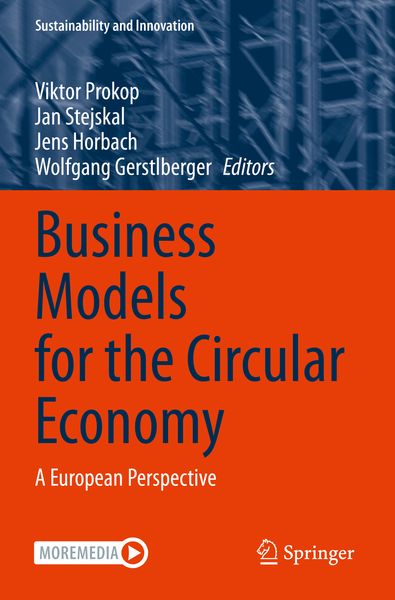
  • Produktbild: Business Models for the Circular Economy
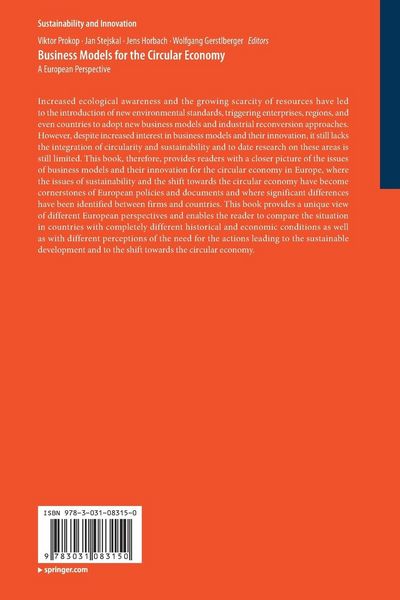
  • Produktbild: Business Models for the Circular Economy
- 13%

Business Models for the Circular Economy A European Perspective

13% sparen

104,99 € UVP 120,99 €

inkl. gesetzl. MwSt., Versandkostenfrei


Beschreibung

Produktdetails

Einband

Taschenbuch

Erscheinungsdatum

18.10.2023

Herausgeber

Viktor Prokop + weitere

Verlag

Springer

Seitenzahl

269

Maße (L/B/H)

23,5/15,5/1,6 cm

Gewicht

429 g

Auflage

1st ed. 2022

Sprache

Englisch

ISBN

978-3-031-08315-0

Beschreibung

Portrait

Viktor Prokop is deputy head of the Science and Research Centre at the Faculty of Economics and Administration at the University of Pardubice (Czech Republic). His research interests are innovation ecosystems and (eco) innovation and its determinants. His work has been published in journals such as Technological Forecasting and Social Change or Journal of Cleaner Production.

Jan Stejskal is Professor of Public and Regional Economics in the Faculty of Economics and Administration at the University of Pardubice (Czech Republic). He focuses on public policies aimed at increasing the resilience, sustainability, and performance of innovation ecosystems and regional actors that cooperate. He has published in journals such as Technological Forecasting and Social Change or Corporate Social Responsibility and Environmental Management.

Jens Horbach is Professor of Economics at the University of Applied Sciences Augsburg (Germany). He holds a PhD from Friedrich-Alexander University in Nuremberg (Germany). Prof. Horbach's current research interests focus on the empirical analysis of the determinants and effects of environmental innovations. He has published in major journals such as Research Policy or Ecological Economics.

Wolfgang Gerstlberger is Professor of Operations Management at Tallinn University of Technology (Estonia) since 2019. He received his PhD and habilitation in general management from Kassel University (Germany). His research interests are sustainability and digital transformation, and his work has been published in journals like the Journal of Cleaner Production and Energy Policy.

Produktdetails

Einband

Taschenbuch

Erscheinungsdatum

18.10.2023

Herausgeber

Verlag

Springer

Seitenzahl

269

Maße (L/B/H)

23,5/15,5/1,6 cm

Gewicht

429 g

Auflage

1st ed. 2022

Sprache

Englisch

ISBN

978-3-031-08315-0

Herstelleradresse

Springer-Verlag KG
Sachsenplatz 4-6
1201 Wien
AT

Email: ProductSafety@springernature.com

Kundinnen und Kunden meinen

0 Bewertungen

Informationen zu Bewertungen

Zur Abgabe einer Bewertung ist eine Anmeldung im Konto notwendig. Die Authentizität der Bewertungen wird von uns nicht überprüft. Wir behalten uns vor, Bewertungstexte, die unseren Richtlinien widersprechen, entsprechend zu kürzen oder zu löschen.

Die Bewertungen sind nach Format, Anzahl Sterne und Datum sortiert.

Verfassen Sie die erste Bewertung zu diesem Artikel

Helfen Sie anderen Kund*innen durch Ihre Meinung

Kundinnen und Kunden meinen

0 Bewertungen filtern

  • Produktbild: Business Models for the Circular Economy
  • Produktbild: Business Models for the Circular Economy
  • Business Models for the Circular Economy: A European Perspective: Aim of the Book and Overview of the Different Chapters.- Part I: State of the Art and Major Trends.- Business models for Circular Economy: A Literature Review with Bibliometric and Topic Analysis.- Sustainable circular business models: the circular economy needs responsibility and purpose to fulfil its promises.- Lean Startup and Sustainable Business Model Innovation: A Review of the Customer Development Process.- Part II: Southwest European Perspective.- The implementation of emerging clean technologies and circular value chains: Challenges from three cases of by-product valorisation.- Building Circular Innovation Ecosystem in Industrial port territories. The case of Dunkirk, France.- Circular Economy and Business Model Innovation: The key elements for a sustainable transition in Spain Circular Economy 2030.- Part III: Central and Northeast European Perspective.- Green tech for green growth? Insights from Nordic environmental innovation.- Fiscal Incentives for Circular Economy: Insights from the Baltic States.- Do environmental regulations stimulate firms’ R&D, product innovation, or environmental awareness? Putting Porter’s hypothesis in the context of Central and Eastern European countries.