KI-Beratung Beta

Gutscheinbedingungen

**Gültig am 25.11.2026 auf fremdsprachige Bücher online auf thalia.at und in der Thalia App. Einzelne Artikel können ausgeschlossen sein. Ausgenommen sind preisgebundene Artikel & eBooks. Pro Einkauf einmal einlösbar. Click & Collect nur bei Onlinevorabzahlung möglich. Keine Barauszahlung. Nicht kombinierbar mit anderen Aktionen und Gutscheinen. Gutschein wird auf max. 500€ Bestellwert angerechnet. Nicht gültig für Geschenkkarten, Versandkosten und Services.

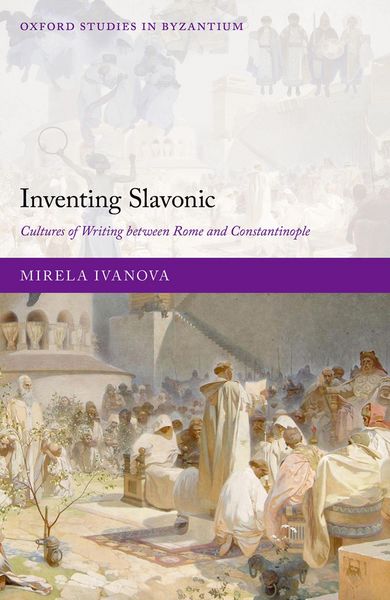
Produktbild: Inventing Slavonic

Inventing Slavonic Cultures of Writing Between Rome and Constantinople

158,99 €

inkl. gesetzl. MwSt., Versandkostenfrei


Beschreibung

Few alphabets in the world are actively celebrated, and none more so than the Slavonic. Annually across Eastern Europe, the alphabet and its inventors, Cyril and Methodios, are celebrated with parades, concerts, liturgical services, and public addresses by presidents, ministers, and mayors. Inventing...

Beschreibung

Few alphabets in the world are actively celebrated, and none more so than the Slavonic. Annually across Eastern Europe, the alphabet and its inventors, Cyril and Methodios, are celebrated with parades, concerts, liturgical services, and public addresses by presidents, ministers, and mayors. Inventing Slavonic: Cultures of Writing Between Rome and Constantinople offers a new reading of the invention of the Slavonic alphabet and its implications. Its premise is simple: namely, that the alphabet was not invented once, but that it continued to be contested and redefined in the century after its creation. However, Inventing Slavonic goes against the grain of modern scholarship and popular common sense, where a stable and fossilized story about Cyril, his brother and companion Methodios, and the alphabet still persists. Mirela Ivanova shows that this well-known story is, in fact, a Frankenstein's monster, bolted together from texts which originally attributed quite different and often conflicting meanings to the elements which make up this supposedly unified narrative. In this narrative's place, the book offers a series of new readings of our earliest sources for the alphabet's appearance. In doing so, it constructs a new social history of the early script's fragility, and the ways in which its existence was conditioned by changes in socio-political life between Rome and Constantinople.

Produktdetails

Einband

Gebundene Ausgabe

Erscheinungsdatum

08.05.2024

Abbildungen

6 black and white illustrations and 1 map

Verlag Oxford Academic

Produktdetails

Einband

Gebundene Ausgabe

Erscheinungsdatum

08.05.2024

Abbildungen

6 black and white illustrations and 1 map

Verlag Oxford Academic
Seitenzahl

296

Maße (L/B/H)

22,6/14,7/2,3 cm

Gewicht

635 g

Sprache

Englisch

ISBN

978-0-19-889150-5

Herstelleradresse

Libri GmbH
Europaallee 1
36244 Bad Hersfeld
DE

Email: gpsr@libri.de

Noch keine Bewertungen vorhanden

Verfassen Sie die erste Bewertung zu diesem Artikel

Helfen Sie anderen Kundinnen und Kunden durch Ihre Meinung.

Kundinnen und Kunden meinen

Bewertungen (0)

Die Leseprobe wird geladen.
  • Produktbild: Inventing Slavonic
    • Acknowledgements
    • Note on Transliteration
    • Abbreviations
    • List of Figures
    • Map
    • Introduction
    • Part One: Inventing Slavonic
    • 1: Constantine-Cyril Today: A Critical Assessment
    • 2: The Life of Constantine-Cyril: A New Reading
    • 3: Learned Saints between Rome and Constantinople: The VC in Context
    • Part Two: Institutionalising Slavonic
    • 4: The Myth of Cyril and Methodios Revisited
    • 5: Cyril, Slavonic, and the Pope in the Life of Methodios
    • 6: Popes, Bishops, and Emperors between Rome and Constantinople
    • Part Three: Defending Slavonic
    • 7: Where Not to Start: Slavonic in Balkan History
    • 8: A Case for Slavonic: The Earliest Defence of the Alphabet
    • 9: Slavonic and Greek Bookmen in the Tenth-Century Balkans
    • Conclusions
    • Bibliography
    • Index