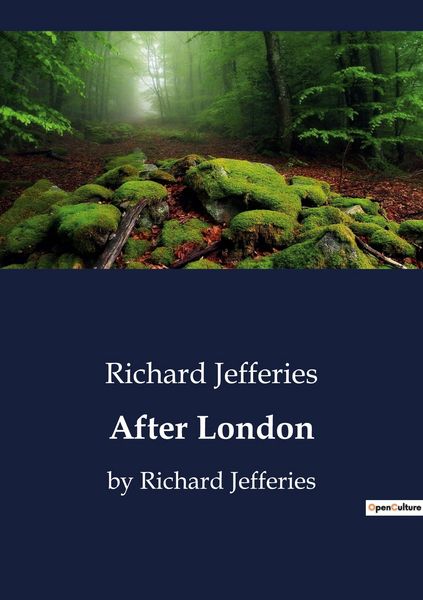
After London The transition of England: A Post-Apocalyptic Exploration
-
- Hardcover
- Taschenbuch ausgewählt
- eBook
-
Sprache:Englisch
-
Verlag:Culturea
- EHV Academicpress 23,60 €
- Outlook 24,90 €
- Alpha Editions 26,99 €
- Leseklassiker 21,50 €
- Tredition 15,40 €
- Sharp Ink 11,30 €
- Bibliotech Pr 22,99 €
- Book Jungle 26,99 €
- Les prairies numériques 29,99 €
- Culturea 19,99 € ausgewählt
- Creative Media Partners, LLC 24,99 €
- FV éditions 23,99 €
- Pantianos Classics 14,99 €
- Europäischer Literaturverlag 24,60 €
- BoD - Books on Demand 28,30 €
- Dogma Verlag 23,60 €
- E-artnow 15,99 €
- Double 9 Books 28,99 €
-
Auflage:1. Tirage
- 1. Tirage 19,99 € ausgewählt
- 1. Tirage 22,99 €
19,99 €
inkl. gesetzl. MwSt.,
- Kostenlose Lieferung ab 30 € Einkaufswert
- Versandkostenfrei für Bonuscard-Kund*innen
Beschreibung
Produktdetails
Einband
Taschenbuch
Erscheinungsdatum
03.03.2023
Verlag
CultureaSeitenzahl
294
Maße (L/B/H)
21/14,8/1,7 cm
Gewicht
383 g
Auflage
1. Tirage
Sprache
Englisch
ISBN
979-10-418-0031-5
"After London; Or, Wild England" by Richard Jefferies is a post-apocalyptic novel that envisions a future where England has reverted to a state of wilderness and barbarism following an unspecified catastrophe. The narrative is divided into two parts: "The Relapse into Barbarism" and "Wild England." In the first part, Jefferies describes the transformation of the English landscape as nature reclaims the land. Fields become overgrown with forests, and wild animals, including feral cats, dogs, and cattle, roam freely. The second part focuses on the human societies that emerge in this new world. The remnants of civilization are scattered into small, isolated communities, each with its own governance and struggles. The novel explores the dynamics between different groups, including the Bushmen, who live primitively in the woods, and the Romany, who maintain a nomadic lifestyle. The narrative also delves into the conflicts between these groups and the more organized societies that have formed around the central lake. Jefferies uses this setting to reflect on themes of civilization, nature, and the cyclical nature of history, suggesting that human progress is fragile and can easily be undone.
Noch keine Bewertungen vorhanden
Verfassen Sie die erste Bewertung zu diesem Artikel
Helfen Sie anderen Kundinnen und Kunden durch Ihre Meinung.
Kurze Frage zu unserer Seite
Vielen Dank für Ihr Feedback
Wir nutzen Ihr Feedback, um unsere Produktseiten zu verbessern. Bitte haben Sie Verständnis, dass wir Ihnen keine Rückmeldung geben können. Falls Sie Kontakt mit uns aufnehmen möchten, können Sie sich aber gerne an unseren Kund*innenservice wenden.
zum Kundenservice