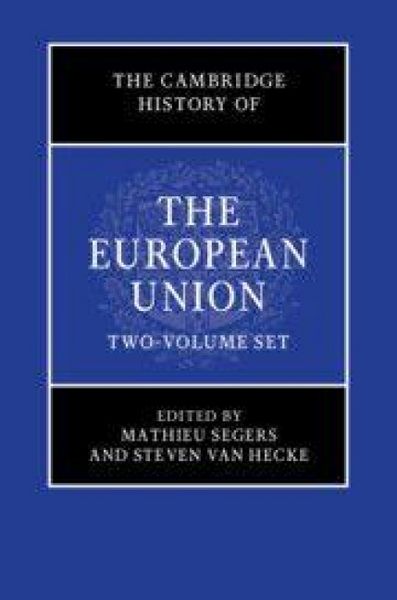
Volume I: Reflections on the history and historiography of European integration; Part I. Critical Junctures: 1. The emergence of a divided world and a divisible west; 2. European integration and the temporary division of Germany; 3. Europe, de-colonization and the challenge of developing countries; 4. European integration and globalization since the 1970s; 5. A Europe of re-unification?; 6. Moderately failing forward: the EU in the years 2004-2019; Part II. Multilateralism and Geopolitics: 7. A pillar of the golden age? European integration and the Trente Glorieuses; 8. The end of Bretton Woods: origins and European consequences; 9. The vicissitudes of market Europe; 10. European integration and the challenges of free movement; 11. The EU as a global trade power; 12. The role of NATO in Europe integration; 13. European integration and the UN; 14. The European nuclear dimension: from cold war to post-cold war; 15. From 'Helsinki' and development aid to multipolar hard ball; 16. European integration, the environment and climate change; 17. The space policy of the EU; Part III. Perspectives and Ideas: 18. Researching the eurocrats; 19. Elite networks of allegiance; 20. The multi-dimensional nature of public EU attitudes; 21. Ideas of Europe: 1880s to 1910s and beyond; 22. Beginning with culture: a certain idea of Europe; 23. The European union and memory; 24. European culture(s); 25. The catholic narrative of European integration; 26. European integration and the churches; Index. Volume II; Reflections on the history and historiography of European integration; Part I. Milestones: 1. Early forms of European unity; 2. From 'Messina' and 'Rome' to the single European act; 3. The making of the European union; 4. From 'Maastricht' and 'Copenhagen' to 'Amsterdam' and 'Nice'; 5. The constitution project, 'Lisbon' and beyond; 6. Moving beyond British exceptionalism; Part II. Instruments of Integration: 7. In the name of social stability: the European payments union; 8. Competition versus planning: a battle that shaped European integration; 9. Banks, the Eurodollar market and the beginnings of monetary integration; 10. From Werner-report to the start of the EMU; 11. The euro area crisis: from pre-history to aftermath; 12. The institutional and legal culture of European integration; 13. The formation of the migration regime of the EU; 14. The constitutional dimension: centralization, democratization and the rule of law; 15. EU enlargement: origins and practice; Part III. Narratives and Outcomes: 16. A global perspective on European cooperation and integration since 1918; 17. War, peace and memory: Franco-German reconciliation; 18. The 'saints' of European integration: from visionaries to architects; 19. The EU and the narrative of prosperity; 20. Changing Europe's economic history; 21. Transforming market Europe to social Europe; 22. European solidarity: the difficult art of managing interdependence; 23. Ideologies of EU democracy since 1950; 24. Democratic challenges since 'Maastricht'; Index.