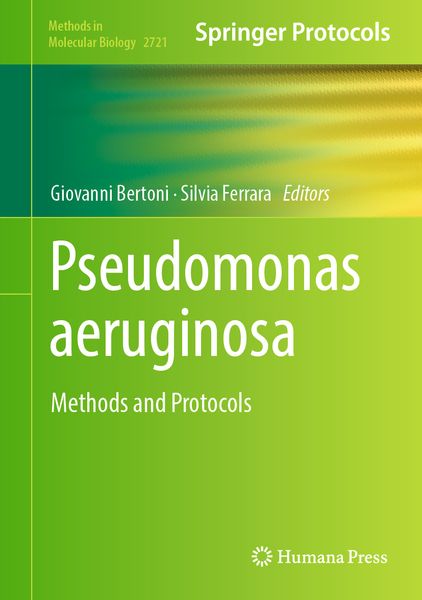
Pseudomonas aeruginosa Methods and Protocols
-
- Hardcover ausgewählt
- Taschenbuch
- eBook
-
Sprache:Englisch
192,99 €
UVP
219,99 €
inkl. gesetzl. MwSt.,
Beschreibung
Produktdetails
Einband
Gebundene Ausgabe
Erscheinungsdatum
12.10.2023
Abbildungen
X, 246 p. 51 illus., 40 illus. in color.
Herausgeber
Giovanni Bertoni + weitereVerlag
Springer UsSeitenzahl
246
Maße (L/B/H)
26/18,3/2 cm
Gewicht
621 g
Auflage
23001 Auflage 1st edition 2024
Sprache
Englisch
ISBN
978-1-07-163472-1
This book aims to provide methods, protocols, and discussion topics for those who wish to examine in depth the molecular mechanisms of adaptation and versality of bacteria and would like to envisage their evolution responses in the fast changing Antropocene.Written in the highly successful Methods in Molecular Biology series format, chapters include introductions to their respective topics, lists of the necessary materials and reagents, step-by-step, readily reproducible laboratory protocols, and key tips on troubleshooting and avoiding known pitfalls.
Authoritative and cutting-edge,
Pseudomonas aeruginosa: Methods and Protocols
aims to be a useful and practical guide to new researchers and experts looking to expand their knowledge.
Noch keine Bewertungen vorhanden
Verfassen Sie die erste Bewertung zu diesem Artikel
Helfen Sie anderen Kundinnen und Kunden durch Ihre Meinung.
Kurze Frage zu unserer Seite
Vielen Dank für Ihr Feedback
Wir nutzen Ihr Feedback, um unsere Produktseiten zu verbessern. Bitte haben Sie Verständnis, dass wir Ihnen keine Rückmeldung geben können. Falls Sie Kontakt mit uns aufnehmen möchten, können Sie sich aber gerne an unseren Kund*innenservice wenden.
zum Kundenservice