
Gutscheinbedingungen

**Gültig nur für Bestellungen an die Wunsch-Poststation bis 10.06.2026 auf Spielzeug, Schreibwaren, Filme, Geschenke & Trends, Musik, tolino eReader & Zubehör, Hörbücher und Hörbuch-Downloads (außer Abo), nicht preisgebundene Bücher und Kalender online auf thalia.at und in der Thalia App. Einzelne Artikel können ausgeschlossen sein. Aufgrund der Buchpreisbindung sind deutschsprachige Bücher und eBooks ausgenommen. Zusätzlich ausgenommen sind preisgebundene Artikel, Abos & Flatrates, eBooks, Games, Geschenkkarten/-boxen, Shelfies, Software, Zeitschriften sowie einzelne Artikel von tonies®. Pro Einkauf einmal einlösbar. Kein Click & Collect möglich. Keine Barauszahlung. Nicht kombinierbar mit anderen Aktionen und Gutscheinen. Gutschein wird auf max. 500€ Bestellwert angerechnet. Nicht gültig für Versandkosten und Services.

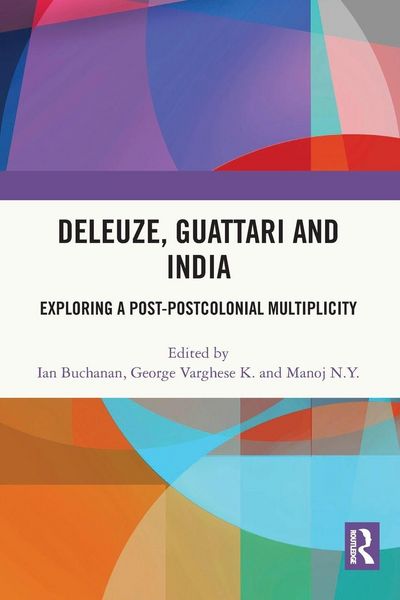
  • Produktbild: Deleuze, Guattari and India
  • Produktbild: Deleuze, Guattari and India

Deleuze, Guattari and India Exploring a Post-Postcolonial Multiplicity

59,99 €

inkl. gesetzl. MwSt., Versandkostenfrei


Beschreibung

Produktdetails

Einband

Taschenbuch

Erscheinungsdatum

25.09.2023

Abbildungen

schwarz-weiss Illustrationen, Raster, schwarz-weiss, Zeichnungen, schwarz-weiss

Herausgeber

Ian Buchanan + weitere

Verlag

Taylor & Francis

Seitenzahl

272

Maße (L/B/H)

23,4/15,6/1,5 cm

Gewicht

500 g

Sprache

Englisch

ISBN

978-1-03-210847-6

Beschreibung

Rezension

'This excellent collection of essays explores Indian cultural phenomena in the light of Deleuzian concepts and throws new light on aspects of Deleuze's thought. The question 'Why?' hovers over the collection: why Deleuze? Why India? Together the essays assembled here provide a compelling case for the fecundity of this encounter. They make essential reading for anyone interested in Deleuze, India and new developments in the humanities.'

Paul Patton, Hongyi Chair Professor of Philosophy, Wuhan University, China


'This is a thoughtful and scholarly volume, applying Deleuze not in a blind manner but through a Deleuzian way of philosophizing which is critical and creative. Not only are essential concepts from Deleuze clearly discussed but through their application to various dimensions of Indian social experiences, these concepts are further interpreted and enriched, thereby showing how Deleuzian thought is important for contemporary projects of comparative philosophy. It should be of great interest to all those who are struggling with finding new vocabulary for the changing contemporary world.'

Sundar Sarukkai, Visiting Faculty, Indian Institute of Science and Former/Founder Director, Manipal Centre for Philosophy and Humanities, India

Produktdetails

Einband

Taschenbuch

Erscheinungsdatum

25.09.2023

Abbildungen

schwarz-weiss Illustrationen, Raster, schwarz-weiss, Zeichnungen, schwarz-weiss

Herausgeber

Verlag

Taylor & Francis

Seitenzahl

272

Maße (L/B/H)

23,4/15,6/1,5 cm

Gewicht

500 g

Sprache

Englisch

ISBN

978-1-03-210847-6

Kundinnen und Kunden meinen

0 Bewertungen

Informationen zu Bewertungen

Zur Abgabe einer Bewertung ist eine Anmeldung im Konto notwendig. Die Authentizität der Bewertungen wird von uns nicht überprüft. Wir behalten uns vor, Bewertungstexte, die unseren Richtlinien widersprechen, entsprechend zu kürzen oder zu löschen.

Die Bewertungen sind nach Format, Anzahl Sterne und Datum sortiert.

Verfassen Sie die erste Bewertung zu diesem Artikel

Helfen Sie anderen Kund*innen durch Ihre Meinung

Kundinnen und Kunden meinen

0 Bewertungen filtern

Die Leseprobe wird geladen.
  • Produktbild: Deleuze, Guattari and India
  • Produktbild: Deleuze, Guattari and India
  • Introduction: Deleuze, Guattari, and the Invention of the 'Indian Diagram' Part I: Deleuzian Ontology: Difference, Events and Codes  1. Deleuzian Ontology: Encounter and Experimentation  2. Virtual Ontologies: Heidegger, Deleuze and the Concept of the Event (Ereignis, événement)  3. La Gestothèque in Translation: From Body Techniques to Technologies and Back  4. Hindustani Sangeet Paddhati and the Problem of Singularity: A Deleuzian Point of View  Part II: Becoming Minor/Becoming Political  5. Becoming Minor: From Literature to Cinema  6. Desire, Body and Capitalism: Dalit Literature and Becoming Political in a Postcolonial World  7. The Un/Paralleled Universe of Pramod Pati: Deleuzian Reflections on Abid, Explorer and Trip  8. Bodies, Matter and Memory: Enfolding and Unfolding of Virtual and Actual Experiences in Artist Part III: Territorial Multiplicities  9. Can 'Territoriality' be Social? Interrogating the 'Political' of Dalit Social Inclusion in India  10. Deleuze and the Third Gender Identity in India  11. Concepts, Singularity and Nation-ness: 'Becoming-Democratic and the Question of the Political  12. Why Deleuze Spoke So Little About Theatre?