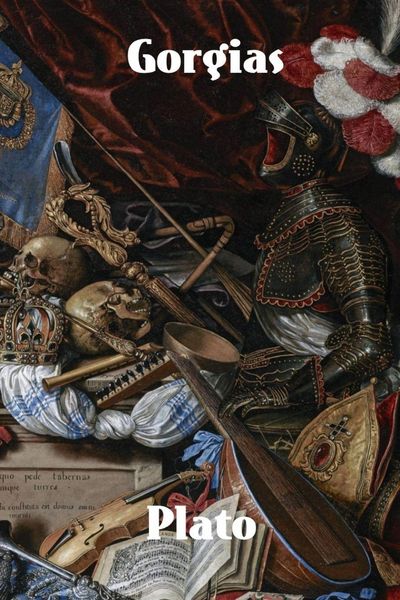
Gorgias
-
- Hardcover
- Taschenbuch ausgewählt
- eBook
- Hörbuch
-
Sprache:Englisch
-
Verlag:Binker North
- Cornell University Press 14,99 €
- Hackett Publishing Co, Inc 14,99 €
- Tredition 13,30 €
- Oxford University Press 9,99 €
- Watchmaker Publishing 14,99 €
- Serenity Publishers, LLC 14,99 €
- Sanage Publishing House 21,99 €
- Digireads.com 12,99 €
- Creative Media Partners, LLC 22,99 €
- Penguin Books 9,99 €
- Binker North 19,99 € ausgewählt
- Hansebooks 22,60 €
- Antiquum Novum Verlag 22,99 €
- Indoeuropeanpublishing.Com 19,99 €
19,99 €
inkl. gesetzl. MwSt.,
- Kostenlose Lieferung ab 30 € Einkaufswert
- Versandkostenfrei für Bonuscard-Kund*innen
Beschreibung
Produktdetails
Einband
Taschenbuch
Erscheinungsdatum
08.06.2023
Verlag
Binker NorthSeitenzahl
130
Maße (L/B/H)
22,9/15,2/0,7 cm
Gewicht
201 g
Sprache
Englisch
ISBN
978-1-77441-966-3
Gorgias is a Socratic dialogue written by Plato around 380 BC. The dialogue depicts a conversation between Socrates and a small group of sophists (and other guests) at a dinner gathering. Socrates debates with the sophist seeking the true definition of rhetoric, attempting to pinpoint the essence of rhetoric and unveil the flaws of the sophistic oratory popular in Athens at the time. The art of persuasion was widely considered necessary for political and legal advantage in classical Athens, and rhetoricians promoted themselves as teachers of this fundamental skill. Some, like Gorgias, were foreigners attracted to Athens because of its reputation for intellectual and cultural sophistication. Socrates suggests that he is one of the few Athenians to practice true politics. ¿¿¿Socrates interrogates Gorgias to determine the true definition of rhetoric, framing his argument in the question format, "What is X?" (2).[3] He asks, "... why don't you tell us yourself what the craft you're an expert in is, and hence what we're supposed to call you?" (449e). Throughout the remainder of the dialogue, Socrates debates about the nature of rhetoric. Although rhetoric has the potential to be used justly, Socrates believes that in practice, rhetoric is flattery; the rhetorician makes the audience feel worthy because they can identify with the rhetorician's argument.
Noch keine Bewertungen vorhanden
Verfassen Sie die erste Bewertung zu diesem Artikel
Helfen Sie anderen Kundinnen und Kunden durch Ihre Meinung.
Kurze Frage zu unserer Seite
Vielen Dank für Ihr Feedback
Wir nutzen Ihr Feedback, um unsere Produktseiten zu verbessern. Bitte haben Sie Verständnis, dass wir Ihnen keine Rückmeldung geben können. Falls Sie Kontakt mit uns aufnehmen möchten, können Sie sich aber gerne an unseren Kund*innenservice wenden.
zum Kundenservice