KI-Beratung Beta

Gutscheinbedingungen

**Gültig am 25.11.2026 auf fremdsprachige Bücher online auf thalia.at und in der Thalia App. Einzelne Artikel können ausgeschlossen sein. Ausgenommen sind preisgebundene Artikel & eBooks. Pro Einkauf einmal einlösbar. Click & Collect nur bei Onlinevorabzahlung möglich. Keine Barauszahlung. Nicht kombinierbar mit anderen Aktionen und Gutscheinen. Gutschein wird auf max. 500€ Bestellwert angerechnet. Nicht gültig für Geschenkkarten, Versandkosten und Services.

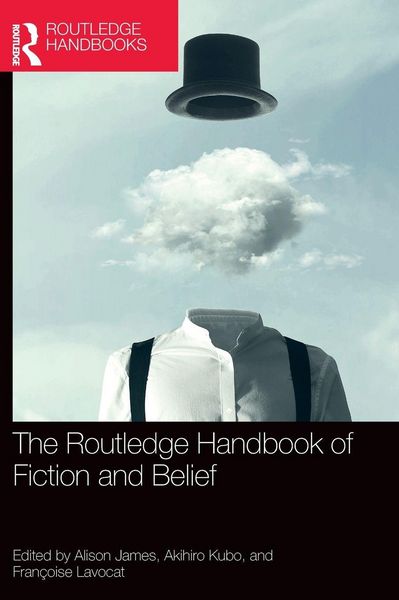
  • Produktbild: The Routledge Handbook of Fiction and Belief
  • Produktbild: The Routledge Handbook of Fiction and Belief

The Routledge Handbook of Fiction and Belief

346,99 €

inkl. gesetzl. MwSt., Versandkostenfrei


Beschreibung

The Routledge Handbook of Fiction and Belief offers a fresh reevaluation of the relationship between fiction and belief, surveying key debates and perspectives from a range of disciplines including narrative and cultural studies, science, religion, and politics. This volume draws on global, cutting edge...

Beschreibung

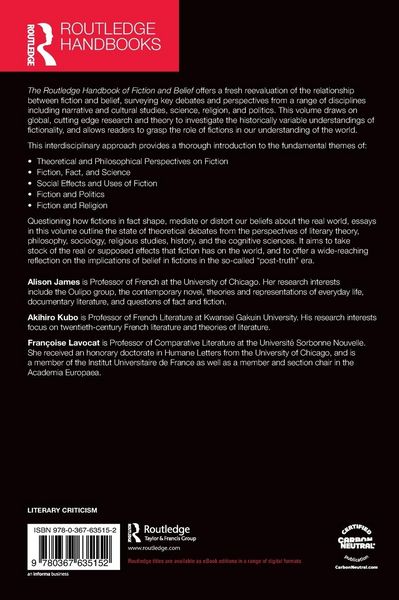
The Routledge Handbook of Fiction and Belief offers a fresh reevaluation of the relationship between fiction and belief, surveying key debates and perspectives from a range of disciplines including narrative and cultural studies, science, religion, and politics. This volume draws on global, cutting edge research and theory to investigate the historically variable understandings of fictionality, and allows readers to grasp the role of fictions in our understanding of the world.

This interdisciplinary approach provides a thorough introduction to the fundamental themes of:

  • Theoretical and Philosophical Perspectives on Fiction
  • Fiction, Fact, and Science
  • Social Effects and Uses of Fiction
  • Fiction and Politics
  • Fiction and Religion

Questioning how fictions in fact shape, mediate or distort our beliefs about the real world, essays in this volume outline the state of theoretical debates from the perspectives of literary theory, philosophy, sociology, religious studies, history, and the cognitive sciences. It aims to take stock of the real or supposed effects that fiction has on the world, and to offer a wide-reaching reflection on the implications of belief in fictions in the so-called "post-truth" era.

Produktdetails

Einband

Gebundene Ausgabe

Erscheinungsdatum

22.12.2023

Abbildungen

14 SW-Abb., 10 SW-Fotos, 4 SW-Zeichn., 5 Tabellen

Herausgeber Alison James + weitere

Produktdetails

Einband

Gebundene Ausgabe

Erscheinungsdatum

22.12.2023

Abbildungen

14 SW-Abb., 10 SW-Fotos, 4 SW-Zeichn., 5 Tabellen

Herausgeber
Verlag Taylor & Francis
Seitenzahl

524

Maße (L/B/H)

26/18,3/3,3 cm

Gewicht

1170 g

Sprache

Englisch

ISBN

978-0-367-63515-2

Herstelleradresse

Libri GmbH
Europaallee 1
36244 Bad Hersfeld
DE

Email: gpsr@libri.de

Noch keine Bewertungen vorhanden

Verfassen Sie die erste Bewertung zu diesem Artikel

Helfen Sie anderen Kundinnen und Kunden durch Ihre Meinung.

Kundinnen und Kunden meinen

Bewertungen (0)

Die Leseprobe wird geladen.
  • Produktbild: The Routledge Handbook of Fiction and Belief
  • Produktbild: The Routledge Handbook of Fiction and Belief
  • Introduction

    Alison James, Akihiro Kubo, and Françoise Lavocat

    Part I: Believing in Fiction: Philosophical and Theoretical Perspectives

    1 Belief, Imagination, and the Nature of Fiction

    Stacie Friend

    2 The "Willing Suspension of Disbelief": The Long History of a Short Phrase

    Nicholas D. Paige

    3 The Fictionality of Games and the Ludic Nature of Fiction: Make-Believe, Immersion, Play

    Marie-Laure Ryan

    4 Fictional Emotions and Belief

    Eva-Maria Konrad

    5 Fictional Characters and Belief

    Thomas Pavel

    6 Fictionality, the Zone of Generic Fiction, and the Allure of Unreliable Narration

    James Phelan

    7 Belief Is a Mess. That Makes It Good for Fiction. (A Perspective from Cognitive Literary Theory)

    Lisa Zunshine

    8 Fiction and Historiography

    Annick Louis

    9 Fiction and Scientific Knowledge

    Adam Toon

    10 Learning from Fiction

    Gregory Currie, Heather Ferguson, Jacopo Frascaroli, Stacie Friend, Kayleigh Green, and Lena Wimmer

    Part II: From Fiction to Belief: Social and Political Effects

    11 Do Fictions Impact People's Beliefs? A Critical View

    Edgar Dubourg and Nicolas Baumard

    12 The Impact of Fiction on Beliefs about Gender

    Vera Nünning

    13 Implicit Bias, Fiction, and Belief

    Kris Goffin and Agnes Moors

    14 Children's Ideas about Stories and about Reality

    Ayse Payir and Paul L. Harris

    15 From Suspension of Disbelief to Production of Belief: The Case of Alternate Reality Games

    Patrick Jagoda

    16 Interactive Environments and Fictional Engagement

    Olivier Caïra

    17 Fake News and Fictional News

    Jessica Pepp, Rachel Sterken, and Eliot Michaelson

    18 Trust, Credulity, and Speech

    Philippe Roussin

    19 Literature on Credit: Fiction and the Fiduciary Paradigm

    Emmanuel Bouju and Loïse Lelevé

    20 Fifth-Generation Fictionality? Fiction, Politics, War

    Henrik Zetterberg-Nielsen

    21 Uses of Fantasy Fiction in Contemporary Political Mobilization

    Anne Besson

    22 Fiction, Belief, and Postcolonial Criticism

    Alok Yadav

    23 Can Fictions Predict the Future?

    Anne Duprat

    24 Dystopian Fictions and Contemporary Fears

    Jean-Paul Engélibert

    25 Fiction, Belief, and Climate Change: Paratexts, Skeptics, and Objects of Care

    Erin James

    Part III: Fiction and Religious Belief 337

    26 Greek Mythology: Discourse, Belief, and Ritual Action

    Claude Calame

    27 Fiction and Belief: Approaching Medieval Latin Christendom

    Julie Orlemanski

    28 Literary Fictions, "Fables," and Unbelief in the West

    Nicolas Correard

    29 Saints, Between Faith, Belief, and Fiction

    Barbara Selmeci Castioni

    30 The Role of Fiction in Buddhist Hagiography: The Case of Shinran

    Markus Rüsch

    31 Fiction and Belief in Ancient and Early Medieval India

    Isabelle Ratié

    32 Fiction, Religion, and Premodern Arab-Islamic Literature (Eighth-Eighteenth Centuries)