KI-Beratung Beta

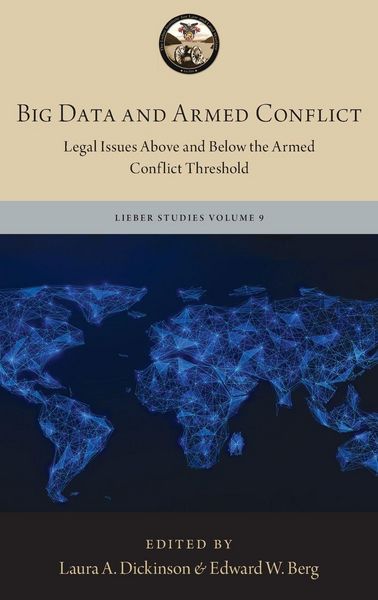
Produktbild: Big Data and Armed Conflict

Big Data and Armed Conflict Legal Issues Above and Below the Armed Conflict Threshold

152,99 €

inkl. gesetzl. MwSt., Versandkostenfrei


Beschreibung

There has been much recent excitement amongst neuroscientists and ethicists about the possibility of using drugs, as well as other technologies, to enhance cognition in healthy individuals. This excitement has arisen from recent advances in neuroscientific technologies such as drugs that increase alertness...

Beschreibung

There has been much recent excitement amongst neuroscientists and ethicists about the possibility of using drugs, as well as other technologies, to enhance cognition in healthy individuals. This excitement has arisen from recent advances in neuroscientific technologies such as drugs that increase alertness and wakefulness in healthy individuals or technologies that can stimulate activity in different parts of the brain - either via the scalp or via electrodes - raising the possibility of producing cognitive and affective improvements in otherwise healthy individuals. Despite this growing interest, there are conflicting views on the ethics of cognitive enhancement. Some argue that enhancement is not only an ethical pursuit but one that we have a moral obligation to pursue. Others are more skeptical about the ethical implications and long term effects of cognitive enhancement. Some neuroscientists argue that use of stimulants as putative enhancers will lead to misuse, abuse and addiction in some users, and might have undesirable long-term consequences. This book critically explores and analyses the scientific and ethical debates surrounding cognitive enhancers. Including contributions from neuroscientists, neuropsychopharmacologists, ethicists, philosophers, public health professionals, and policy researchers, the book offers a multidisciplinary, critical consideration of the ethics of the use of cognitive enhancers.

Produktdetails

Einband

Gebundene Ausgabe

Erscheinungsdatum

01.05.2017

Herausgeber Dickinson Laura A. + weitere
Verlag Oxford Academic

Produktdetails

Einband

Gebundene Ausgabe

Erscheinungsdatum

01.05.2017

Herausgeber
Verlag Oxford Academic
Seitenzahl

386

Maße (L/B/H)

24/16,1/2,5 cm

Gewicht

743 g

Sprache

Englisch

ISBN

978-0-19-766861-0

Herstelleradresse

Libri GmbH
Europaallee 1
36244 Bad Hersfeld
DE

Email: gpsr@libri.de

Noch keine Bewertungen vorhanden

Verfassen Sie die erste Bewertung zu diesem Artikel

Helfen Sie anderen Kundinnen und Kunden durch Ihre Meinung.

Kundinnen und Kunden meinen

Bewertungen (0)

Die Leseprobe wird geladen.
  • Produktbild: Big Data and Armed Conflict

    • Foreword


    • Shane R. Reeves


    • Introduction


    • Laura A. Dickinson


    • SCENARIO


    • Mark A. Visger


    • PART ONE: Operations Below the Armed Conflict Threshold and the Jus ad Bellum


    • Chapter 1: Big Data: International Law Issues Below the Armed Conflict Threshold


    • Michael N. Schmitt


    • Chapter 2: Threatening Force in Cyberspace


    • Duncan B. Hollis and Tsvetelina van Benthem


    • Chapter 3: "Attacking" Big Data: Strategic Competition, the Race for AI, and the International Law of Cyber Sabotage


    • Gary P. Corn and Eric Talbot Jensen


    • Chapter 4: Attacking Big Data as a Use of Force


    • Ido Kilovaty


    • PART TWO: Military Operations and International Humanitarian Law


    • Chapter 5: Big Data: International Law Issues During Armed Conflict


    • Michael N. Schmitt


    • Chapter 6: Garbage In, Garbage Out: Data Poisoning Attacks and Their Legal Implications


    • Mark A. Visger


    • Chapter 7: Data Centers and International Humanitarian Law


    • François Delerue


    • Chapter 8: The Duty of Constant Care and Data Protection in War


    • Asaf Lubin


    • Chapter 9: Cyborg Soldiers: International Law and Military Brain-Computer Interfaces


    • Noam Lubell and Katya Al-Khateeb


    • PART THREE: Humanitarian Operations and Atrocity Investigation


    • Chapter 10: Corporate Data Responsibility


    • Galit A. Sarfaty


    • Chapter 11: Leveraging Big Data for LOAC


    • Beth Van Schaack


    • PART FOUR: International Human Rights Law


    • Chapter 12: The Datafication of Counter-Terrorism


    • Fionnuala Ni Aolain


    • Index