KI-Beratung Beta

Gutscheinbedingungen

**Gültig bis 11.11.2026 auf Spielzeug, Schreibwaren, Filme, Geschenke & Trends, Musik, tolino eReader & Zubehör, Hörbücher und Hörbuch-Downloads, nicht preisgebundene Bücher und Kalender online auf thalia.at und in der Thalia App. Einzelne Artikel können ausgeschlossen sein. Aufgrund der Buchpreisbindung sind deutschsprachige Bücher und eBooks ausgenommen. Zusätzlich ausgenommen sind Abos & Flatrates, Games, Geschenkkarten/-boxen, Shelfies, Software, Zeitschriften sowie einzelne Artikel von tonies®. Pro Einkauf einmal einlösbar. Click & Collect nur bei Onlinevorabzahlung möglich. Keine Barauszahlung. Nicht kombinierbar mit anderen Aktionen und Gutscheinen. Gutschein wird auf max. 500€ Bestellwert angerechnet. Nicht gültig für Versandkosten und Services.

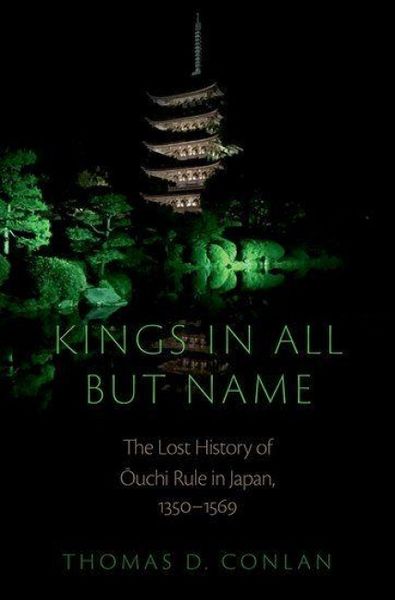
Produktbild: Kings in All But Name

Kings in All But Name The Lost History of Ouchi Rule in Japan, 1350-1569

162,99 €

inkl. gesetzl. MwSt., Versandkostenfrei


Beschreibung

In the sixteenth century, members of the Ouchi family were kings in all but name in much of Japan. Immensely wealthy, they controlled sea lanes stretching to Korea and China, as well as the Japanese city of Yamaguchi, which functioned as an important regional port with a growing population and a host...

Beschreibung

In the sixteenth century, members of the Ouchi family were kings in all but name in much of Japan. Immensely wealthy, they controlled sea lanes stretching to Korea and China, as well as the Japanese city of Yamaguchi, which functioned as an important regional port with a growing population and a host of temples and shrines. The family was unique in claiming ethnic descent from Korean kings, and-remarkably for this time-such claims were recognized in both Korea and Japan. Their position, coupled with dominance over strategic ports and mines, allowed them to facilitate trade throughout East and Southeast Asia. They also played a key cultural role in disseminating Confucian texts, Buddhist sutras, ink paintings, and pottery, and in creating a distinctive, hybrid culture that fused Japanese, Korean, and Chinese beliefs, objects, and customs. Kings in All but Name illustrates how Japan was an ethnically diverse state from the fourteenth through the sixteenth centuries, closely bound by trading ties to Korea and China. It reveals new archaeological and textual evidence proving that East Asia had integrated trading networks long before the arrival of European explorers and includes an analysis of ores and slag that shows how mining techniques improved and propelled East Asian trade. The story of the Ouchi rulers argues for the existence of a segmented polity, with one center located in Kyoto, and the other in the Ouchi city of Yamaguchi. It also contradicts the belief that Japan collapsed into centuries of turmoil and rather proves that Japan was a stable and prosperous trading state where rituals, policies, politics, and economics were interwoven and diverse.

Produktdetails

Einband

Gebundene Ausgabe

Erscheinungsdatum

24.01.2024

Abbildungen

35, b/w

Verlag Oxford Academic

Produktdetails

Einband

Gebundene Ausgabe

Erscheinungsdatum

24.01.2024

Abbildungen

35, b/w

Verlag Oxford Academic
Seitenzahl

468

Maße (L/B/H)

22,1/16,5/5,6 cm

Gewicht

794 g

Sprache

Englisch

ISBN

978-0-19-767733-9

Herstelleradresse

Libri GmbH
Europaallee 1
36244 Bad Hersfeld
DE

Email: gpsr@libri.de

Noch keine Bewertungen vorhanden

Verfassen Sie die erste Bewertung zu diesem Artikel

Helfen Sie anderen Kundinnen und Kunden durch Ihre Meinung.

Kundinnen und Kunden meinen

Bewertungen (0)

Weitere Artikel finden Sie in

Die Leseprobe wird geladen.
  • Produktbild: Kings in All But Name
    • Acknowledgements
    • Conventions
    • Introduction: The Lost History of Ouchi Rule
    • Chapter 1. The Origins of the Ouchi
    • Chapter 2. The Founder Ouchi Hiroyo
    • Chapter 3: Ouchi Yoshihiro and the Forging of Ouchi Identity
    • Chapter 4. The One Who Could See Stars: The Unlikely Rule of Ouchi Moriakira
    • Chapter 5. Fraternal Succession, Expanding Trade, and Durable Administration
    • Chapter 6. Trader, Shogun, King, and God
    • Chapter 7. Ouchi Masahiro and the Rise of Yamaguchi
    • Chapter 8. Yoshioki and the Apogee of Ouchi Rule (1495-1528)
    • Chapter 9. The Triumphs and Tragedy of ?uchi Yoshitaka (1528-51)
    • Chapter 10. The Collapse
    • Epilogue. Legacies
    • Bibliography