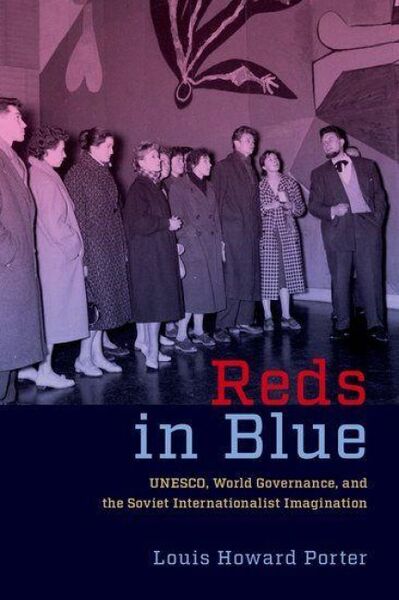
Reds in Blue Unesco, World Governance, and the Soviet Internationalist Imagination
78,99 €
inkl. gesetzl. MwSt.,
Beschreibung
Produktdetails
Einband
Gebundene Ausgabe
Erscheinungsdatum
20.09.2023
Abbildungen
13 black and white halftones
Verlag
Oxford University PressSeitenzahl
320
Maße (L/B/H)
22,9/27,9/1,9 cm
Gewicht
748 g
Sprache
Englisch
ISBN
978-0-19-765630-3
Before Josef Stalin's death in 1953, the USSR had, at best, an ambivalent relationship with noncommunist international organizations. Although it had helped found the United Nations, it refused to join the United Nations Educational, Scientific, and Cultural Organization (UNESCO) and other major agencies beyond the Security Council and General Assembly, casting them as foreign meddlers. Under new leadership, the USSR joined UNESCO and a slew of international organizations for the first time, including the World Health Organization and the International Labor Organization. As a result, it enabled Soviet diplomats, scholars, teachers, and even some blue-collar workers to participate in global discussions on topics ranging from their professional specialties to worldwide problems. Reds in Blue investigates Soviet relations with one of the most prominent of these organizations, UNESCO, to present a novel way of thinking about the role of the United Nations in the Soviet experience of the Cold War. Drawing on unused archival material from the former USSR and elsewhere, the book examines the forgotten stories of Soviet citizens who contributed to the nuts-and-bolts operations and lesser-known activities of world governance. These unexamined dimensions of everyday participation in the UN's bureaucracy, conferences, publications, and technical assistance show the body's importance for a group of Soviet "one-worlders," who used the UN to imagine and work for a better world amidst the realities of the Cold War. Meanwhile, the Khrushchev and early Brezhnev governments sought to use their participation as a means of spreading Soviet influence within Western-dominated international organizations but discovered that this required risk-taking and a degree of openness for which the Soviet leadership and domestic institutions were often unprepared. Moving beyond debates over the successes and failures of UN diplomatic activities, Reds in Blue offers fresh perspectives on how Soviet citizens became citizens of the world and advocated for opening up Soviet society in ways that transcended Cold War categories without abandoning a sense of loyalty to their homeland. In doing so, it recaptures a space where East and West worked together towards a future without international conflict in the years before détente.
Noch keine Bewertungen vorhanden
Verfassen Sie die erste Bewertung zu diesem Artikel
Helfen Sie anderen Kundinnen und Kunden durch Ihre Meinung.
Kurze Frage zu unserer Seite
Vielen Dank für Ihr Feedback
Wir nutzen Ihr Feedback, um unsere Produktseiten zu verbessern. Bitte haben Sie Verständnis, dass wir Ihnen keine Rückmeldung geben können. Falls Sie Kontakt mit uns aufnehmen möchten, können Sie sich aber gerne an unseren Kund*innenservice wenden.
zum Kundenservice