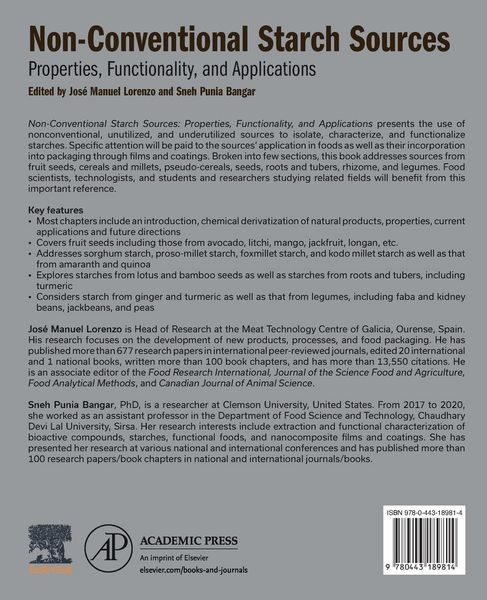
José Manuel Lorenzo is Head of Research at the Meat Technology Centre of Galicia (CTC), Ourense, Spain and Associate Professor at the University of Vigo, Spain. He received his M.S. in Food Science and Technology (University of Vigo). He obtained his Ph.D. in Food Science and Technology (University of Vigo) in 2006. He has started his scientific career in the Department of Food Science and Technology at the University of Vigo, first as researcher scholarship, then, since April 2006, as academic Researcher. In 2006-2005 from October to March, he completed a stage period for his research project at the Stazione Sperimentale per L´Industria delle Conserve Alimentaria, (Parma, Italy). He has been PI of several projects of R&D and innovation related to meat science and food technology.
He has developed numerous projects, many related to agro-industry and meat companies, and acquired extensive experience in the field of food technology. During this period, he completed my analytic training in LC and GC, developing methods to quantify levels of lipid/protein oxidation, lipid fractionation by SPE and vitamins with HPLC/FD/DAD and volatiles by GC/MS. These have focused on 1) Characterization of the products from different species under different rearing conditions, such as pigs, poultry or horsemeat; 2) Extension of food shelf life using natural extracts with antioxidant and antimicrobial capacities from agro-products; 3) Understanding physicochemical, biochemical and microbial changes during the technological processes applied to meat products; and 4) Development of new, healthier meat foods based on fat and salt reduction or improving lipid profile modification, replacement of fat, or incorporating functional compounds. Currently, he is involved in identifying proteomic and biomarkers associated with pastiness in dry-cured ham and their consequences for meat quality, using proteomic 2-DE techniques for protein separation and subsequent identification and quantification applying HPLC/MS/MS.
Sneh Punia Bangar is an assistant professor in the Department of Packaging Science and Graphic Media at Rochester Institute of Technology, New York. Prior to this appointment, she worked as a postdoctoral researcher in the Department of Food, Nutrition, and Packaging Sciences at Clemson University, SC, USA. Her research focuses on the design and development of sustainable biopolymer-based films, coatings, and packaging materials derived from starch, cellulose, lignin, and other natural polymers. A key aspect of her research is adding value to agricultural and food industry waste by extracting functional biopolymers with applications in food and packaging. She has authored or coauthored more than 100 research/review articles, 15 authored/edited books, 35 book chapters, and 20 conference proceedings/seminars. She is also the associate editor of the Journal of Food Measurement and Characterization (Springer), an editorial board member of the International Journal of Food Science and Technology (Wiley), academic editor of the Journal of Food Quality (Hindawi), and a section editor of Current Food Science and Technology Reports (Springer). Her significant contributions to academia and research were acknowledged with the “Award of Honour in 2019 for her outstanding achievements. She is the recipient of the GSG Outstanding Graduate Research Assistant (2022) and CAFLS Outstanding Graduate Student Research Award (2023) at Clemson University, USA. Dr. Bangar received the “Professor Gurcharan Bains Award from the Association of Food Scientists & Technologists (India) in 2023 for her incredible contribution to Food Science and Technology. In addition, she has been listed (2023 and 2024) in “World Ranking of Top 2% Scientists, published by Stanford University, USA. Dr. Bangar was awarded Clemson University’s Distinguished Postdoctoral Fellow Award for 2024. She has an H-index of 72 with ~15000 citations, as per Google Scholar.