Imago Dei The Byzantine Apologia for Icons
-
- Taschenbuch
- eBook ausgewählt
-
Form:Einzelkauf Download
-
Sprache:Englisch
63,80 €
inkl. gesetzl. MwSt.Beschreibung
Produktdetails
Format
ePUB
Kopierschutz
Nein
Family Sharing
Nein
Text-to-Speech
Ja
Erscheinungsdatum
17.10.2023
Verlag
Nyu PressSeitenzahl
224 (Printausgabe)
Sprache
Englisch
EAN
9780691252735
A sweeping account of the controversies surrounding the worship of images in the early Byzantine church
In 726, the Byzantine emperor, Leo III, issued an edict that all religious images in the empire were to be destroyed, a directive that was later endorsed by a synod of the church in 753 under his son, Constantine V. If the policy of Iconoclasm had succeeded, the entire history of Christian art-and of the Christian church, at least in the East-would have been altered.
Iconoclasm was defeated by Byzantine politics, popular revolts, monastic piety, and, most fundamentally of all, by theology, just as it had been theology that the opponents of images had used to justify their actions. Analyzing an intriguing chapter in the history of ideas, the renowned scholar Jaroslav Pelikan shows how a faith that began by attacking the worship of images ended first in permitting and then in commanding it.
Pelikan charts the theological defense of icons during the iconoclastic controversies of the eighth and ninth centuries, whose high point came in 787, when the Second Council of Nicaea restored the cult of images in the church. He demonstrates how the dogmas of the Trinity and the Incarnation eventually provided the basic rationale for images: because the invisible God had become human and therefore personally visible in Jesus Christ, it became permissible to make images of that Image. And because not only the human nature of Christ, but that of his Mother had been transformed by the Incarnation, she, too, could be "iconized," together with all the other saints and angels.
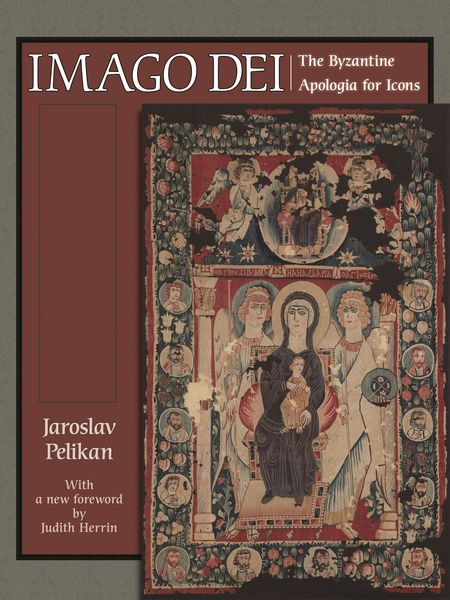
The iconographic "text" of the book is provided by one of the very few surviving icons from the period before Iconoclasm, the Egyptian tapestry Icon of the Virgin now in the Cleveland Museum of Art. Other icons serve to illustrate the theological argument, just as the theological argument serves to explain the icons.
In an incisive foreword, Judith Herrin explains the enduring importance of the book and discusses how later scholars have built on Pelikan's work.
Please note: All images in this ebook are presented in black and white and have been reduced in size.
Noch keine Bewertungen vorhanden
Verfassen Sie die erste Bewertung zu diesem Artikel
Helfen Sie anderen Kundinnen und Kunden durch Ihre Meinung.
Kurze Frage zu unserer Seite
Vielen Dank für Ihr Feedback
Wir nutzen Ihr Feedback, um unsere Produktseiten zu verbessern. Bitte haben Sie Verständnis, dass wir Ihnen keine Rückmeldung geben können. Falls Sie Kontakt mit uns aufnehmen möchten, können Sie sich aber gerne an unseren Kund*innenservice wenden.
zum Kundenservice