KI-Beratung Beta

  • Produktbild: Economic Inclusion in Post-Independence Africa
  • Produktbild: Economic Inclusion in Post-Independence Africa
- 13%

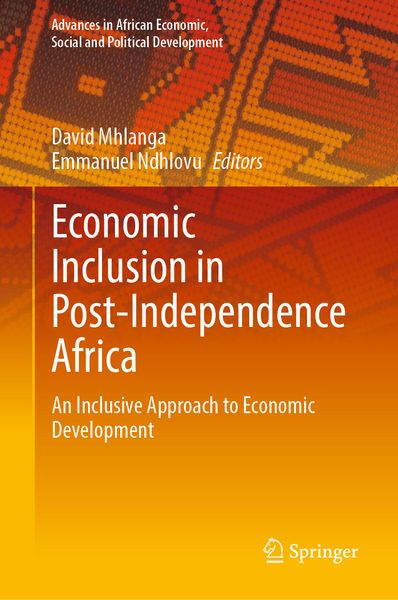
Economic Inclusion in Post-Independence Africa An Inclusive Approach to Economic Development

13% sparen

161,99 € UVP 186,99 €

inkl. gesetzl. MwSt., Versandkostenfrei


Beschreibung

The second in a three-volume series, this edited volume discusses post-independence economic inclusion in selected African countries. While human development indices rise and poverty rates fall across the African continent, facilitated by recent technological and innovation development which reaches...

Beschreibung

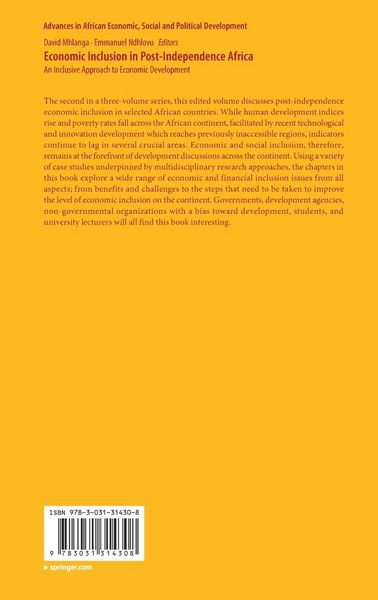
The second in a three-volume series, this edited volume discusses post-independence economic inclusion in selected African countries. While human development indices rise and poverty rates fall across the African continent, facilitated by recent technological and innovation development which reaches previously inaccessible regions, indicators continue to lag in several crucial areas. Economic and social inclusion, therefore, remains at the forefront of development discussions across the continent. Using a variety of case studies underpinned by multidisciplinary research approaches, the chapters in this book explore a wide range of economic and financial inclusion issues from all aspects; from benefits and challenges to the steps that need to be taken to improve the level of economic inclusion on the continent. Governments, development agencies, non-governmental organizations with a bias toward development, students, and university lecturers will all find this book interesting.

Portrait

David Mhlanga is a Senior Researcher at the University of Johannesburg in South Africa. He received his PhD in economics from North-West University (South Africa). Dr. Mhlanga conducts research in the fields of development economics, education economics, economics of artificial intelligence, health economics, and Industry 4.0.

Emmanuel Ndhlovu is a peasant scholar-activist, and a lifelong student of development educated at the universities of Zimbabwe and South Africa. He holds a PhD in Development Studies from the University of South Africa. He conducts research on land reform, political economy, peasant livelihoods, migration, food sovereignty, and on development. Emmanuel is currently with the Vaal University of Technology, South Africa, as a postdoctoral researcher.

Produktdetails

Einband

Gebundene Ausgabe

Erscheinungsdatum

04.08.2023

Abbildungen

XVII, 381 p. 40 illus., 36 illus. in color.

Herausgeber David Mhlanga + weitere

Produktdetails

Einband

Gebundene Ausgabe

Erscheinungsdatum

04.08.2023

Abbildungen

XVII, 381 p. 40 illus., 36 illus. in color.

Herausgeber
Verlag Springer
Seitenzahl

381

Maße (L/B/H)

24,1/16/2,7 cm

Gewicht

712 g

Auflage

2023

Sprache

Englisch

ISBN

978-3-031-31430-8

Herstelleradresse

Springer-Verlag KG
Sachsenplatz 4-6
1201 Wien
AT

Email: ProductSafety@springernature.com

Noch keine Bewertungen vorhanden

Verfassen Sie die erste Bewertung zu diesem Artikel

Helfen Sie anderen Kundinnen und Kunden durch Ihre Meinung.

Kundinnen und Kunden meinen

Bewertungen (0)

  • Produktbild: Economic Inclusion in Post-Independence Africa
  • Produktbild: Economic Inclusion in Post-Independence Africa
  • 1. Introduction: Theorising Economic and Social Inclusion in Post-Independence Africa.- 2. Economic Inclusion: Transforming the Lives of the Poor and How to Make Economic Inclusion Work in Africa?- 3. Information Communication Technology (ICT) and Its Effects on Social and Political Inclusion in Africa.- 4. Social Inclusion Interventions for Africa Towards Sustainable Development and Shared Prosperity.- 5. The Impact of Digital Financial Service Taxes and Mobile Money Taxes on Financial Inclusion and Inclusive Development in Africa.- 6. The Political Economy of Financial Inclusion for Smallholder Farmers in Sub-Saharan Africa.- 7. Digital Financial Inclusion and Digital Financial Literacy in Africa: The Challenges Connected with Digital Financial Inclusion in Africa.- 8. Post-Independence Development and Financial Inclusion in Africa: Case Studies and the Way Forward to Support Further Financial Inclusion.- 9. The Future of Financial Inclusion.- 10. On the Determinants of Foreign Direct Investment to West African Countries: Does Political Risk Matter?- 11. Comparative analysis of socioeconomic change and inclusion in Ghana: A gendered empirical analysis using Ghana Living Standards 1988 and Ghana Socioeconomic Panel Survey 2019.- 12. Rethinking Financial Inclusion for Post-Colonial Land Reform Beneficiaries in South Africa.- 13. Peasant Financial Inclusion for Inclusive Development in Zimbabwe.- 14. Artificial Intelligence (AI) Solutions for Financial Inclusion of the Excluded: What are the Challenges?. 15. Women Empowerment in The South African Agri-Business: Opportunities and Constraints in The Gauteng Province.- 16. Gender Inclusive Education in Science, Technology, Engineering and Mathematics (Stem) Fields in Post-Independence Zimbabwe.- 17. Policy Alternatives for Strengthening Women's Representation in African Local Authorities: Insights from Zimbabwe.- 18. The Digital Economy, Digital Financial Inclusion and Digital Taxation in the Industry 4.0: A South African Perspective.- 19. Digital Transformation in the Healthcare Sector: The Role of Artificial Intelligence for Inclusive Long -Term Care Around the World, Lessons for Africa.- 20. Economic and Social Inclusion in Post-Independence Africa A Conclusion.