• Produktbild: Toxic Heritage
  • Produktbild: Toxic Heritage

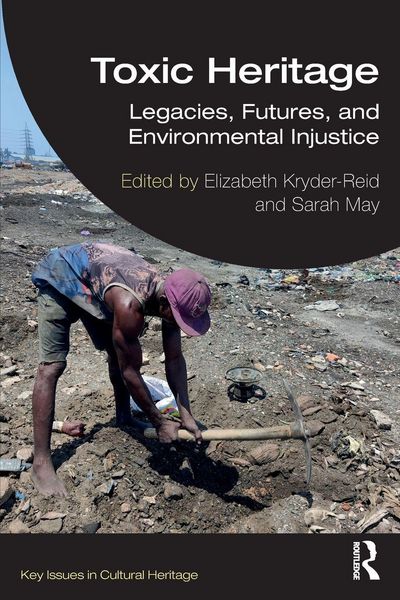
Toxic Heritage Legacies, Futures, and Environmental Injustice

49,99 €

inkl. gesetzl. MwSt., Versandkostenfrei


Beschreibung

Produktdetails

Einband

Taschenbuch

Erscheinungsdatum

21.07.2023

Abbildungen

110 SW-Abb., 109 SW-Fotos, 1 SW-Zeichn., 1 Tabellen

Herausgeber

Kryder-Reid Elizabeth + weitere

Verlag

Taylor & Francis

Seitenzahl

384

Maße (L/B/H)

23,4/15,6/2,1 cm

Gewicht

582 g

Sprache

Englisch

ISBN

978-1-03-242997-7

Beschreibung

Produktdetails

Einband

Taschenbuch

Erscheinungsdatum

21.07.2023

Abbildungen

110 SW-Abb., 109 SW-Fotos, 1 SW-Zeichn., 1 Tabellen

Herausgeber

Verlag

Taylor & Francis

Seitenzahl

384

Maße (L/B/H)

23,4/15,6/2,1 cm

Gewicht

582 g

Sprache

Englisch

ISBN

978-1-03-242997-7

Herstelleradresse

Libri GmbH
Europaallee 1
36244 Bad Hersfeld
DE

Email: gpsr@libri.de

Noch keine Bewertungen vorhanden

Verfassen Sie die erste Bewertung zu diesem Artikel

Helfen Sie anderen Kundinnen und Kunden durch Ihre Meinung.

Kundinnen und Kunden meinen

Bewertungen (0)

Die Leseprobe wird geladen.
  • Produktbild: Toxic Heritage
  • Produktbild: Toxic Heritage
  • Foreword; Introduction: Toxic Heritage: An Introduction. Section 1: Introduction - Section 1 "Framing Toxicity": Chapter 1: Toxic legacies of slickens in California: a mobile heritage of hydraulic mining debris; Visual Essay 1: Visual Essay: Extraction old and new: toxic legacies of mining the desert in southwestern Africa; Chapter 2: Of blaes and bings: the (non)toxic heritage of the West Lothian oil shale industry; Chapter 3: When Toxic Heritage is Forever: Confronting PFAS Contamination and Toxicity as Lived Experience; Chapter 4: Plasticity and Time: Using the Stress-Strain Curve as a Framework for Investigating the Wicked Problems of Marine Pollution and Climate Change. Section 2: Introduction - Section 2 "The Politics of Toxic Heritage": Chapter 5: Heritage-led Regeneration and the Sanitisation of Memory in the Lower Swansea Valley; Case Study 1: Ghost Wrecks of the Anthropocene: An Enduring Toxic Legacy of the Pacific War; Chapter 6: Military Legacies and Indigenous Heritage in Canada's Newest National Park Reserve; Case Study 2: Trash Fires as Toxic Heritage in Palestine; Chapter 7: Politics of Mining: Toxic Heritage in the Atacama Desert; Case Study 3: Sticky, Stinky, Squalid: The toxic leachate of households' waste in an area of urban decay in Tehran (Iran); Chapter 8: Toxic Landmarking and Technoprecarious Heritage in Ghana. Section 3: Section 3 Affected Communities, Activism, and Agency - Introduction: Chapter 9: Reluctant Returns: Repatriating a Poisoned Past; Case Study 4: Public Memory of Toxic Displacement: Heavy Metal Contamination and Superfund Remediation in Federally Assisted Housing Communities; Visual Essay 2: Translating and Transforming Toxicity: Moving Between Ethnography and Graphic Art; Chapter 10: Preservation by demolition: Toxic heritage in contemporary China; Chapter 11: Unwanted Legacy and Memory of the Milieu: Toxic Materials, Remediation, Habituation (Estarreja, Portugal); Chapter 12: Environmental and Embodied Agro-toxic heritage in Rural Uruguay: From Recognition to Transition to Sustainability among Dairy Farmers. Section 4 Introduction - Section 4 "Narratives of Toxic Heritage": Chapter 13: Dirty Laundry: the Toxic Heritage of Dry Cleaning in Indianapolis, Indiana; Case Study 5: When Cleaning up the Battlefields from Time of War has Polluted Soils in Time of Peace: A Silent but Visible Toxic Legacy from the Great War; Chapter 14: Toxic City: Industrial Residues, the Body and Community Activism as Heritage Practice in Glasgow; Case Study 6: Rubber as (toxic) heritage: the Amazonian rubber case; Case Study 7: Three memory frameworks on Chernobyl; Chapter 15: The Toxic Anthracite: Toxic Heritage. Section 5: Introduction - Section 5 "Approaches and Interventions": Chapter 16: Environmental Justice Tours: Transformative Narratives of Struggle, Solidarity and Activism; Visual Essay 3: Getting the Lead Out, One Community at a Time; Case Study 8: Climate Museum UK: Practices in Response to the Traumasphere; Chapter 17: Toxic Heritage and Reparations: Activating Memory for Climate Justice; Case Study 9: Case Study: From Leftovers To Takeover: Latent Insurgency Amidst the System's Remnants; Visual Essay 4: Taking care of nuclear waste; Chapter 18: Toxic and Wasted: Artists Thinking About How to Engage With Material Futures; Conclusion: Why Toxic Heritage Matters.