Gutscheinbedingungen

**Gültig bis 15.06.2026 auf Spiele & Spielzeug online auf thalia.at, in der Thalia App ab einem Mindestbestellwert von 30€ und in allen Thalia Buchhandlungen in Österreich. In den Buchhandlungen nur gültig auf lagernde Ware. Einzelne Artikel können ausgeschlossen sein. Ausgenommen sind preisgebundene Artikel sowie online auf thalia.at und in der Thalia App einzelne Artikel von tonies®. Pro Einkauf einmal einlösbar. Nur gültig gegen Vorlage oder im Onlineshop hinterlegter Bonuscard. Infos zur Einlösung in der Buchhandlung sind auf der Bonuscard-Vorteilspreisseite zu finden. Click & Collect nur bei Onlinevorabzahlung möglich. Keine Einlösung bei Scan & Go-Bezahlung. Keine Barauszahlung. Nicht kombinierbar mit anderen Aktionen und Gutscheinen. Gutschein wird auf max. 500€ Bestellwert angerechnet. Nicht gültig für Geschenkkarten, Versandkosten und Services.

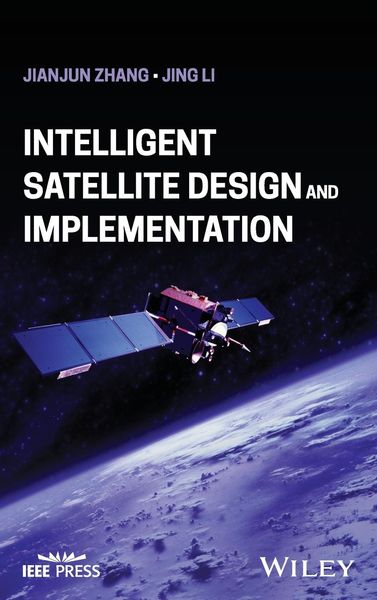
  • Produktbild: Intelligent Satellite Design and Implementation
  • Produktbild: Intelligent Satellite Design and Implementation

Intelligent Satellite Design and Implementation

152,99 €

inkl. gesetzl. MwSt., Versandkostenfrei


Beschreibung

Produktdetails

Einband

Gebundene Ausgabe

Erscheinungsdatum

16.10.2023

Verlag

Wiley

Seitenzahl

224

Maße (L/B/H)

23,5/15,7/1,6 cm

Gewicht

488 g

Sprache

Englisch

ISBN

978-1-394-19895-5

Beschreibung

Produktdetails

Einband

Gebundene Ausgabe

Erscheinungsdatum

16.10.2023

Verlag

Wiley

Seitenzahl

224

Maße (L/B/H)

23,5/15,7/1,6 cm

Gewicht

488 g

Sprache

Englisch

ISBN

978-1-394-19895-5

Herstelleradresse

Libri GmbH
Europaallee 1
36244 Bad Hersfeld
DE

Email: gpsr@libri.de

Kundinnen und Kunden meinen

0 Bewertungen

Informationen zu Bewertungen

Zur Abgabe einer Bewertung ist eine Anmeldung im Konto notwendig. Die Authentizität der Bewertungen wird von uns nicht überprüft. Wir behalten uns vor, Bewertungstexte, die unseren Richtlinien widersprechen, entsprechend zu kürzen oder zu löschen.

Die Bewertungen sind nach Format, Anzahl Sterne und Datum sortiert.

Verfassen Sie die erste Bewertung zu diesem Artikel

Helfen Sie anderen Kund*innen durch Ihre Meinung

Kundinnen und Kunden meinen

0 Bewertungen filtern

Die Leseprobe wird geladen.
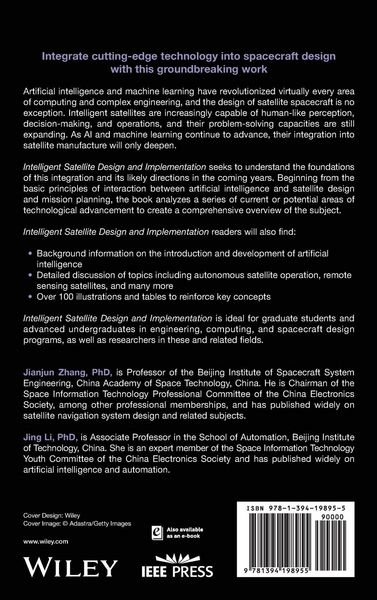
  • Produktbild: Intelligent Satellite Design and Implementation
  • Produktbild: Intelligent Satellite Design and Implementation
  • About the Authors xiii

    Preface xv

    1 Development of Artificial Intelligence 1

    1.1 The Concept and Evolution of Artificial Intelligence 1

    1.1.1 The Concept of Artificial Intelligence 1

    1.1.2 Evolution of Artificial Intelligence 5

    1.2 The Current Scope and Technical Framework of Artificial Intelligence 7

    1.2.1 Technical Scope 7

    1.2.2 Technical Framework 7

    1.2.3 Technical Features 8

    1.3 The Overall Development Trend of Artificial Intelligence 9

    1.3.1 Current Development Trend 9

    1.3.2 Technical Development Trend 13

    1.4 The Main Achievements of AI 16

    1.4.1 Image Recognition 16

    1.4.2 Speech Recognition 17

    1.4.3 Art Creation 19

    1.4.4 Other Aspects 20

    References 23

    2 Artificial Intelligence in the Satellite Field 25

    2.1 The Concept and Connotation of Intelligent Satellite 25

    2.1.1 The Concept of Intelligent Satellite 25

    2.1.1.1 Artificial Intelligence in Satellite Field 25

    2.1.1.2 Intelligent Satellite 26

    2.1.1.3 Group Intelligence 27

    2.1.1.4 Understanding of Intelligence and Autonomy 27

    2.1.2 Technical Characteristics of Intelligent Satellite 28

    2.1.2.1 Functional Level 28

    2.1.2.2 Implementation Level 29

    2.1.2.3 Apparent Level 30

    2.2 Technical Characteristics of Intelligent Satellite System 30

    2.2.1 Intelligent Classification of Satellite System 31

    2.2.1.1 Classification of Satellite Intelligent Autonomous Control 31

    2.2.1.2 Classification of Satellite Intelligent Reasoning 32

    2.2.2 Intelligent Satellite Technology Architecture 32

    2.2.2.1 Basic Layer 33

    2.2.2.2 Technical Level 34

    2.2.2.3 Application Layer 34

    2.3 Opportunities and Challenges for Satellite to Develop AI 34

    2.3.1 Development Opportunities of Smart Satellite 34

    2.3.1.1 AI Leads the Disruptive Innovation of Future Satellite Platforms Is an Inevitable Trend 35

    2.3.1.2 Artificial Intelligence Technology Will Effectively Improve the Efficiency of Satellite Systems 35

    2.3.2 Significance of Intelligent Satellite 36

    2.3.2.1 The Application and Development of Artificial Intelligence Technology in the Satellite Field Closely Meet the Needs of the Times 37

    2.3.2.2 Artificial Intelligence Technology Will Open Up a New Working Pattern of Integrating Space and Earth in Satellite Field 37

    2.3.2.3 The Development of Artificial Intelligence Technology Will Comprehensively Promote the Upgrading of the Ecological Industrial Structure in the Satellite Field 38

    2.3.3 Major Challenges of Intelligent Satellites 38

    References 41

    3 Development Status of AI Technology in Satellites 43

    3.1 Policy and Planning 43

    3.2 Technology and Application 44

    3.2.1 NASA 51

    3.2.2 European Space Agency (ESA) 52

    3.2.3 Other Countries and Regions 53

    3.3 Development Trend Analysis 53

    References 62

    4 Basic Knowledge of AI Technology 65

    4.1 The Concepts and Characteristics of Machine Learning and Deep Learning 65

    4.1.1 Artificial Intelligence: Give Human Intelligence to Machines 66

    4.1.2 Machine Learning: A Method to Realize Artificial Intelligence 66

    4.1.3 Deep Learning: A Technology to Realize Machine Learning 67

    4.1.4 Reinforcement Learning: Self-evolution Mechanism of Learning Feedback 68

    4.1.5 Transfer Learning: A New Machine Learning Method that Uses Existing Knowledge to Solve Problems in Different but Related Fields 69

    4.2 Key Technologies of AI 70

    4.2.1 Classification of Key AI Technologies 70

    4.2.2 Technical Development Trend Analysis 73

    4.3 Machine Learning 74

    4.3.1 Unsupervised Learning 74

    4.3.2 Supervise Learning 75

    4.3.3 Deep Learning 77

    4.3.3.1 Feedforward Depth Network 78

    4.3.3.2 Convolution Neural Network 78

    4.3.3.3 Cyclic Neural Network 79

    4.3.3.4 Bidirectional Deep Network 80

    4.4 Natural Language Processing 80

    4.4.1 Introduction to Natural Language Processing Methods 81

    4.4.2 Introduction of Natural Language Processing Model 82

    4.5 Knowledge Engineering 82

    4.5.1 Expert System 83

    4.5.1.1 Development of Expert System 83

    4.5.1.2 Expert System and Its Functions 84

    4.5.1.3 Structure of Expert System 86

    4.5.2 Data Mining 86

    References 90

    5 AI Requirements for Satellite System 95

    5.1 Demand Requirements for AI Technology in Satellite System 95

    5.1.1 Space Intelligent Perception Requirements 96

    5.1.2 Space Intelligent Decision-Making and Control Requirements 96

    5.1.3 Space Cluster Intelligence Requirements 97

    5.1.4 Space Intelligent Interaction Requirements 98

    5.1.5 Space Intelligent Design Requirements 98

    5.2 Challenges and Solutions of Artificial Intelligence in Aerospace Applications 99

    5.2.1 Hardware Level 99

    5.2.2 Software Level 100

    5.2.3 System Level 101

    References 104

    6 Intelligent Remote-Sensing Satellite System 107

    6.1 Technical Analysis of Intelligent Remote-Sensing Satellite System 107

    6.1.1 Technical Requirements Analysis of Remote-Sensing Satellite Artificial Intelligence System 107

    6.1.2 Concept Connotation of Intelligent Remote-Sensing Satellite System 110

    6.1.3 Main Features of Intelligent Remote-Sensing Satellite System 111

    6.1.3.1 Special Function 111

    6.1.3.2 Variable Imaging Mode 112

    6.1.3.3 Real-time Processing of Onboard Data 112

    6.1.3.4 Real-time Data Download 112

    6.2 Basic Structure of Intelligent Remote-Sensing Satellite System 113

    6.2.1 Intelligent Expert System 114

    6.2.1.1 Intelligent Identification Module 114

    6.2.1.2 Intelligent Decision Module 114

    6.2.1.3 Intelligent Evolution Module 115

    6.2.1.4 Intelligent Execution System 115

    6.2.2 Intelligent Semantic Interpretation System 116

    6.3 Key Technical Directions of Intelligent Remote-Sensing Satellite System 116

    6.3.1 Develop Autonomous Parameters and Mode Adaptation Technology of Remote Sensor 117

    6.3.2 Develop Satellite Autonomous Mission Planning Technology 117

    6.3.3 Develop In-Orbit Semantic Interpretation Technology of Remote-Sensing Images 117

    6.4 Typical Application Cases 118

    6.4.1 Rapid Intelligence Generation and Release of Remote-Sensing Satellite 118

    6.4.2 On-track Feature-level Fusion Processing and New Feature Learning 119

    6.4.3 On-track Independent Disaster Identification and Alarm 120

    6.4.4 Distributed Autonomous Mission Planning for Constellation 120

    6.4.5 AI Technology-assisted OODA Loop 121

    References 122

    7 Intelligent Communication Satellite System 125

    7.1 Requirements for AI System Technology by Communication Satellite 125

    7.1.1 Satellite Security Requirements 125

    7.1.1.1 The Disintegration of Japan's Astro-H Satellite in Orbit 126

    7.1.1.2 Anik-F2 Satellite Communication Service Interruption 127

    7.1.2 Load Usability Requirements 127

    7.1.3 Requirements for Autonomous Operation of Satellites 128

    7.2 Key Technologies of Communication Satellite Intelligent System 129

    7.2.1 Spectrum Sensing Technology in Satellite Communication 129

    7.2.1.1 Introduction to Cognitive Radio 129

    7.2.1.2 Spectrum Parameters 132

    7.2.1.3 Spectrum Sensing Concept 133

    7.2.1.4 Spectrum Sensing Algorithm 134

    7.2.2 Intelligent Information Distribution and Push Technology 134

    7.2.3 Satellite Digital Channelization Technology 135

    7.2.3.1 Basic Structure of Onboard Flexible Transponder 135

    7.2.3.2 Digital Channeler Signal Separation and Signal Synthesis Algorithm 137

    7.2.4 Spaceborne Intelligent Antenna Beamforming Technology 139

    7.2.4.1 Classification of Intelligent Antenna Digital Beamforming Technology 139

    7.2.4.2 Broadband Digital Beamforming Technology 140

    7.3 Typical Application Cases 140

    7.3.1 Software Definition Satellite 140

    7.3.2 Autonomous Orbit Change/Orbit Maneuver of Satellite 141

    7.3.3 Satellite Intelligent Spectrum Sensing and Anti-interference 142

    References 143

    8 Intelligent Navigation Satellite System 145

    8.1 Intelligent Management of Constellation Network 146

    8.1.1 Satellite Network Intelligent Management Technology 146

    8.1.2 Constellation-level Intelligent Autonomous Navigation Technology 147

    8.2 Satellite Independent Health Management 149

    8.2.1 High Reliability and Autonomy of Satellites 150

    8.2.2 Long-Term Autonomous Operation of Satellites in Orbit 150

    8.3 Intelligent Fault Diagnosis and Prediction Technology 152

    8.3.1 Fault Diagnosis Method Based on Signal Processing 152

    8.3.2 Fault Diagnosis Method Based on Analytical Model 153

    8.3.3 Knowledge-based Fault Diagnosis Method 153

    8.3.3.1 Model-based Fault Prediction Technology 154

    8.3.3.2 Fault Prediction Technology Based on Data Driven 155

    8.3.3.3 Fault Prediction Technology Based on Statistical Reliability 155

    8.4 Intelligent On-Orbit Maintenance of Satellite 156

    8.4.1 Evolutionary Hardware Technology 156

    8.4.2 Reconfigurable Computing Technology 160

    8.4.2.1 Research on Reconfigurable Computing Hardware 161

    8.4.2.2 Research on Reconfigurable Computing System Programming 162

    8.4.2.3 Applied Research 163

    8.5 Typical Application Cases 165

    8.5.1 Long-term Autonomous Navigation 165

    8.5.2 Navigation Intelligent Countermeasure 166

    References 166

    9 Application of AI in Aerospace Loads 169

    9.1 Intelligent Load Software Architecture 169

    9.2 Cloud Service Center Software Architecture 170

    9.3 Network-oriented Communication Protocol 172

    9.4 Intelligent Expert System 173

    9.4.1 Intelligent Identification Module 174

    9.4.2 Intelligent Decision-Making Module 174

    9.4.3 Intelligent Evolution Module 175

    9.5 Intelligent Execution System 175

    9.6 Intelligent Semantic Interpretation System 176

    9.7 Intelligent Load Onboard Intelligent Processing Technology Scheme 177

    9.8 Digital Multi-function Load 179

    9.8.1 American SCAN Test Bench 179

    9.8.2 UK Full Digital Payload 181

    9.8.3 The European Space Agency's Second-Generation Galileo Satellite 182

    References 183

    10 Future Development of Intelligent Satellite 185

    10.1 Application Prospect of AI in Aerospace Field 185

    10.1.1 Autonomous Operation Satellite System Based on Artificial Intelligence 185

    10.1.2 Satellite State Detection, Fault Diagnosis, and System Reconstruction 186

    10.1.3 Satellite Intelligent Autonomous Control Technology 187

    10.1.4 Intelligent Planning and Scheduling of Satellites 188

    10.1.5 Satellite Collaboration and Cooperation 188

    10.1.5.1 Lots of Scientific Data 189

    10.1.5.2 Complex Scientific Instruments 189

    10.1.5.3 Increased Number of Satellites 189

    10.1.6 Multi-satellite Mission Management 190

    10.2 The Next Development Gocus 191

    10.2.1 Design of Onboard Intelligent Chip 191

    10.2.2 Satellite System Design Based on Artificial Intelligence 191

    10.2.3 On-track Fault Detection and Maintenance Based on Artificial Intelligence 192

    10.2.4 Satellite Intelligent Control Based on Artificial Intelligence 193

    10.2.5 Space-ground Integration Based on Artificial Intelligence 194

    10.2.6 Satellite Intelligent Platform Based on Artificial Intelligence 194

    10.3 Summary 195

    References 195

    Index 197