KI-Beratung Beta

Gutscheinbedingungen

**Gültig am 25.11.2026 auf fremdsprachige Bücher online auf thalia.at und in der Thalia App. Einzelne Artikel können ausgeschlossen sein. Ausgenommen sind preisgebundene Artikel & eBooks. Pro Einkauf einmal einlösbar. Click & Collect nur bei Onlinevorabzahlung möglich. Keine Barauszahlung. Nicht kombinierbar mit anderen Aktionen und Gutscheinen. Gutschein wird auf max. 500€ Bestellwert angerechnet. Nicht gültig für Geschenkkarten, Versandkosten und Services.

Produktbild: Minds on Stage

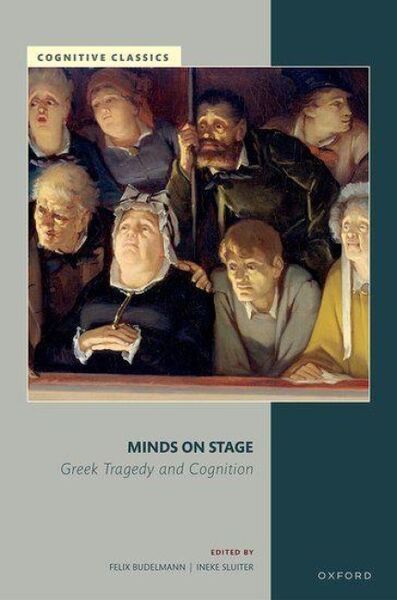
Minds on Stage Greek Tragedy and Cognition

153,99 €

inkl. gesetzl. MwSt., Versandkostenfrei


Beschreibung

Greek tragedy parades, tests, stimulates, and upends human cognition. Characters plot deception, try to fathom elusive gods, and fail to recognise loved ones. Spectators observe the characters' cognitive limitations and contemplate their own, grapple with moral quandaries and emotional breakdown, overlay...

Beschreibung

Greek tragedy parades, tests, stimulates, and upends human cognition. Characters plot deception, try to fathom elusive gods, and fail to recognise loved ones. Spectators observe the characters' cognitive limitations and contemplate their own, grapple with moral quandaries and emotional breakdown, overlay mythical past and topical present, and all the while imagine that a man with a mask is Helen of Troy. With broad coverage of both plays and cognitive capabilities, Minds on Stage pursues a dual aim: to expand our understanding of Greek tragedy and to use Greek tragedy as a focal point for exploring cognitive thinking about literature. After an introduction that considers questions of methodology, the volume is divided into three parts. Part One examines the dynamics of mind-reading by characters and audience, with articles on Aeschylus, Sophocles, and Euripides. The chapters in Part Two study aspects of the characters' cognitive sense-making, from individual styles of attributing causes and different manners of remembering, to the use of objects as tools for thinking. Finally, Part Three turns to the cognitive dimension of spectating. The articles treat the spectators' generic expectations and different modes of engagement with the fictional worlds of the plays, the joint nature of their attention to the drama, the nexus between aesthetic illusion and the ethics of deception, as well as the situated nature of cognition that helps both audiences and characters make sense of morally complex situations.

Produktdetails

Einband

Gebundene Ausgabe

Erscheinungsdatum

01.09.2023

Herausgeber Felix Budelmann + weitere
Verlag Oxford University Press

Produktdetails

Einband

Gebundene Ausgabe

Erscheinungsdatum

01.09.2023

Herausgeber
Verlag Oxford University Press
Seitenzahl

282

Maße (L/B/H)

23,7/16/2,4 cm

Gewicht

592 g

Sprache

Englisch

ISBN

978-0-19-288893-8

Herstelleradresse

Libri GmbH
Europaallee 1
36244 Bad Hersfeld
DE

Email: gpsr@libri.de

Noch keine Bewertungen vorhanden

Verfassen Sie die erste Bewertung zu diesem Artikel

Helfen Sie anderen Kundinnen und Kunden durch Ihre Meinung.

Kundinnen und Kunden meinen

Bewertungen (0)

Die Leseprobe wird geladen.
  • Produktbild: Minds on Stage
    • 1: Felix Budelmann: Introduction
    • Part I Reading Minds
    • 2: Evert van Emde Boas: Mindreading, character, and realism: the case of Medea
    • 3: Sheila Murnaghan: Reading the mind of Ajax
    • 4: Michael Carroll: Space for deliberation: image schemas, metaphorical reasoning, and the dilemma of Pelasgus
    • Part II Cognitive Work by Characters
    • 5: Ruth Scodel: Attribution and Antigone
    • 6: Lucy van Essen Fishman: 'Remember to what sort of man you give this favour': Looking back on Sophocles' Ajax
    • 7: Anne-Sophie Noel: Thinking through things: extended cognition as a consolatory fiction in Greek tragedy
    • Part III Performance, Spectating, and Cognition
    • 8: Hanna Golab: Spectating ancient dramas: the Athenian audience and its emotional response
    • 9: Jonas Grethlein: Gorgias' apatê, Sophocles' Electra, and cognitive criticism
    • 10: A. C. Duncan: Seeing together: joint attention in Attic tragedy
    • 11: Seth L. Schein: Generic expectations and the interpretation of Attic tragedy some preliminary questions and considerations
    • 12: Bob Corthals and Ineke Sluiter: Situated cognition. Sophocles, Milgram, and the disobedient hero