KI-Beratung Beta

Gutscheinbedingungen

**Gültig am 25.11.2026 auf fremdsprachige Bücher online auf thalia.at und in der Thalia App. Einzelne Artikel können ausgeschlossen sein. Ausgenommen sind preisgebundene Artikel & eBooks. Pro Einkauf einmal einlösbar. Click & Collect nur bei Onlinevorabzahlung möglich. Keine Barauszahlung. Nicht kombinierbar mit anderen Aktionen und Gutscheinen. Gutschein wird auf max. 500€ Bestellwert angerechnet. Nicht gültig für Geschenkkarten, Versandkosten und Services.

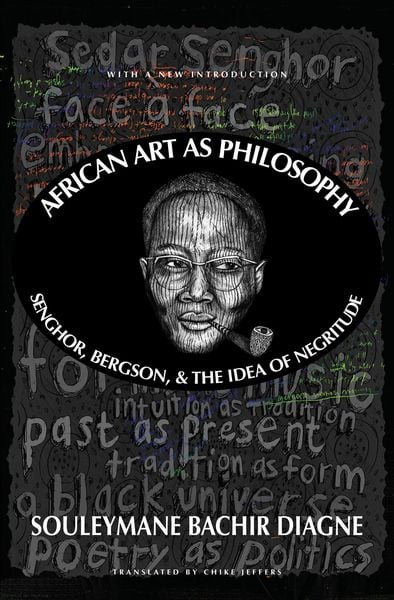
Produktbild: African Art as Philosophy

African Art as Philosophy Senghor, Bergson, and the Idea of Negritude

24,99 €

inkl. gesetzl. MwSt., zzgl. Versandkosten


  • Kostenlose Lieferung ab 30 € Einkaufswert
  • Versandkostenfrei für Bonuscard-Kund*innen

Beschreibung

This critically acclaimed study offers a distinct, incisive look at how Senegalese philosopher Senghor sees in African art the most acute expression of Bergson’s philosophy. Léopold Sédar Senghor (1906–2001) was a Senegalese poet and philosopher who in 1960 also became the first president of the Republic...

Beschreibung

This critically acclaimed study offers a distinct, incisive look at how Senegalese philosopher Senghor sees in African art the most acute expression of Bergson’s philosophy.
Léopold Sédar Senghor (1906–2001) was a Senegalese poet and philosopher who in 1960 also became the first president of the Republic of Senegal. In African Art as Philosophy, Souleymane Bachir Diagne uses a unique approach to reading Senghor’s influential works, taking as the starting point for his analysis Henri Bergson’s idea that in order to understand philosophers, one must find the initial intuition from which every aspect of their work develops. In the case of Senghor, Diagne argues that his primordial intuition is that African art is a philosophy.
To further this point, Diagne looks at what Senghor called the “1889 Revolution” (the year Bergson’s Time and Free Will was published), as well as the influential writers and publications of that period—specifically, Nietzsche and Rimbaud. The 1889 Revolution, Senghor claims, is what led him to the understanding of the “Vitalism” at the core of African religions and beliefs that found expression in the arts.

Produktdetails

Einband

Taschenbuch

Erscheinungsdatum

05.09.2023

Verlag Random House N.Y.
Seitenzahl

208

Produktdetails

Einband

Taschenbuch

Erscheinungsdatum

05.09.2023

Verlag Random House N.Y.
Seitenzahl

208

Maße (L/B/H)

20,3/13,6/1,7 cm

Gewicht

234 g

Sprache

Englisch

ISBN

978-1-63542-321-1

Herstelleradresse

Libri GmbH
Europaallee 1
36244 Bad Hersfeld
DE

Email: gpsr@libri.de

Noch keine Bewertungen vorhanden

Verfassen Sie die erste Bewertung zu diesem Artikel

Helfen Sie anderen Kundinnen und Kunden durch Ihre Meinung.

Kundinnen und Kunden meinen

Bewertungen (0)

Weitere Artikel finden Sie in

Die Leseprobe wird geladen.
  • Produktbild: African Art as Philosophy