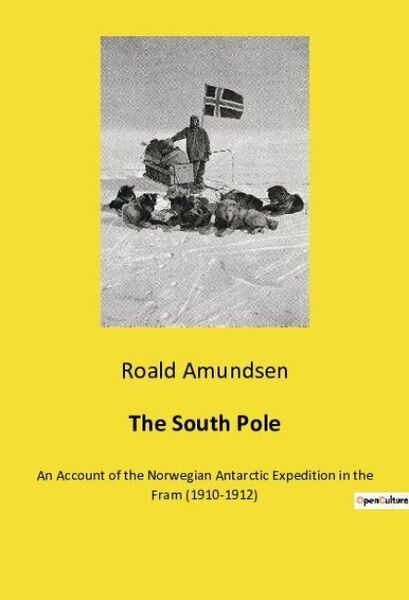
What does it take to cross a white continent with dogs, skis, and a small band of men who must trust one another in weather that can erase a trail in minutes? Roald Amundsen answers by beginning at the edge of the world and by keeping his eye on the plainest facts of travel, from store tents to snow surface, from clothing to food, from timing to distance. In A. G. Chater's translation, The South Pole reads as both travel narrative and expedition record, a sustained account of the Norwegian Antarctic expedition of the Fram between 1910 and 1912. The book opens with a wide historical frame. Before the march itself begins, Amundsen recalls the long search for the southern end of the earth and places his own venture beside the names of Ross, Borchgrevink, Gerlache, Scott, Shackleton, and Charcot. That opening gives the journey its tension, because the South Pole is never only a destination here. It is a problem of routes, weather, supplies, and timing, and the reader sees how every earlier Antarctic voyage becomes part of the background against which Amundsen must make his decisions. From there, the narrative turns to the plan and the preparations. The Fram, the dogs, the skis, the depots, the tents, the rations, the instruments, and the winter clothing all receive close attention. Amundsen writes as the man in command, knowing that a polar expedition lives or fails in the smallest details of packing and organization. The book lingers on the practical work of fitting out the ship, choosing supplies, and arranging the camp, so that the later sledge journeys do not feel abstract but earned through patient labor. The promise of success is built out of canvas, meat, fuel, and discipline. Once the expedition reaches the Ross Ice Shelf, the tone becomes even more immediate. Readers follow the passage from Madeira to the barrier, the landing at the Bay of Whales, and the construction of Framheim, the base that will shelter the men through the Antarctic winter. Depot journeys push southward to marked points at eighty, eighty-one, and eighty-two degrees south, while the home station settles into a rhythm of work, watchfulness, and endurance. A chapter built around a single day at Framheim captures the texture of polar life with unusual intimacy, making the cold, the chores, and the routines feel almost tangible. Amundsen's voice combines clear observation with a dry sense of humor and a steady respect for both human and animal effort. He does not write only about conquest. He writes about snow, fatigue, shelter, navigation, and the habits that keep a group moving together when the land itself offers no mercy. The companions named along the way, Helmer Hanssen, Olav Bjaaland, Sverre Hassel, Oscar Wisting, Prestrud, Johansen, Stubberud, Lindström, and Thorvald Nilsen, become part of a working team whose roles are defined by skill, trust, and endurance rather than by rhetoric. The later chapters broaden the book again, with the start for the Pole, the crossing through the mountains, the arrival at the Pole, and the return to Framheim followed by the long northward journey and the eastern sledge expedition. The appendices carry the account beyond memoir into observation and record, with notes on the Fram, meteorology, geology, astronomy, and oceanography. If you want a classic Antarctic expedition book that blends polar history, scientific travel writing, and the lived reality of the South Pole quest, this is a rewarding place to begin, and one that still speaks directly to readers who are ready to follow the tracks into the ice.