KI-Beratung Beta

Gutscheinbedingungen

**Gültig bis 30.11.2026 auf Spielzeug, Schreibwaren, Filme, Geschenke & Trends, Musik, tolino eReader & Zubehör, Hörbücher und Hörbuch-Downloads, nicht preisgebundene Bücher und Kalender online auf thalia.at und in der Thalia App. Einzelne Artikel können ausgeschlossen sein. Aufgrund der Buchpreisbindung sind deutschsprachige Bücher und eBooks ausgenommen. Zusätzlich ausgenommen sind Abos & Flatrates, Games, Geschenkkarten/-boxen, Shelfies, Software, Zeitschriften sowie einzelne Artikel von tonies®. Pro Einkauf einmal einlösbar. Nur gültig mit im Onlineshop hinterlegter Bonuscard. Click & Collect nur bei Onlinevorabzahlung möglich. Keine Barauszahlung. Nicht kombinierbar mit anderen Aktionen und Gutscheinen. Gutschein wird auf max. 500€ Bestellwert angerechnet. Nicht gültig für Versandkosten und Services.

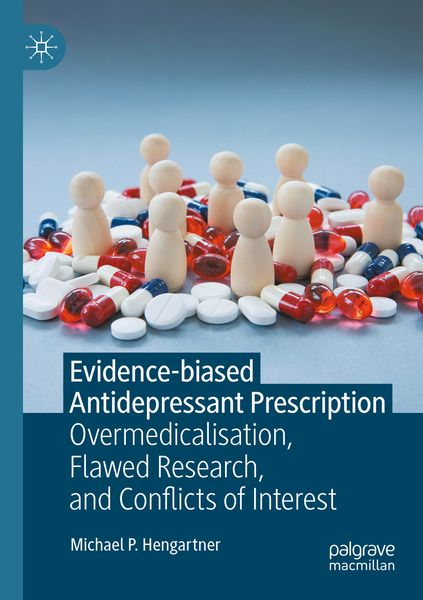
  • Produktbild: Evidence-biased Antidepressant Prescription
  • Produktbild: Evidence-biased Antidepressant Prescription
- 12%

Evidence-biased Antidepressant Prescription Overmedicalisation, Flawed Research, and Conflicts of Interest

12% sparen

114,99 € UVP 131,99 €

inkl. gesetzl. MwSt., Versandkostenfrei


Beschreibung

This book addresses the over-prescribing of antidepressants in people with mostly mild and subthreshold depression. It outlines the steep increase in antidepressant prescription and critically examines the current scientific evidence on the efficacy and safety of antidepressants in depression. The book...

Beschreibung

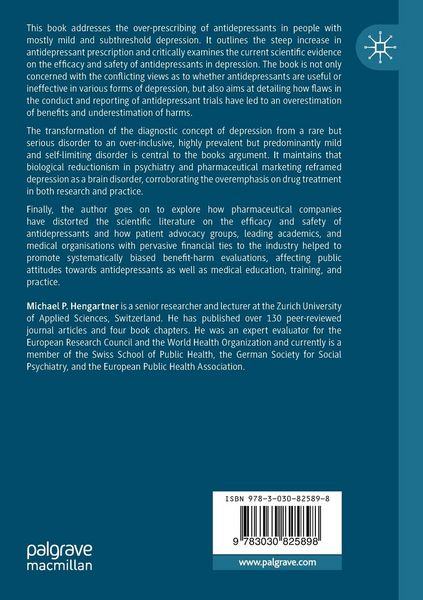
This book addresses the over-prescribing of antidepressants in people with mostly mild and subthreshold depression. It outlines the steep increase in antidepressant prescription and critically examines the current scientific evidence on the efficacy and safety of antidepressants in depression. The book is not only concerned with the conflicting views as to whether antidepressants are useful or ineffective in various forms of depression, but also aims at detailing how flaws in the conduct and reporting of antidepressant trials have led to an overestimation of benefits and underestimation of harms. 
The transformation of the diagnostic concept of depression from a rare but serious disorder to an over-inclusive, highly prevalent but predominantly mild and self-limiting disorder is central to the books argument. It maintains that biological reductionism in psychiatry and pharmaceutical marketing reframed depression as a brain disorder, corroboratingthe overemphasis on drug treatment in both research and practice. 
Finally, the author goes on to explore how pharmaceutical companies have distorted the scientific literature on the efficacy and safety of antidepressants and how patient advocacy groups, leading academics, and medical organisations with pervasive financial ties to the industry helped to promote systematically biased benefit-harm evaluations, affecting public attitudes towards antidepressants as well as medical education, training, and practice.  

Produktdetails

Einband

Taschenbuch

Erscheinungsdatum

11.12.2022

Verlag Springer
Seitenzahl

354

Produktdetails

Einband

Taschenbuch

Erscheinungsdatum

11.12.2022

Verlag Springer
Seitenzahl

354

Maße (L/B/H)

21/14,8/2 cm

Gewicht

471 g

Auflage

1st ed. 2022

Sprache

Englisch

ISBN

978-3-030-82589-8

Herstelleradresse

Springer-Verlag GmbH
Tiergartenstr. 17
69121 Heidelberg
DE

Email: ProductSafety@springernature.com

Noch keine Bewertungen vorhanden

Verfassen Sie die erste Bewertung zu diesem Artikel

Helfen Sie anderen Kundinnen und Kunden durch Ihre Meinung.

Kundinnen und Kunden meinen

Bewertungen (0)

  • Produktbild: Evidence-biased Antidepressant Prescription
  • Produktbild: Evidence-biased Antidepressant Prescription
  • 1.    Introduction: How did I get here?.- 2.    Antidepressants in clinical practice.- 3.    Medico-cultural context.- 4.    Flaws in antidepressant research.- 5.    Conflicts of interest in psychiatry.- 6.    Solutions for reform.