KI-Beratung Beta

  • Produktbild: Sectarianism, De-Sectarianization and Regional Politics in the Middle East
  • Produktbild: Sectarianism, De-Sectarianization and Regional Politics in the Middle East

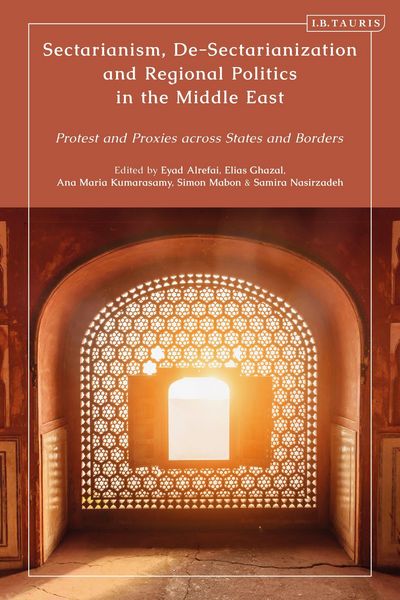
Sectarianism, De-Sectarianization and Regional Politics in the Middle East Protest and Proxies Across States and Borders

135,99 €

inkl. gesetzl. MwSt., Versandkostenfrei


Beschreibung

Following the Arab Uprisings, new ways of understanding sectarianism and sect-based differences emerged. But these perspectives, while useful, reduced sectarian identities to a consequence of either primordial tensions or instrumentalised identities. While more recently 'third way' approaches addressed...

Beschreibung

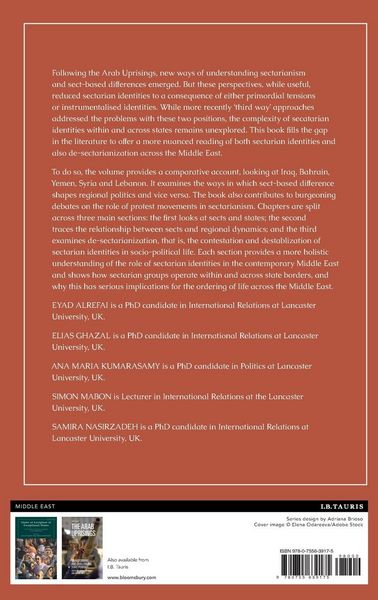
Following the Arab Uprisings, new ways of understanding sectarianism and sect-based differences emerged. But these perspectives, while useful, reduced sectarian identities to a consequence of either primordial tensions or instrumentalised identities. While more recently 'third way' approaches addressed the problems with these two positions, the complexity of secatarian identities within and across states remains unexplored. This book fills the gap in the literature to offer a more nuanced reading of both sectarian identities and also de-sectarianization across the Middle East.
To do so, the volume provides a comparative account, looking at Iraq, Bahrain, Yemen, Syria and Lebanon. It examines the ways in which sect-based difference shapes regional politics and vice versa. The book also contributes to burgeoning debates on the role of protest movements in sectarianism. Chapters are split across three main sections: the first looks at sects and states; the second traces the relationship between sects and regional dynamics; and the third examines de-sectarianization, that is, the contestation and destablization of sectarian identities in socio-political life. Each section provides a more holistic understanding of the role of sectarian identities in the contemporary Middle East and shows how sectarian groups operate within and across state borders, and why this has serious implications for the ordering of life across the Middle East.

Produktdetails

Einband

Gebundene Ausgabe

Erscheinungsdatum

01.01.2024

Herausgeber Samira Nasirzadeh + weitere
Verlag I.B. Tauris

Produktdetails

Einband

Gebundene Ausgabe

Erscheinungsdatum

01.01.2024

Herausgeber
Verlag I.B. Tauris
Seitenzahl

254

Maße (L/B/H)

24/16,1/1,8 cm

Gewicht

499 g

Sprache

Englisch

ISBN

978-0-7556-3917-5

Herstelleradresse

Libri GmbH
Europaallee 1
36244 Bad Hersfeld
DE

Email: gpsr@libri.de

Noch keine Bewertungen vorhanden

Verfassen Sie die erste Bewertung zu diesem Artikel

Helfen Sie anderen Kundinnen und Kunden durch Ihre Meinung.

Kundinnen und Kunden meinen

Bewertungen (0)

Die Leseprobe wird geladen.
  • Produktbild: Sectarianism, De-Sectarianization and Regional Politics in the Middle East
  • Produktbild: Sectarianism, De-Sectarianization and Regional Politics in the Middle East
  • Introduction, Sectarianism, geopolitics and De-Sectarianization in the Middle East, Simon Mabon., University of Lancaster, UK; & Ana Kumarasamy, University of Lancaster, UK

    Section I: Politics of Sectarinianism

    Chapter 1: Politics of Sectarinism in Iraq, Harith Hasan, The Carnegie Middle East Center, USA
    Chapter 2: Taif at Thirty: A Revolution against Orientalism, Madonna Kalousian: Lancaster University, UK
    Chapter 3: The Weakness of Sovereignty in Authoritarian Regimes, Samuel Peter Mace, Leeds University, UK
    Chapter 4: De-essentializing Sectarianism: A Study of Iran's Regional Politics, Chimat Ladol, Jawaharlal Nehru University, UK

    Section II: Regional Dynamics & Proxies

    Chapter 5: The Spectre of Geopolitically Charged Sectarianism, Ibrahim Halawi, Royal Holloway, UK
    Chapter 6: The Deal of Discontent Saudi Arabia, Iran & the Nuclear Deal, Olivia Isabell Glombitza, Universitat Autònoma de Barcelona, UK
    Chapter 7: Securitization through Sectarianization in Bahrain, Samira Nasirzadeh, Lancaster University, UK
    Chapter 8: Bridging Ethno-Religious Divides by Proxy? Non-State Sponsorship and Sectarianism in the Middle East, Michel Wyss, Military Academy, Switzerland
    Chapter 9: The Importance of Framing Conflicts-Building the Narrative of a Proxy War in Yemen, Maria-Louise Clausen: Danish Institute for International Studies, Denmark
    Chapter 10: Sectarianism and Civil Wars in the MENA Region, Francesco Belcastro: University of Derby, UK

    Section III: De-sectarianization

    Chapter 11: Iran's Soft Power in the Gulf from Islamic Revolution to Post Intra Gulf Crisis, Nesibe Hicret Battaloglu, Middle East Technical University, Turkey
    Chapter 12: Discursive De-Secterianization: Re-Ordering Saudi Foreign and Domestic Policy Making, Umer Karim, University of Birmingham, UK
    Chapter 13: How to Understand the Role of Al-Azhar in the Sunni-Shi'i Rapprochement?, Hossam Ed-Deen Allam, Lancaster University, UK

    Conclusion, Samira Nasirzadeh, University of Lancaster, UK; Elias Ghazal, University of Lancaster, UK; Eyad Alrefai, University of Lancaster, UK; Ana Kumarasamy, University of Lancaster, UK