Beschreibung
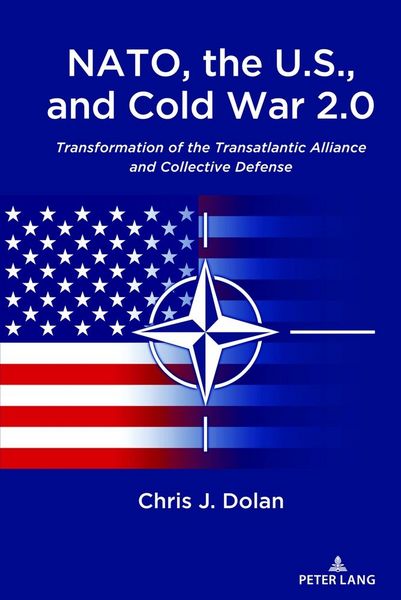
This is one of the first books on U.S. foreign policy and NATO in the international system published in the immediate wake of the Russian invasion of Ukraine. The book assesses the extent to which the Russian invasion of Ukraine pushed both the U.S. and NATO into making necessary changes to contend with a multipolar world structured in terms of Cold War 2.0 great power competition. The North Atlantic space is now a complex and complicated strategic environment. In addition to the persistent confrontation between NATO and Russia over Ukraine, multi-dimensional security challenges emanate from China. In addition, hybrid war operations and competition over advanced technologies are fast becoming disruptive threats as are transnational threats like climate change, pandemics, and migration. Moreover, a Cold War 2.0 system of tension and rivalry is playing out along military, economic, and technological lines with two bounded orders between the U.S. and NATO allies on one side and China and Russia on the other. The consequences will likely force NATO to wrestle with whether the alliance is transatlantic with a global outlook or a global alliance with responsibility for upholding the liberal world order. "This is a timely contribution to deepen our understanding of how Russian and Chinese offensive maneuvers, along with the security risks posed by the current pandemic, climate change, terrorism, migration, and threats posed by hybrid war-fare are shaping NATO’s strategic reorientation. Dolan also recognizes the internal threats to liberal democracies, namely the rise of illiberal political forces, in NATO member states and the challenges they pose to the Euro-Atlantic alliance. The book is clearly organized and includes the author’s recommendations for NATO’s effective path forward."—S. Mohsin Hashim, Professor of Political Science, Muhlenberg College "An extraordinarily timely and germane assessment of the evolution of the transatlantic relationship and the identity and roles of the North Atlantic Treaty Organization (NATO) in the European, Eurasian, Greater Middle Eastern, and broader global security architecture in the wake of Russia’s intervention in (and conduct of a war of choice against) Ukraine beginning in February 2022. Most significantly, the book is instructive in situating the historical strains of cooperation and discord between the United States and its European allies within shifting strategic and geopolitical environments that demand balance and in safeguarding often interconnected threats posed by global and regional adversaries, most notably Russia, China, Iran and North Korea on one hand, and transnational challenges such as climate change, cybersecurity, and Islamist extremist driven terrorism on the other. Further, the author is adept in identifying and explaining the links between those threats emphasized in the 2022 NATO Strategic Concept and the daunting challenges in achieving the requisite transatlantic unity to manage them effectively."—Robert J. Pauly, Jr., Professor of International Development, The University of Southern Mississippi
Rezension
“This is a timely contribution to deepen our understanding of how Russian and Chinese offensive maneuvers, along with the security risks posed by the current pandemic, climate change, terrorism, migration, and threats posed by hybrid war-fare are shaping NATO’s strategic reorientation. Dolan also recognizes the internal threats to liberal democracies, namely the rise of illiberal political forces, in NATO member states and the challenges they pose to the Euro-Atlantic alliance. The book is clearly organized and includes the author’s recommendations for NATO’s effective path forward.”
—S. Mohsin Hashim, Professor of Political Science, Muhlenberg College
“An extraordinarily timely and germane assessment of the evolution of the transatlantic relationship and the identity and roles of the North Atlantic Treaty Organization (NATO) in the European, Eurasian, Greater Middle Eastern, and broader global security architecture in the wake of Russia’s intervention in (and conduct of a war of choice against) Ukraine beginning in February 2022. Most significantly, the book is instructive in situating the historical strains of cooperation and discord between the United States and its European allies within shifting strategic and geopolitical environments that demand balance and in safeguarding often interconnected threats posed by global and regional adversaries, most notably Russia, China, Iran and North Korea on one hand, and transnational challenges such as climate change, cybersecurity, and Islamist extremist driven terrorism on the other. Further, the author is adept in identifying and explaining the links between those threats emphasized in the 2022 NATO Strategic Concept and the daunting challenges in achieving the requisite transatlantic unity to manage them effectively.”
—Robert J. Pauly, Jr., Professor of International Development, The University of Southern Mississippi