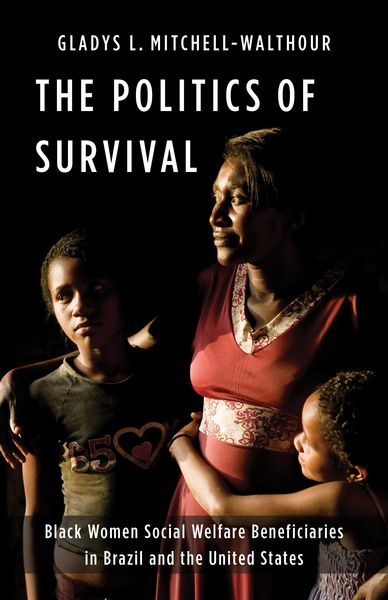
The Politics of Survival Black Women Social Welfare Beneficiaries in Brazil and the United States
-
- Einzelkauf Download ausgewählt
-
Sprache:Englisch
31,90 €
inkl. gesetzl. MwSt.Beschreibung
Produktdetails
Format
ePUB
Kopierschutz
Nein
Family Sharing
Nein
Text-to-Speech
Ja
Erscheinungsdatum
27.06.2023
Verlag
Columbia University PressSeitenzahl
280 (Printausgabe)
Sprache
Englisch
EAN
9780231557078
Winner, 2024 Anna Julia Cooper Outstanding Publication Award, Association for the Study of Black Women in Politics
Poor Black women who benefit from social welfare are marginalized in a number of ways by interlocking systemic racism, sexism, and classism. The media renders them invisible or casts them as racialized and undeserving "welfare queens" who exploit social safety nets. Even when Black women voters are celebrated, the voices of the poorest too often go unheard. How do Afro-descendant women in former slave-holding societies survive amid multifaceted oppression?
Gladys L. Mitchell-Walthour offers a comparative analysis of how Black women social welfare beneficiaries in Brazil and the United States defy systems of domination. She argues that poor Black women act as political subjects in the struggle to survive, to provide food for their children and themselves, and challenge daily discrimination even in dire circumstances. Mitchell-Walthour examines the effects of social welfare programs, showing that mutual aid networks and informal labor also play important roles in beneficiaries' lives. She also details how Afro-descendant women perceive stereotypes and discrimination based on race, class, gender, and skin color. Mitchell-Walthour considers their formal political participation, demonstrating that low-income Black women support progressive politics and that religious affiliation does not lead to conservative attitudes.
Drawing on Black feminist frameworks, The Politics of Survival confronts the persistent invisibility of poor Black women by foregrounding their experiences and voices. Providing a wealth of empirical evidence on these women's views and survival strategies, this book not only highlights how systemic structures marginalize them but also offers insight into how they resist such forces.
Noch keine Bewertungen vorhanden
Verfassen Sie die erste Bewertung zu diesem Artikel
Helfen Sie anderen Kundinnen und Kunden durch Ihre Meinung.
Kurze Frage zu unserer Seite
Vielen Dank für Ihr Feedback
Wir nutzen Ihr Feedback, um unsere Produktseiten zu verbessern. Bitte haben Sie Verständnis, dass wir Ihnen keine Rückmeldung geben können. Falls Sie Kontakt mit uns aufnehmen möchten, können Sie sich aber gerne an unseren Kund*innenservice wenden.
zum Kundenservice