KI-Beratung Beta

Gutscheinbedingungen

**Gültig bis 30.11.2026 auf Spielzeug, Schreibwaren, Filme, Geschenke & Trends, Musik, tolino eReader & Zubehör, Hörbücher und Hörbuch-Downloads, nicht preisgebundene Bücher und Kalender online auf thalia.at und in der Thalia App. Einzelne Artikel können ausgeschlossen sein. Aufgrund der Buchpreisbindung sind deutschsprachige Bücher und eBooks ausgenommen. Zusätzlich ausgenommen sind Abos & Flatrates, Games, Geschenkkarten/-boxen, Shelfies, Software, Zeitschriften sowie einzelne Artikel von tonies®. Pro Einkauf einmal einlösbar. Nur gültig mit im Onlineshop hinterlegter Bonuscard. Click & Collect nur bei Onlinevorabzahlung möglich. Keine Barauszahlung. Nicht kombinierbar mit anderen Aktionen und Gutscheinen. Gutschein wird auf max. 500€ Bestellwert angerechnet. Nicht gültig für Versandkosten und Services.

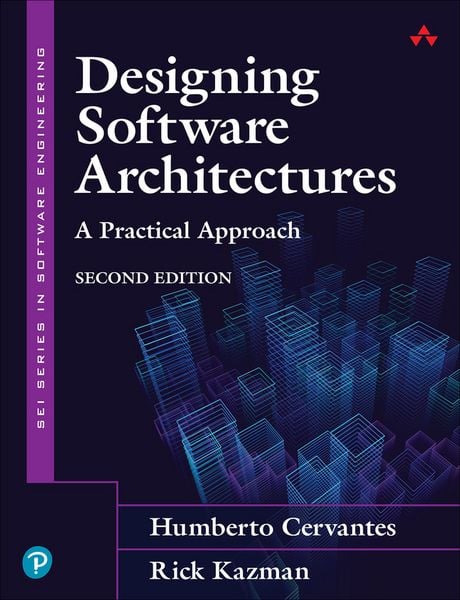
Produktbild: Designing Software Architectures: A Practical Approach

Designing Software Architectures: A Practical Approach

51,99 €

inkl. gesetzl. MwSt., Versandkostenfrei


Beschreibung

Learn how to create successful architectural designs and improve your current design practices!

Designing Software Architectures, 2nd Edition, provides a practical, step-by-step methodology for architecture design that any professional software engineer can use, with structured methods supported by...

Beschreibung

Learn how to create successful architectural designs and improve your current design practices!

Designing Software Architectures, 2nd Edition, provides a practical, step-by-step methodology for architecture design that any professional software engineer can use, with structured methods supported by reusable chunks of design knowledge and rich case studies that demonstrate how to use the methods.

The Attribute-Driven Design method may not have changed since this book's first printing, but almost everything else about the industry has. In this newly updated edition, you will find new chapters on supporting business agility through API-centric design, deployability, cloud-based solutions, and technical debt in design.

Humberto Cervantes and Rick Kazman illuminate best practices for how architects should design complex systems so you can make design decisions in systematic, repeatable, and cost-effective ways. This book will help you become a better, more confident designer who can create high-quality architectures with ease.

The new edition includes:

  • A clear explanation of the Attribute-Driven Design method
  • New chapters focused on the technical environments and contexts of contemporary design
  • Two new case studies on The Hotel Pricing System and Digital Twin Platform
  • Coverage of current architecture topics like cloud computing, DevOps, and large-scale systems
  • Methods to make architecture design agile and achievable

Produktdetails

Einband

Taschenbuch

Erscheinungsdatum

28.09.2024

Verlag Pearson Education Limited
Seitenzahl

336

Produktdetails

Einband

Taschenbuch

Erscheinungsdatum

28.09.2024

Verlag Pearson Education Limited
Seitenzahl

336

Maße (L/B/H)

23,5/17,8/1,9 cm

Gewicht

586 g

Auflage

2

Sprache

Englisch

ISBN

978-0-13-810802-1

Herstelleradresse


Email: info@bod.de

Noch keine Bewertungen vorhanden

Verfassen Sie die erste Bewertung zu diesem Artikel

Helfen Sie anderen Kundinnen und Kunden durch Ihre Meinung.

Kundinnen und Kunden meinen

Bewertungen (0)

Die Leseprobe wird geladen.
  • Produktbild: Designing Software Architectures: A Practical Approach
  • Preface    xi

    Acknowledgments    xiii

    About the Authors     xv


    CHAPTER 1: Introduction     1

    1.1 Motivations     1

    1.2 Software Architecture     2

    1.3 The Role of the Architect     6

    1.4 A Brief History of ADD     7

    1.5 Summary     8

    1.6 Further Reading      8

    1.7 Discussion Questions      9


    CHAPTER 2: Architectural Design      11

    2.1 Design in General      11

    2.2 Design in Software Architecture      12

    2.3 Why Is Architectural Design So Important?       16

    2.4 Architectural Drivers      17

    2.5 Summary      26

    2.6 Further Reading      26

    2.7 Discussion Questions      27


    CHAPTER 3: Making Design Decisions      29

    3.1 Making Design Decisions      29

    3.2 Design Concepts: The Building Blocks for Creating Structures      32

    3.3 Design Concepts to Support Performance      39

    3.4 Design Concepts to Support Availability      41

    3.5 Design Concepts to Support Modifiability      46

    3.6 Design Concepts to Support Security      49

    3.7 Design Concepts to Support Integrability      53

    3.8 Summary      57

    3.9 Further Reading      57

    3.10 Discussion Questions      58


    CHAPTER 4: The Architecture Design Process      59

    4.1 The Need for a Principled Method      59

    4.2 Attribute-Driven Design 3.0      60

    4.3 Applying ADD to Different System Contexts      66

    4.4 Identifying and Selecting Design Concepts      70

    4.5 Producing Structures      74

    4.6 Defining Interfaces      77

    4.7 Creating Preliminary Documentation During Design      81

    4.8 Tracking Design Progress      85

    4.9 Summary      87

    4.10 Further Reading      88

    4.11 Discussion Questions      89


    CHAPTER 5: API-centric Design      91

    5.1 Business Agility      91

    5.2 API-centric Design      93

    5.3 API-centric Design and ADD      107

    5.4 Summary      110

    5.5 Further Reading      110

    5.6 Discussion Questions      111


    CHAPTER 6: Designing for Deployability      113

    6.1 Deployability Principles and Architectural Design      113

    6.2 Design Decisions to Support Deployability      119

    6.3 Deployability and ADD      128

    6.4 Summary      129

    6.5 Further Reading      130

    6.6 Discussion Questions      130


    CHAPTER 7: Designing Cloud-Based Solutions      133

    7.1 Introduction to the Cloud      133

    7.2 Drivers and the Cloud      136

    7.3 Cloud-Based Design Concepts      139

    7.4 ADD in the Design of Cloud-Based Solutions      147

    7.5 Summary      148

    7.6 Further Reading      148

    7.7 Discussion Questions      149


    CHAPTER 8: Case Study: Hotel Pricing System      151

    8.1 Business Case      151

    8.2 System Requirements      153

    8.3 Development and Operations Requirements 1     56

    8.4 The Software Design Process      158

    8.5 Summary      188

    8.6 Further Reading      189

    8.7 Discussion Questions      189


    CHAPTER 9: Case Study: Digital Twin Platform      191

    9.1 Business Case      192

    9.2 System Requirements      193

    9.3 The Design Process      195

    9.4 Summary      223

    9.5 Further Reading      224

    9.6 Discussion Questions      225


    CHAPTER 10: Technical Debt in Architectural Design      227

    10.1 Technical Debt      227

    10.2 The Roots of Technical Debt in Design      228

    10.3 Refactoring and Redesign      231

    10.4 Technical Debt and ADD      233

    10.5 Summary      235

    10.6 Further Reading      236

    10.7 Discussion Questions      237


    CHAPTER 11: Analysis in the Design Process      239

    11.1 Analysis and Design      239

    11.2 Why Analyze?       242

    11.3 Analysis Techniques      243

    11.4 Tactics-Based Analysis      244

    11.5 Reflective Questions      246

    11.6 Scenario-Based Design Reviews      247

    11.7 Summary      250

    11.8 Further Reading      251

    11.9 Discussion Questions      251


    CHAPTER 12: The Architecture Design Process in the Organization      253

    12.1 Architecture Design and the Development Life Cycle      253

    12.2 Architecture Design and the Organization      263

    12.3 Summary      268

    12.4 Further Reading      269

    12.5 Discussion Questions      270


    CHAPTER 13: Final Thoughts      273

    13.1 On the Need for Methods      273

    13.2 Future Directions      275

    13.3 Next Steps      276

    13.4 Further Reading      277

    13.5 Discussion Questions      277


    Appendix Tactics-Based Questionnaires      279

    Index      301