• Produktbild: Second Language Acquisition and Lifelong Learning
  • Produktbild: Second Language Acquisition and Lifelong Learning

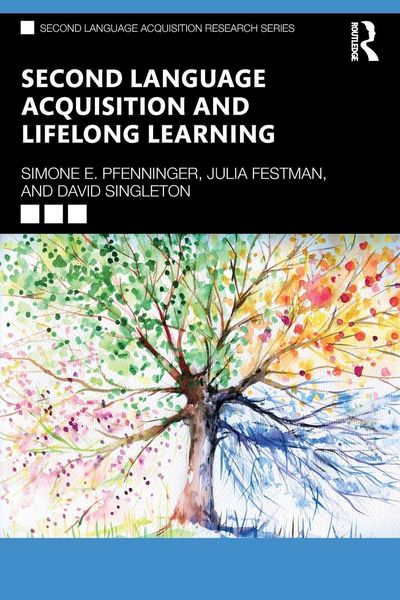
Second Language Acquisition and Lifelong Learning

55,99 €

inkl. gesetzl. MwSt., Versandkostenfrei


Beschreibung

Produktdetails

Einband

Taschenbuch

Erscheinungsdatum

05.05.2023

Verlag

Taylor & Francis

Seitenzahl

242

Maße (L/B/H)

22,9/15,2/1,3 cm

Gewicht

780 g

Sprache

Englisch

ISBN

978-0-367-76913-0

Beschreibung

Produktdetails

Einband

Taschenbuch

Erscheinungsdatum

05.05.2023

Verlag

Taylor & Francis

Seitenzahl

242

Maße (L/B/H)

22,9/15,2/1,3 cm

Gewicht

780 g

Sprache

Englisch

ISBN

978-0-367-76913-0

Herstelleradresse

Libri GmbH
Europaallee 1
36244 Bad Hersfeld
DE

Email: gpsr@libri.de

Kundinnen und Kunden meinen

0 Bewertungen

Informationen zu Bewertungen

Zur Abgabe einer Bewertung ist eine Anmeldung im Konto notwendig. Die Authentizität der Bewertungen wird von uns nicht überprüft. Wir behalten uns vor, Bewertungstexte, die unseren Richtlinien widersprechen, entsprechend zu kürzen oder zu löschen.

Die Bewertungen sind nach Format, Anzahl Sterne und Datum sortiert.

Verfassen Sie die erste Bewertung zu diesem Artikel

Helfen Sie anderen Kund*innen durch Ihre Meinung

Kundinnen und Kunden meinen

0 Bewertungen filtern

Die Leseprobe wird geladen.
  • Produktbild: Second Language Acquisition and Lifelong Learning
  • Produktbild: Second Language Acquisition and Lifelong Learning
  • Chapter 1 Introduction: Seasons of life in SLA

    Chapter 2 Infant and childhood bilingualism

    2.1 Impact of early exposure to two languages on brain development, functioning and structure

    2.1.1 The many shades of child bilingualism: Early and late bilinguals and beyond

    2.1.2 Age of onset of exposure to a second language linked to ultimate attainment only – but there is more

    2.1.3 Age of onset of exposure to a second language linked to influences on the brain

    2.2 Chronological age and maturation

    2.2.1 Chronological age, maturation and the brain

    2.2.2 Child language development and variability

    2.3 Learning environment as a complex socio-cultural variable: Setting the stage for early L2 learning

    2.4 From environment to input: Early experiences with language(s) and focus on input dependency (quantity and quality)

    2.5 Child-internal factors

    2.6 Idiosyncratic learner trajectories – from early on?

    2.7 Methodological envoi

    Chapter 3 Dual language development in school-age children and adolescents

    3.1 Dual language development in schools

    3.1.1 Brain development as a basic challenge in adolescence

    3.1.2 Dual language learners (DLLs) in schools

    3.1.3 Some notes on the bilingual advantage

    3.2 The ‘earlier is better conundrum’ in school settings

    3.2.2 Intensity trumps quantity in foreign language instruction

    3.3 Methodological envoi

    Chapter 4 Language learning in young adulthood and midlife

    4.1 Young adults

    4.1.1 Plurilingual couples

    4.1.2 Opportunities for bi-/plurilingual love

    4.1.3 Planning and policy

    4.1.4 Love and language use: three cases

    4.1.5 Methodological envoi

    4.2 L2 acquisition in midlife

    4.2.1 Heritage languages

    4.2.2 Adult classroom learners in their home country or region

    4.2.3 Adult migrant foreign language acquirers

    4.2.4 Methodological envoi

    Chapter 5 Complex and dynamic realities of second language (L2) learning later in life

    5.1 Additional language learning in the third age

    5.1.1 Inter-individual variation across the lifespan

    5.1.2 Intra-individual variation across the lifespan

    5.1.3 Intra-individual variation as a source of information

    5.1.4 Methodological envoi

    5.2 Cognitive decline or too much mileage? The causal story behind ageing and cognitive changes – and its implications for SLA

    5.3 Benefits of L2 learning in older adulthood

    5.3.1 Cognitive benefits of lifelong bilingualism

    5.3.2 Cognitive consequences of foreign language learning in old age

    5.3.3 Methodological envoi

    5.4 Implications for the third age FL classroom

    5.5 ICT usage among adult L2 learners

    5.6 Suggestions for future research on third-age additional language learning

    5.6.1 Reframing lifelong learning through personal narratives

    5.6.2 Narratives: understanding who we are, how to live, and what to do

    5.6.3 The narrative of decline as a dominant master narrative of ageing in Western societies

    5.6.4 The value of staying young

    5.6.5 Example of a dialogical narrative analysis with third age additional language learners

    Chapter 6 Re-examining threshold hypotheses: Continuity vs. cut-off points throughout the lifespan

    6.1 The (multiple) critical period(s) hypothesis as a biologically regulated threshold

    6.1.1 The notion of "critical period"

    6.1.2 Neurolinguists following in the footsteps of Penfield and Lenneberg

    6.1.3 Definitive onset, offset and terminus?

    6.1.4 Nativelikeness and the critical period

    6.1.5 Nativelikeness and the role of language aptitude

    6.1.6 Critical age or critical opportunity?

    6.1.7 Envoi

    6.2 Thresholds for cognitive and brain reserve capacities

    6.3 Retirement as a potentially significant life event altering the process of cognitive ageing and language acquisition, use and attrition

    6.3.1 Effects of occupation on cognitive functioning

    6.3.2 Experiences and perceptions of continuity in the transition from work to retirement

    6.3.3 Language acquisition, use and attrition across retirement age

    6.3.4 Methodological envoi

    Chapter 7 Conclusions and future directions of research on lifelong L2 learning