KI-Beratung Beta

Gutscheinbedingungen

**Gültig bis 11.11.2026 auf Spielzeug, Schreibwaren, Filme, Geschenke & Trends, Musik, tolino eReader & Zubehör, Hörbücher und Hörbuch-Downloads, nicht preisgebundene Bücher und Kalender online auf thalia.at und in der Thalia App. Einzelne Artikel können ausgeschlossen sein. Aufgrund der Buchpreisbindung sind deutschsprachige Bücher und eBooks ausgenommen. Zusätzlich ausgenommen sind Abos & Flatrates, Games, Geschenkkarten/-boxen, Shelfies, Software, Zeitschriften sowie einzelne Artikel von tonies®. Pro Einkauf einmal einlösbar. Click & Collect nur bei Onlinevorabzahlung möglich. Keine Barauszahlung. Nicht kombinierbar mit anderen Aktionen und Gutscheinen. Gutschein wird auf max. 500€ Bestellwert angerechnet. Nicht gültig für Versandkosten und Services.

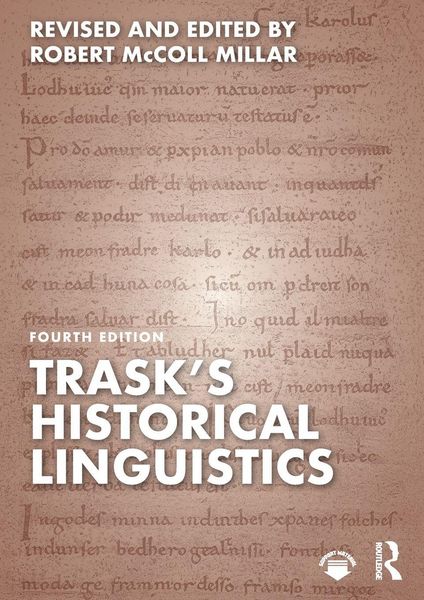
Produktbild: Trask's Historical Linguistics

Trask's Historical Linguistics

52,99 €

inkl. gesetzl. MwSt., Versandkostenfrei


Beschreibung

Trask's Historical Linguistics provides an accessible introduction to historical linguistics - the study of language change over time. This engaging book is illustrated with language examples from all six continents, and covers the fundamental concepts of language change, methods for historical linguistics,...

Beschreibung

Trask's Historical Linguistics provides an accessible introduction to historical linguistics - the study of language change over time. This engaging book is illustrated with language examples from all six continents, and covers the fundamental concepts of language change, methods for historical linguistics, linguistic reconstruction, sociolinguistic aspects of language change, language contact, the birth and death of languages, language and prehistory, and the issue of very remote relations.

The fourth edition of this renowned textbook is fully revised and updated and covers the most recent developments in historical linguistics, including:

  • A thorough reworking of sections on morphological and syntactic change, incorporating progress in areas such as grammaticalization and the discussion of the Indo-European 'homeland'
  • Discussion and analysis of 'folk' historical linguistics and its connection with some of the more eccentric views of professional linguists
  • An expanded discussion of language contact, historical sociolinguistics, and language planning, including a discussion of contemporary competing views on the genesis and nature of creoles, and their importance in our understanding of radical linguistic change
  • Updated support material including suggestions for essay questions and a larger number of supporting examples of the phenomena described in the book

Trask's Historical Linguistics is essential reading for advanced undergraduate and postgraduate students of historical linguistics as well as any student looking for a grounded introduction to the English language.

Rezension

Since its first publication in 1996, Trask's Historical Linguistics has been the resource for teaching historical linguistics. It's great to have a new edition, carefully updated and revised by language change expert McColl Millar, so that future generations can also work with this gem of a textbook!

Professor Alexander Bergs, Osnabrück University, Germany

Trask's Historical Linguistics is that rare thing: a wide-ranging textbook for both undergraduates and postgraduates that is not only as an authoritative introduction to the topic but also offers new insights into major research problems. Robert McColl Millar's latest revision is a tour-de-force of clear, up-to-date and indeed inspirational exposition. It can be heartily recommended.

Jeremy J. Smith, University of Glasgow, Scotland

Produktdetails

Einband

Taschenbuch

Erscheinungsdatum

18.05.2023

Abbildungen

32 SW-Abb., 32 SW-Zeichn., 76 Tabellen

Verlag Taylor & Francis

Produktdetails

Einband

Taschenbuch

Erscheinungsdatum

18.05.2023

Abbildungen

32 SW-Abb., 32 SW-Zeichn., 76 Tabellen

Verlag Taylor & Francis
Seitenzahl

412

Maße (L/B/H)

24,6/17,4/2,3 cm

Gewicht

730 g

Auflage

4. Auflage

Sprache

Englisch

ISBN

978-0-367-64557-1

Herstelleradresse

Libri GmbH
Europaallee 1
36244 Bad Hersfeld
DE

Email: gpsr@libri.de

Noch keine Bewertungen vorhanden

Verfassen Sie die erste Bewertung zu diesem Artikel

Helfen Sie anderen Kundinnen und Kunden durch Ihre Meinung.

Kundinnen und Kunden meinen

Bewertungen (0)

Die Leseprobe wird geladen.
  • Produktbild: Trask's Historical Linguistics
  • List of illustrations

    To the reader

    To the teacher

    Acknowledgements

    Abbreviations

    1. The fact of language change

    1.1 Irregardless

    1.2 English then and now

    1.3 Attitudes to language change

    1.4 The inevitability of change

    Case-study: kind regards

    Further reading

    Exercises

    2. Lexical and semantic change

    2.1 Borrowing

    2.2 Phonological treatment of loans

    2.3 Morphological treatment of loans

    2.4 Formation of new words

    2.5 Change in word-meaning

    Case study: nice

    Further reading

    Exercises

    3. Phonological change 1: Change in pronunciation

    3.1 The phonetic basis of phonological change

    3.2 Assimilation and dissimilation

    3.3 Lenition and fortition

    3.4 Addition and removal of phonetic features

    3.5 Vowels and syllable structure

    3.6 Whole-segment processes

    3.7 The regularity issue: a first look

    Case study: Germanic */xw/ in the present-day dialects

    3.8 Summary

    Further reading

    Exercises

    4. Phonological change II: Change in phonological systems

    4.1 Conditioning and rephonologization

    4.2 Phonological space

    4.3 Chain shifts

    Case study: large scale change in the Germanic consonant system - Grimm's Law and Verner's Law

    4.4 Summary

    Further reading

    Exercises

    5. Morphological change

    5.1 Reanalysis

    5.2 Analogy and levelling

    5.3 Universal principles of analogy

    5.4 Morphologization

    5.5 Morphologization of phonological rules

    5.6 Change in morphological type

    Case study: The evolution of the definite article from the demonstrative paradigm in English

    Further reading

    Exercises

    6. Syntactic change

    6.1 Reanalysis of surface structure

    6.2 Shift of markedness

    6.3 Grammaticalization

    6.4 Typological harmony

    6.5 Syntactic change as restructuring of grammars

    Case study: the rise of ergativity

    Further reading

    Exercises

    7. Relatedness between languages

    7.1 The origin of dialects

    7.2 Dialect geography

    7.4 Tree model and wave model

    7.5 The language families of the world

    Case study: A Martian's view on the Germanic language family

    Further reading

    Exercises

    8. The comparative method

    8.1 Systematic correspondences

    8.2 Comparative reconstruction

    8.3 Pitfalls and limitations

    8.4 The Neogrammarian Hypothesis

    8.5 Semantic reconstruction

    8.6 The use of typology and universals

    8.7 Reconstructing grammar

    8.8 The reality of proto-languages

    Case study: A reconstruction too far?

    Further reading

    Exercises

    9. Internal Reconstruction

    9.1 A first look at the internal method

    9.2 Alternations and internal reconstruction

    9.3 Intern