KI-Beratung Beta

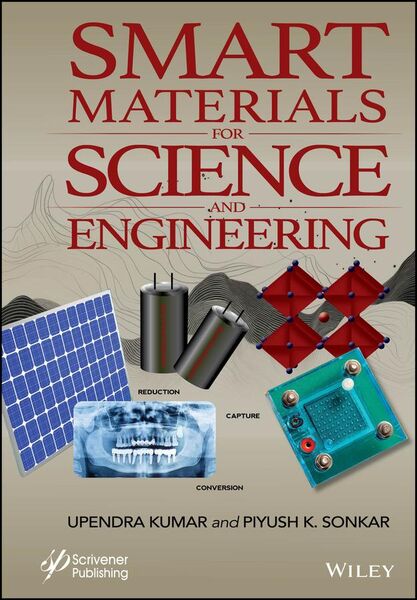
Produktbild: Smart Materials for Science and Engineering

Smart Materials for Science and Engineering

237,99 €

inkl. gesetzl. MwSt., Versandkostenfrei


Beschreibung

Produktdetails

Einband

Gebundene Ausgabe

Erscheinungsdatum

05.06.2024

Herausgeber

Upendra Kumar + weitere

Verlag

WILEY

Seitenzahl

400

Maße (L/B/H)

25,7/18,1/3,3 cm

Gewicht

1134 g

Sprache

Englisch

ISBN

978-1-394-18581-8

Beschreibung

Produktdetails

Einband

Gebundene Ausgabe

Erscheinungsdatum

05.06.2024

Herausgeber

Verlag

WILEY

Seitenzahl

400

Maße (L/B/H)

25,7/18,1/3,3 cm

Gewicht

1134 g

Sprache

Englisch

ISBN

978-1-394-18581-8

Herstelleradresse

Libri GmbH
Europaallee 1
36244 Bad Hersfeld
DE

Email: gpsr@libri.de

Noch keine Bewertungen vorhanden

Verfassen Sie die erste Bewertung zu diesem Artikel

Helfen Sie anderen Kundinnen und Kunden durch Ihre Meinung.

Kundinnen und Kunden meinen

Bewertungen (0)

Die Leseprobe wird geladen.
  • Produktbild: Smart Materials for Science and Engineering
  • Preface xvii

    Acknowledgements xix

    Scope of the Book xxi

    1 Introduction: Historical Overview, Current and Future Perspective 1
    Unni kisan, R.R. Awashthi and Sanjeev Kumar Trivedi

    1.1 Introduction 1

    1.2 Historical Overview of Smart Material 4

    1.3 About Smart Materials 6

    1.4 Current and Future Perspectives of Smart Materials 11

    2 Fabrication and Characterization Tools for Organic Semiconductors as Smart Materials in Optoelectronic Device Applications 17
    Minakshi Sharma, Chandra Mohan Singh Negi, Parvez Ahmed Alvi and Saral Kumar Gupta

    2.1 Introduction 18

    2.2 Overview of Organic Semiconductors 18

    2.3 Optoelectronic Properties of Conjugated Polymers 19

    2.4 Optoelectronic Devices 19

    2.5 Overview of Smart Materials 22

    2.6 Methods and Techniques 25

    2.7 Methodology 29

    2.8 Characterization Techniques 30

    2.9 Conclusion and Future Work 34

    3 Smart Scaffold Constructs for Regenerative Medicine and Tissue Engineering 39
    Princy Choudhary, Ayushi Gupta, Saurabh Kumar Gupta, Shrey Dwivedi and Sangeeta Singh

    3.1 Introduction 39

    3.2 Applications of Smart Scaffolds in Different Areas 43

    3.3 Future Advancements and Techniques to Improve Efficiency of Scaffolds 60

    3.4 Conclusion 63

    4 Application of Smart Materials in Dental Sciences 75
    Ruqaiya Saleem, Amaresh Kumar Sahoo and Shalini Gupta

    4.1 Introduction 76

    4.2 Clinical Applications of Smart Materials in Various Branches of Dentistry 77

    4.3 Conclusion 85

    5 Graphene-Related Smart Material (GRSM): Synthesis, Characterization, and Application in Optoelectronics Devices 89
    Varsha Yadav, Rahul Bhatnagar and Saral Kumar Gupta

    5.1 Introduction 89

    5.2 Experimental Methods and Materials 94

    5.3 Results and Discussion 96

    5.4 Conclusions 100

    6 Synthesis and Characterization of Mechanical and Microstructural Properties of Fly-Ash-Reinforced Aluminum-Based Metal Matrix Composite 105
    Rahul Bhatnagar and Varsha Yadav

    6.1 Introduction 105

    6.2 Materials and Methods 109

    6.3 Results and Discussion 112

    6.4 Conclusion 115

    7 Organic Smart Materials: Synthesis, Characterization, and Application 121
    Shivaleela B. and S. M. Hanagodimath

    7.1 Introduction 121

    7.2 Organic Smart Materials 122

    7.3 Materials and Experimental Methods 124

    7.4 Synthesis of Organic Smart Materials 125

    7.5 Results and Discussion 127

    7.6 Applications 131

    7.7 Conclusions 133

    8 Magnetostrictive Material-Based Smart Materials, Synthesis, Properties, and Applications 135
    inki Singh and Sonam Perween

    8.1 Introduction 136

    8.2 Overview of Smart Materials Based on Magnetostrictive Materials 137

    8.3 Origin of Magnetostriction 138

    8.4 Synthesis of Magnetostrictive Materials 140

    8.5 Properties of Magnetostrictive Materials 141

    8.6 Methods of Magnetostrictive Property Measurement 144

    8.7 Application of the Magnetostrictive Smart Materials 145

    8.8 Conclusion 148

    9 Materials Development of Supercapacitors--Promising Device for Future Energy Storage Applications 151
    Ram Chhavi Sharma

    9.1 Introduction 151

    9.2 Principle of Operation of Conventional Capacitors and Supercapacitor 154

    9.3 Types of Supercapacitors 155

    9.4 Development of Advanced Materials for Supercapacitors 160

    9.5 Applications of Supercapacitors 164

    9.6 Conclusion 166

    10 Smart Solid Electrolyte Materials in Energy Storage Devices: Batteries 173
    Pawan Kumar, Shalu Rani and Sanjay Kumar

    10.1 Introduction 173

    10.2 Fundamental Aspects, Different Types of Electrolytes, and the Role of the Electrolyte in Battery Technology 175

    10.3 Conductivity Enhancement Approach in Solid Electrolyte Materials 182

    10.4 Synthesis Approaches for Solid Electrolytes 184

    10.5 Conclusion and Future Perspective 186

    11 Smart Materials in Energy Storage Devices: Solar Cells 191
    Indu Sharma, Neha Bisht, Parag R. Patil, Pravin S. Pawar, Rahul Kumar Yadav, Yong Tae Kim and Jaeyeong Heo

    11.1 Introduction 191

    11.2 Types of Solar Cells 194

    11.3 Future Trends and Possibilities for Tackling the Challenges in the Improvement of Smart Materials 209

    11.4 Summary 212

    12 Mixed-Dimensional 2D-3D Perovskite Solar Cells: Origin, Development, and Applications 221
    Vani Pawar, Bhumika Sharma and Sushobhan Avasthi

    12.1 Introduction 222

    12.2 Perovskite Solar Cells (PSCs) 223

    12.3 Low-Dimensional (2D or 2D-3D Mixed) Perovskites 229

    12.4 Ruddlesden-Popper (RP) Perovskites 231

    12.5 Dion-Jacobson (DJ) Perovskites 239

    12.6 Alternating Cation Interlayers 244

    12.7 Additive Engineering 249

    12.8 Compositional Engineering 252

    12.9 Functional Perovskite Photovoltaics 254

    12.10 Conclusion and Future Outlook 259

    13 Advanced Materials in Energy Conversion Devices: Fuel Cells and Biofuel Cells 269
    Amit Kumar Verma, Prerna Tripathi, Akhoury Sudhir Kumar Sinha and Shikha Singh

    13.1 Introduction 269

    13.2 Fuel Cell Types and Advancement in Electrode Materials 273

    13.3 Current Application Status 279

    13.4 Challenges 279

    13.5 Conclusion 280

    14 Smart Materials in Energy Storage Devices: Fuel Cells and Biofuel Cells 287
    Baliram Gurunath Rathod and Venkata Giridhar Poosarla

    14.1 Introduction 287

    14.2 Relation of Smart Materials and MFCs 288

    14.3 MFCs and Their Mechanism 289

    14.4 Classification of MFCs 291

    14.5 Microorganisms Involved in MFCs 291

    14.6 MFC Systems 293

    14.7 Design of MFCs 294

    14.8 Functions/Operations of MFCs 296

    14.9 Components of MFCs 297

    14.10 Energy from MFCs 298

    14.11 Recent Developments and Challenges in Smart Materials for Energy Storage Devices 299

    14.12 Future Perspectives 299

    14.13 Conclusion 300

    15 Role of Smart Materials in Environmental Remediation: CO2 Capture and CO2 Reduction 305
    Yogendra K. Gautam, Durvesh Gautam, Manohar Singh, Himani, Kavita Sharma, Beer Pal Singh and Anuj Kumar

    15.1 Introduction 305

    15.2 CO2 Reduction Techniques 307

    15.3 Conclusion 318

    16 Soft Perovskite Semiconductors for Future Optical Electronics 325
    Rashmi Yadav and Bhoopendra Yadav

    16.1 Introduction 325

    16.2 Perovskite Structure and Characteristics 326

    16.3 Composition Engineering Effects 327

    16.4 Interface Engineering Effects 328

    16.5 Bandgap Engineering Effects 328

    16.6 Stability and Degradation Mechanism in Perovskite Solar Cells (PSCs) 330

    16.7 Novel Applications 332

    16.8 Conclusion 332

    17 Band Gap Engineering and Nanopatterning of Muscovite Mica by Low-Energy Ion Beams Applicable for Futuristic Microelectronics 337
    Dipak Bhowmik, Joy Mukherjee and Prasanta Karmakar

    17.1 Introduction 337

    17.2 Experimental Details 338

    17.3 Nanopattern Formation on Mica Surface and Its Wettability Property by Low-Energy Ion 340

    17.4 Band Gap Engineering of Muscovite Mica by Low-Energy Ion Beam svia Few-Layer and Monolayer Modification 350

    17.5 Conclusion 356

    Acknowledgments 357

    References 357

    About the Editors 361

    Index 363