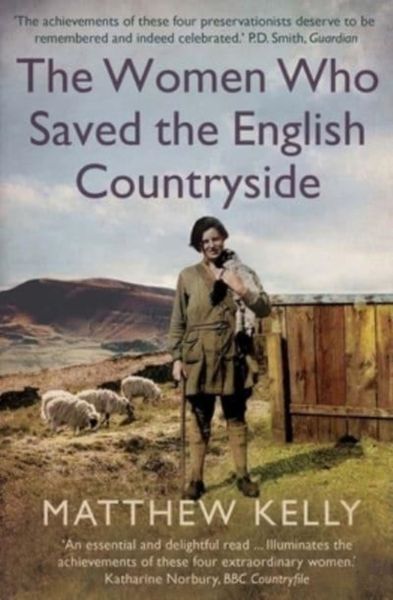
The Women Who Saved the English Countryside
-
- Englisch ausgewählt
19,99 €
inkl. gesetzl. MwSt.,
- Kostenlose Lieferung ab 30 € Einkaufswert
- Versandkostenfrei für Bonuscard-Kund*innen
Beschreibung
Produktdetails
Einband
Taschenbuch
Erscheinungsdatum
25.04.2023
Abbildungen
15 color. + 4 b-w illus.
Verlag
University PressesSeitenzahl
400
Maße (L/B/H)
19,5/12,7/3,4 cm
Gewicht
364 g
Sprache
Englisch
ISBN
978-0-300-27039-6
A vibrant history of English landscape preservation over the last 150 years, told through the lives of four remarkable women
In Britain today, a mosaic of regulations protects the natural environment and guarantees public access to green spaces. But this was not always so. Over the last 150 years, activists have campaigned tirelessly for the right to roam through the countryside and the vital importance of preserving Britain's natural beauty. Matthew Kelly traces the history of landscape preservation through the lives of four remarkable women: Octavia Hill, Beatrix Potter, Pauline Dower, and Sylvia Sayer. From the commons of London to the Lake District, Northumberland, and Dartmoor, these women protected the English landscape at a crucial period through a mixture of environmental activism, networking, and sheer determination. They grappled with the challenges that urbanization and industrial modernity posed to human well-being as well as the natural environment. By tirelessly seeking to reconcile the needs of particular places to the broader public interest they helped reimagine the purpose of the English countryside for the democratic age.Noch keine Bewertungen vorhanden
Verfassen Sie die erste Bewertung zu diesem Artikel
Helfen Sie anderen Kundinnen und Kunden durch Ihre Meinung.
Kurze Frage zu unserer Seite
Vielen Dank für Ihr Feedback
Wir nutzen Ihr Feedback, um unsere Produktseiten zu verbessern. Bitte haben Sie Verständnis, dass wir Ihnen keine Rückmeldung geben können. Falls Sie Kontakt mit uns aufnehmen möchten, können Sie sich aber gerne an unseren Kund*innenservice wenden.
zum Kundenservice