Gutscheinbedingungen

**Gültig bis 14.09.2026 auf Spielzeug, Schreibwaren, Filme, Geschenke & Trends, Musik, tolino eReader & Zubehör, Hörbücher, nicht preisgebundene Bücher und Kalender in der Thalia App. Einzelne Artikel können ausgeschlossen sein. Aufgrund der Buchpreisbindung sind deutschsprachige Bücher und eBooks ausgenommen. Zusätzlich ausgenommen sind Abos & Flatrates, Games, Geschenkkarten/-boxen, Shelfies, Software, Zeitschriften sowie einzelne Artikel von tonies®. Pro Einkauf einmal einlösbar. Nur gültig mit im Onlineshop hinterlegter Bonuscard. Click & Collect nur bei Onlinevorabzahlung möglich. Keine Barauszahlung. Nicht kombinierbar mit anderen Aktionen und Gutscheinen. Gutschein wird auf max. 500€ Bestellwert angerechnet. Nicht gültig für Versandkosten und Services.

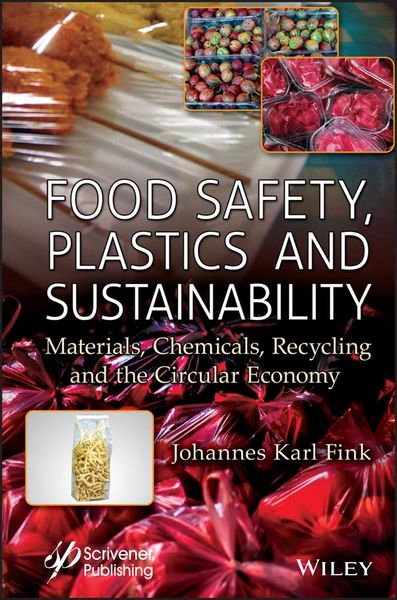
Produktbild: Food Safety, Plastics and Sustainability

Food Safety, Plastics and Sustainability Materials, Chemicals, Recycling and the Circular Economy

254,99 €

inkl. gesetzl. MwSt., Versandkostenfrei


Beschreibung

Produktdetails

Einband

Gebundene Ausgabe

Erscheinungsdatum

31.05.2023

Verlag

John Wiley & Sons Inc

Seitenzahl

432

Maße (L/B/H)

22,9/15,2/2,6 cm

Gewicht

826 g

Auflage

1. Auflage

Sprache

Englisch

ISBN

978-1-394-17456-0

Beschreibung

Produktdetails

Einband

Gebundene Ausgabe

Erscheinungsdatum

31.05.2023

Verlag

John Wiley & Sons Inc

Seitenzahl

432

Maße (L/B/H)

22,9/15,2/2,6 cm

Gewicht

826 g

Auflage

1. Auflage

Sprache

Englisch

ISBN

978-1-394-17456-0

Herstelleradresse

Libri GmbH
Europaallee 1
36244 Bad Hersfeld
DE

Email: gpsr@libri.de

Noch keine Bewertungen vorhanden

Verfassen Sie die erste Bewertung zu diesem Artikel

Helfen Sie anderen Kundinnen und Kunden durch Ihre Meinung.

Kundinnen und Kunden meinen

Bewertungen (0)

Die Leseprobe wird geladen.
  • Produktbild: Food Safety, Plastics and Sustainability
  • Preface xi
     
    1 Food Safety 1
     
    1.1 Food Security 2
     
    1.2 Migration of Substances from Packaging 3
     
    1.2.1 Modeling of Migration 4
     
    1.2.2 Sample Pretreatment Methods 6
     
    1.2.3 Special Chemicals 7
     
    1.2.4 Safety of Recycled HDPE and PP 11
     
    1.3 Food Safety and Hygiene 12
     
    1.3.1 Sensors for Amine Detection 13
     
    1.4 Impact of Microplastics on Humans and the Environment 14
     
    1.4.1 Polychlorinated Biphenyl Compounds 17
     
    1.4.2 Polycyclic Aromatic Hydrocarbon Compounds 17
     
    1.4.3 Organochlorine Pesticides 21
     
    1.4.4 Carcinogens 30
     
    1.5 Methods of Food Packaging 42
     
    1.6 Recycling Safety 58
     
    References 58
     
    2 Regulations 67
     
    2.1 European Strategy for Plastics 67
     
    2.2 Basic Principles of Packaging 68
     
    2.3 Colorants and Optical Brighteners 68
     
    2.4 Non-intentionally Added Substances in Food Contact Material 69
     
    2.4.1 Analysis Methods 71
     
    2.5 Recycling 74
     
    2.5.1 Recycled Plastics in Food Packaging 74
     
    2.5.2 Planning and Decision-Making Process 76
     
    2.5.3 Mechanical Recycled Plastics 76
     
    2.6 Standards 77
     
    2.6.1 Gloves 78
     
    2.6.2 Specifications for Compostable Plastics 78
     
    2.6.3 Containers for Packaging of Liquid Foodstuffs 79
     
    2.6.4 Williams-Landel-Ferry Equation 79
     
    References 80
     
    3 Testing Methods 83
     
    3.1 Risk Assessment 84
     
    3.2 Antimicrobial Packaging 84
     
    3.3 Food Colorants 96
     
    3.3.1 Milk Freshness Testing 101
     
    3.3.2 Meat Freshness Testing 102
     
    3.3.3 Fish Freshness Testing 103
     
    3.4 Standards 103
     
    3.4.1 Odor and Taste Transfer from Packaging Film 106
     
    3.4.2 Annealed Aluminum and Aluminum-Alloy Foil for Food Contact 106
     
    3.4.3 Detection of Leaks in Packages 107
     
    3.4.4 Changes in Sensory Attributes 111
     
    3.4.5 Irradiated Food Contact Materials 112
     
    3.4.6 Oxygen Headspace Analysis 114
     
    References 114
     
    4 Food Packaging 121
     
    4.1 Automated Method 121
     
    4.2 Multilayer Packaging 126
     
    4.3 Flexible Packaging 127
     
    4.4 Multicomponent Package 129
     
    4.4.1 Barrier Films 134
     
    4.5 Chlorine Dioxide Gas-Releasing Package 140
     
    4.6 Sustainable Food Packaging 142
     
    4.7 Ventable Food Packages 142
     
    4.7.1 Ventable Microwave-Safe Food Package 142
     
    4.7.2 Self-Venting Microwave-Safe Food Package 143
     
    4.7.3 Smart and Active Food Packaging 143
     
    4.8 Packages for Pourable Food 146
     
    4.9 Food Storage 149
     
    4.9.1 Trays 149
     
    4.9.2 Storage Container 151
     
    4.9.3 Storage System 154
     
    4.10 Special Materials for Food Packaging 156
     
    4.10.1 Film-Forming Biodegradable Classes 156
     
    4.10.2 Cytotoxicity 158
     
    4.10.3 Microwavable Food Packaging Materials 160
     
    4.10.4 Film-Forming Materials 161
     
    4.10.5 Antimicrobial Biodegradable Food Packaging 164
     
    4.10.6 Multilayer Films for Food Packaging 170
     
    4.10.7 Bilayer Film with Dihydromyricetin 170
     
    References 174
     
    5 Materials 191
     
    5.1 Nanocomposites 191
     
    5.1.1 PVC/Ag Nanocomposites 192
     
    5.1.2 Montmorillonite Clays 193
     
    5.1.3 Graphene Nanoplates 197
     
    5.1.4 Carbon Nanotubes 197
     
    5.1.5 Micro- and Nanoplastics 197
     
    5.2 Biopolymers 198
     
    5.2.1 Proteins 199
     
    5.2.2 Gelatin 203
     
    5.2.3 Storage Polymers in Bacterial Cells 207
     
    5.2.4 Bio-Based Nanocomposites 208