KI-Beratung Beta

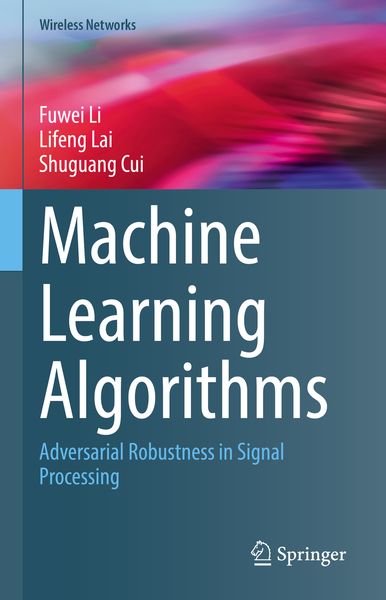
Produktbild: Machine Learning Algorithms
- 12%

Machine Learning Algorithms Adversarial Robustness in Signal Processing

Aus der Reihe Wireless Networks
12% sparen

134,99 € UVP 153,99 €

inkl. gesetzl. MwSt., Versandkostenfrei


Beschreibung

This book demonstrates the optimal adversarial attacks against several important signal processing algorithms. Through presenting the optimal attacks in wireless sensor networks, array signal processing, principal component analysis, etc, the authors reveal the robustness of the signal processing algorithms...

Beschreibung

This book demonstrates the optimal adversarial attacks against several important signal processing algorithms. Through presenting the optimal attacks in wireless sensor networks, array signal processing, principal component analysis, etc, the authors reveal the robustness of the signal processing algorithms against adversarial attacks. Since data quality is crucial in signal processing, the adversary that can poison the data will be a significant threat to signal processing. Therefore, it is necessary and urgent to investigate the behavior of machine learning algorithms in signal processing under adversarial attacks.
The authors in this book mainly examine the adversarial robustness of three commonly used machine learning algorithms in signal processing respectively: linear regression, LASSO-based feature selection, and principal component analysis (PCA). As to linear regression, the authors derive the optimal poisoning data sample and the optimal feature modifications, and also demonstrate the effectiveness of the attack against a wireless distributed learning system. The authors further extend the linear regression to LASSO-based feature selection and study the best strategy to mislead the learning system to select the wrong features. The authors find the optimal attack strategy by solving a bi-level optimization problem and also illustrate how this attack influences array signal processing and weather data analysis. In the end, the authors consider the adversarial robustness of the subspace learning problem. The authors examine the optimal modification strategy under the energy constraints to delude the PCA-based subspace learning algorithm.
This book targets researchers working in machine learning, electronic information, and information theory as well as advanced-level students studying these subjects. R&D engineers who are working in machine learning, adversarial machine learning, robust machine learning, and technical consultants working on the security and robustness of machine learning are likely to purchase this book as a reference guide.

Produktdetails

Einband

Gebundene Ausgabe

Erscheinungsdatum

16.11.2022

Abbildungen

IX, 104 p. 23 illus., 22 illus. in color.

Verlag Springer

Produktdetails

Einband

Gebundene Ausgabe

Erscheinungsdatum

16.11.2022

Abbildungen

IX, 104 p. 23 illus., 22 illus. in color.

Verlag Springer
Seitenzahl

104

Maße (L/B/H)

24,1/16/1,3 cm

Gewicht

296 g

Auflage

22001 Auflage 1st edition 2022

Sprache

Englisch

ISBN

978-3-031-16374-6

Herstelleradresse

Springer-Verlag KG
Sachsenplatz 4-6
1201 Wien
AT

Email: ProductSafety@springernature.com

Noch keine Bewertungen vorhanden

Verfassen Sie die erste Bewertung zu diesem Artikel

Helfen Sie anderen Kundinnen und Kunden durch Ihre Meinung.

Kundinnen und Kunden meinen

Bewertungen (0)

  • Produktbild: Machine Learning Algorithms
  • Chapter. 1. Introduction.- Chapter. 2. Optimal Feature Manipulation Attacks Against Linear Regression.- Chapter. 3. On the Adversarial Robustness of LASSO Based Feature Selection.- Chapter. 4. On the Adversarial Robustness of Subspace Learning.- Chapter. 5. Summary and Extensions.- Chapter. 6. Appendix.